Protests highlight trauma crisis, operating rooms under reconstr...
/ 2026-10-15 18:35:16Focus


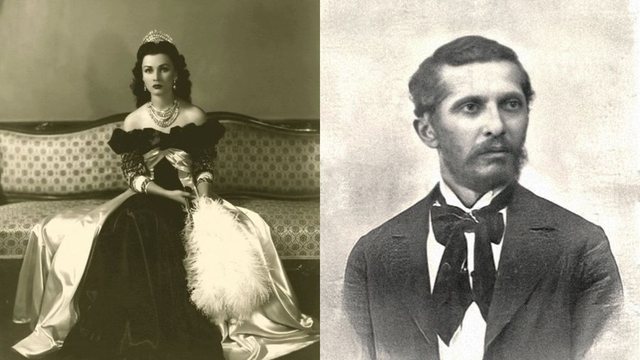
Half a century ago: when Iranian leader Khomeini used the word “none” (which Albanian has probably politely stolen from Persian). Now the theocratic regime in Tehran is being narrowed by mass protests. (Accompanied by a few words about Naim Frashëri, an Albanian Queen of Iran, a banquet in Persepolis and some Swiss waiters from 1971).
By Enver Robelli
1- On February 2, 1979, almost 47 years ago, the newspaper “Rilindja” announced on its third page the triumphant return of Ayatollah Ruhollah Khomeini from Paris to Tehran. Two and a half million followers came out to welcome the leader of the Islamic revolution. Khomeini landed at Tehran Airport at 09:32 local time. Along with him on the Boeing 747 of “Air France” were 50 associates and 150 journalists from around the world. Alcohol was not served.
2- Nearly half a century later, a major uprising against the Islamist rulers has erupted in Iran. Protesters are calling for the overthrow of Ayatollah Khamenei and the end of the Islamist republic. The London-based organization Netblocks announced that the regime has cut off internet access. The Norway-based organization Iran Human Rights announced that at least 45 people have already been killed, including eight minors. Iranian media have so far reported 21 deaths, including security forces. The protests began in late December, initially as a reaction to the dire economic situation in the country.
3- Professor of Islamic studies Katayoun Amirpour, author of a biography of Khomeini (published by CH Beck, Munich), describes the moment of his return as follows: "To many people in Iran, Khomeini seemed like the Mahdi they had been waiting for, the hidden Imam, who was now returning from exile. Everyone was waiting for the fulfillment of their desires and dreams. 'You are my soul, Khomeini,' echoed throughout the city. The returnee himself did not show such great emotions. When asked by BBC reporter John Simpson how he felt about his return after 15 years in exile and millions of people waiting for him, he is said to have replied: 'Nothing, nothing, nothing.'"
It seems that the Albanian language has politely stolen this word from Persian. But we should not feel bad about this, because a great Albanian has given much more to Persian culture – read the following: Naim Frashëri's first book was a grammar of the Persian language entitled “Kavaʻid-i Farsiyye ber-Tarz-ı Nevin” [Rules of Persian according to the new method]. It was published in Istanbul in 1871. This is the first grammar of Persian written in the Western style.
4- Naim Frashëri wrote his first poems in Persian. In 1885, he published the poetic collection “Tehajjulāt” (Dreams) in Istanbul. The Persian grammar written by him is divided into two parts. According to a study by orientalists Abdulla Rexhepi and Zeqije Xhafçe from the University of Prishtina, the grammar has 168 pages: “The first part, 65 pages, contains information on the rules of the Persian language, especially on morphology, while the second part, which has 83 pages, consists of four exercises and a glossary at the end with some Persian-Ottoman words.”
5- Naser Nikoubakht, professor of Persian Language and Literature at Tarbiat Modares University in Tehran, writes about the Albanian poet: “Perhaps Naim Frashëri, at the age of 25, has come to the conclusion that the Persian language is the most suitable means to express his poetic imaginations. Thus, his poetic meditations poured out the treasure of Persian literature. The concepts and poetics of this literature as well as the poetic tradition of the Persian language helped the Albanian poet to express deep poetic experiences and evocations, thus resulting in the creation of the collection 'Tehajjulāt'. Or we can say this: The collection 'Tehajjulāt' is a manifestation of Frashëri's intellectual and spiritual system, which is expressed in coordination with the opinions of the great Iranian poets” (quoted from the work of Abdulla Rexhepi and Zeqije Xhafçe).
6- Regarding Khomeini's return from France to Iran, another spectacular event should be mentioned. On the plane with the Iranian imam was the German journalist Peter Scholl-Latour. During the flight, Scholl-Latour was invited by an associate of Khomeini to go to the new Iranian leader, who was praying the morning prayer. Then Khomeini handed his associate a file, and the latter gave it to the German with the order: "If they arrest us, if they kill us on arrival, then hide this file well, and if everything goes well, as we hope, then return the file to me." What was in this file? Peter Scholl-Latour explains: "Eight months later I found out what was inside. It was the constitution of the Islamic Republic of Iran." Sometimes journalists are witnesses to historical events. With their presence on the plane, the correspondents also served as a human shield against threatening rumors that the plane would be shot down. Khomeini's return to Iran was a global event. The French philosopher Michel Foucault, who visited Tehran twice in 1978, wrote for the Italian newspaper Corriere della Sera: "This is perhaps the first great uprising against the world system, the most modern and insane form of revolt." This revolution was the first great triumph of political Islam. The women dressed in black became a symbol of a return to the Middle Ages.
7- Më 16 janar 1979 Iranin e kishte braktisur me shpejtësi Shahu Mohamad Reza Pahlavi. Kësisoj mori fund mbretëria 2500-vjeçare persiane. Pahlavi vdiq më 1980 në Kairo. Nga pallati mbretëror i Kajros vinte gruaja e parë e Pahlavit. Ajo quhej Favzia bint Fuad dhe ishte e bija e Mbretit Fuad I, i cili rridhte nga dinastia me origjinë shqiptare e Muhamed Aliut, sundimtarit të Egjiptit. Më 16 mars 1939 Favzia bint Fuad u martua me – atëherë – princin e kurorës iraniane Reza Pahlavin, Mbretin e ardhshëm të Iranit (nga viti 1941). Rrjedhimisht Favzia bint Fuad, një grua me origjinë shqiptare, ishte Mbretëreshë e Iranit. Në vitin 1942 portreti i saj u botua në ballinën e revistës së famshme amerikane “Life”. Kështu Favzia u bë ikonë botërore. Fotografi Cecil Beaton e përshkroi atë si një “venus aziatik” me fytyrë të përsosur në formë të zemrës dhe me sy të kaltër depërtues. Më 1945 çifti u shkurorëzua.
8- Iranianët e akuzonin Shahun për korrupsion dhe keqpëdorim të resurseve të shtetit. Si shembull të babëzisë përmendet një festë gjigante e organizuar më 1971 për të shënuar 2500-vjetorin e monarkisë. U ftuan dhjetëra burrështetas nga mbarë bota. Erdhën 69 krerë shtetesh ose dërguan zëvendësit e tyre. Banketi dhe ceremonia u mbajtën në Persepolis, kryeqyteti i monarkisë së lashtë persiane. Për të aterruar mysafirët u ndërtua ekstra një pistë. Kamerierët u sollën nga Zvicra. Në vitin 2005 ata, tashmë në moshë të shtyrë, i treguan kolegut tim Martin Beglinger se ç’kishin përjetuar në Persepolis. Teksti është botuar në shtojcën “Das Magazin” të gazetës “Tages Anzeiger”.
Kamerieri Emil Real: “Në mesditë, përpara darkës së madhe, (lideri jugosllav) Titoja hëngri një gjeldeti të tërë. Ndërsa (sundimtari i Etiopisë) Haile Selasie një rosë”.
Kamerieri Oswald Toutsch: “Gjithashtu, Titos, ndërsa po i shërbeja, ia derdha një pikë (verë) mbi uniformën e bardhë. Por ai nuk tha asgjë dhe vetëm e fshiu shpejt mëngën me dorë”.
Kamerieri Emil Real: “Tri ditë përpara darkës së madhe gala, erdhën 18 tonë ushqime. Sipas listës, midis tyre kishte: 2700 kilogramë mish lope, derri dhe qengji. 1280 kilogramë shpendë dhe mish gjahu. Dhe 30 kilogramë havjar. Të tjerë thanë se ishin 150 kilogramë”.
“Dhe një kamion plot me akull”, sipas kamerierit Oswald Toutsch.
Kolegu i tij Felix Real tha: “Çdo gjë erdhi me avion nga Parisi, madje edhe magdanozi dhe qepa e njomë. Vetëm havjari ishte nga Irani”.
Dante Franzetti, kamarier: “Të gjithë supozonin se (presidenti francez) Pompidou nuk erdhi në Persepolis vetëm sepse nuk do të lejohej të ulej pranë perandoreshës Farah Diba. Ky vend i ishte premtuar tashmë Haile Selassiet”.
Selassie, atëbotë 79-vjeç, shoqërohej nga e bija dhe nga qeni i tij, i cili përreth qafës bartte një zinxhir me diamante. Presidenti i SHBA-së, Nixon, përfaqësohej nga zëvendësi i tij Spiro Agnew, familja e të cilit rridhte nga Peloponezi i Greqisë. Mbretëresha e Anglisë, Elizabeth, dërgoi bashkëshortin e saj, Princin Philip, dhe Princeshën Anne.
9- 80 kilometers of highway were paved. 25 thousand bottles of wine were cooled.
"The camping of billions," wrote the Swiss magazine "Schweizer Illustrierte" about the banquet in Persepolis.
"The party of the century," wrote the American magazine "Life".
"The mother of all holidays," wrote the German magazine "Stern".
German President Gustav Heinemann once accepted the invitation, but after criticism from leftist circles, he gave up and did not go to Persepolis.
To ensure that the holiday passed without tension, the Iranian regime preventively arrested 1,500 people.
Mohammad Reza Pahlavi dismissed criticism of the extravagance. "What is being asked of me - to serve bread and turnips to the heads of state?" he asked cynically. The Iranian government announced that the banquet cost 16.8 million US dollars, the outside world cited the figure of 300 million dollars, while Swiss newspapers speculated that 2 billion francs had been spent.
10- Khomeini called the party a “festival of hell” and “betrayal of Islam and the Iranian people”. In 1979, as stated in the introduction to this text, Khomeini took power. He died in 1989. The regime survived. Often by using violence. By brutally suppressing women who refuse to wear the headscarf. By imprisoning critics of the regime. Often when protests have erupted in Iran, it has been said that the theocratic regime in Tehran is coming to an end. This time the noose is tightening. In 1979, a king (Mohammad Reza Pahlavi) fled Iran, an imam arrived (Ayatollah Ruhollah Khomeini) and, according to the newspaper “Rilindja” dated February 4, 1979, Spain expelled the “self-proclaimed King of Albania” because he was engaged in illegal activities. The short text is quite scathing, the title: “The cicadas collected money”.
There were other problems in Kosovo. In one article, journalists Nexhmedin Kelmendi and Rrustem Rugova complained that Kosovo trains were running without a schedule. It was proudly announced that Kosovo Railways had already separated from Belgrade and had received 5 diesel locomotives of the “Kennedy” type. It was planned that in 1980 the steam engines would be completely removed from use and 13 diesel locomotives would be purchased. But the trains were still late. Like today. Some things never change. The Iranian regime may fall, but Kosovo trains will continue with the old one. Only the steam engines are missing.