Is this police force professional and capable of handling violen...
/ 2026-10-16 18:54:07Focus


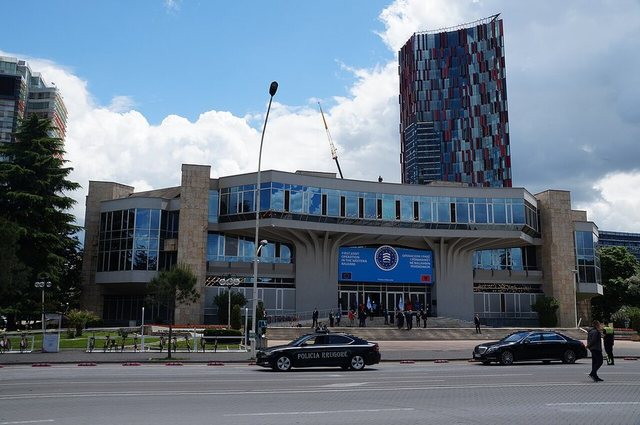
The Albanian Investment Corporation has officially opened the competitive procedure for selecting the private partner that will undertake the revitalization of the Palace of Congresses and the construction of a new multifunctional building on the adjacent land, which is expected to be a tower in the park currently located behind the Palace of Congresses.
It is one of the most symbolic and urban sensitive projects in the capital, not only because of its location in a coveted area, but also for the combination of cultural heritage, public interest, and real estate development.
At the heart of the project is a "venture-based" model, where the private partner finances the revitalization and modernization of the Congress Palace and, in return, benefits from a portion of the development area of a new multifunctional facility on the Corporation's property next to the existing building.
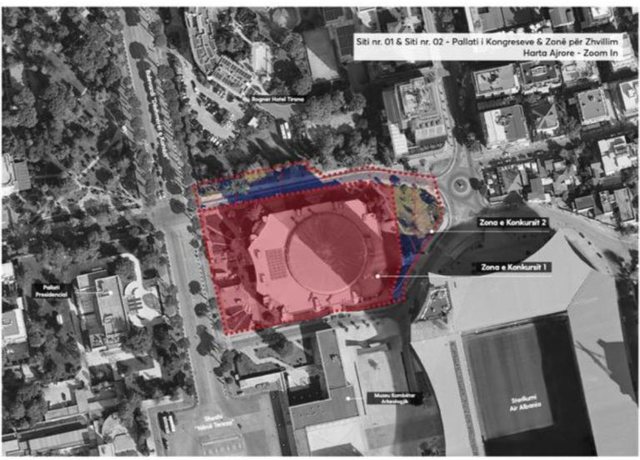
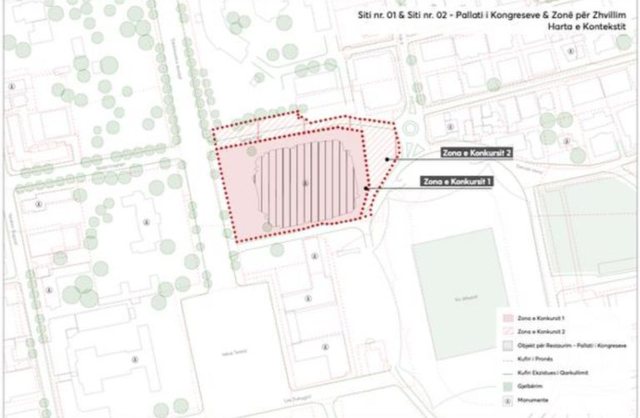
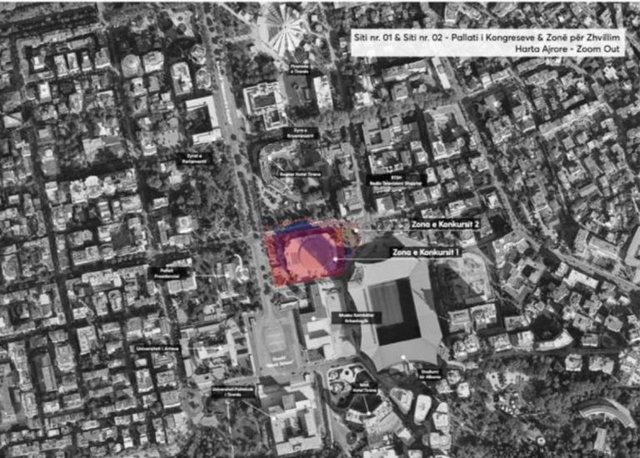
Two sites, one project: cultural monument and multifunctional "tower"
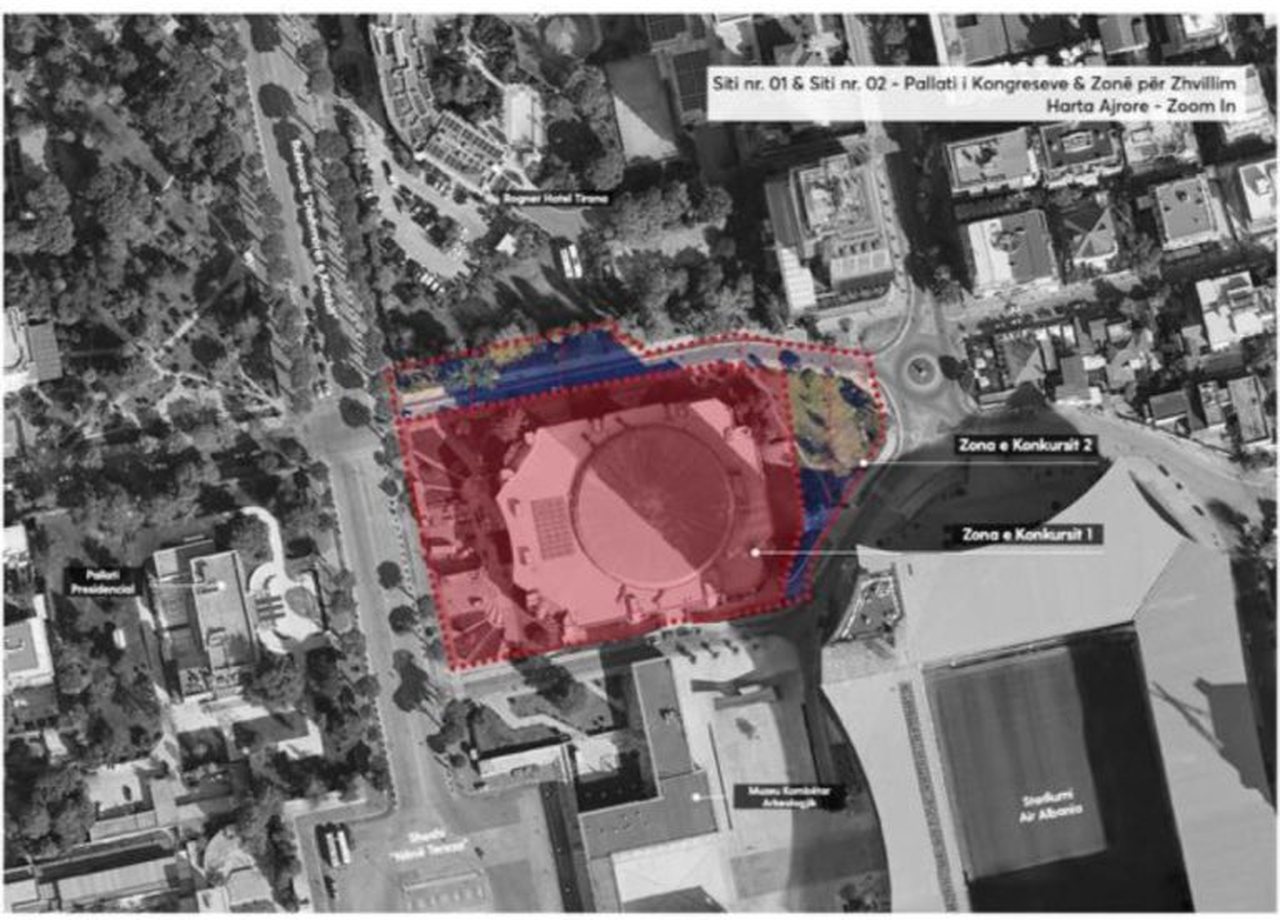
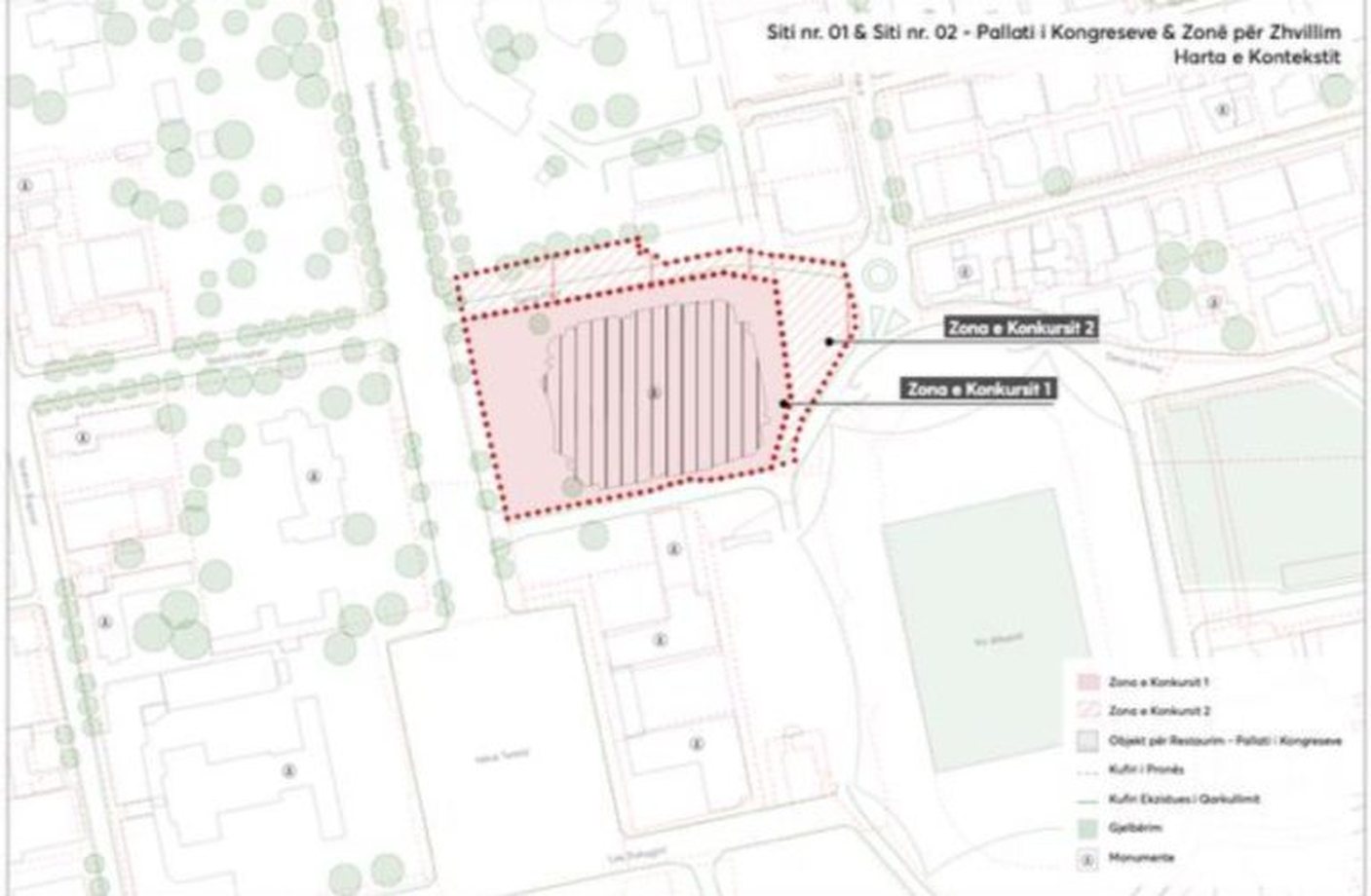
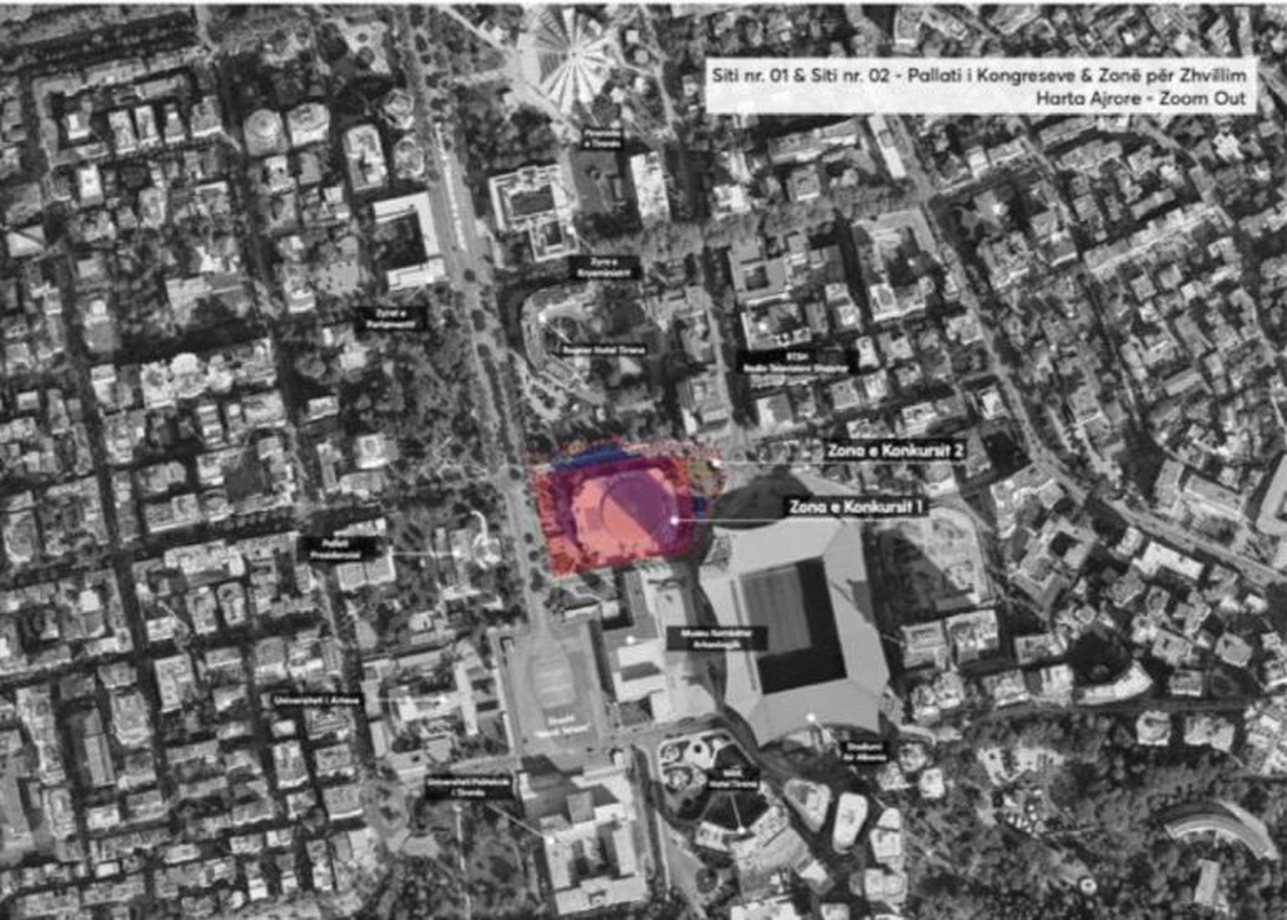
Ekofin consulted the competition documents and it turns out that the area is divided into two “sites.” The first is the Palace of Congresses itself, with a plot of 11,740 square meters and an existing construction area of 5,604.8 square meters.
This building, built in 1982–1986 and declared a Category II Cultural Monument, is not only the central stage for congresses, festivals and state events, but also one of the most significant examples of monumental architecture of that period.
The second is the land for entrepreneurship bordering the Palace, with a total area of 4,760 square meters, consisting of parcels 7/74 and 7/88 in cadastral zone 8160. It is here that the construction of a new multifunctional mixed-use building is envisaged, where accommodation, business, office, trade, services and underground parking functions can be combined. The maximum permitted construction area above ground is 50,000 square meters, while the minimum is 40,000 square meters, positioning the project in the category of large urban developments.
The two structures – the existing Palace and the new building – must function independently, each with its own identity, but in architectural and functional harmony. The challenge for the designers is that the new construction does not “suffocate” or relativize the silhouette of the Palace of Congresses, but rather emphasizes and highlights it as a point of reference in a resized ensemble.
Cultural heritage in the face of development pressure
The Palace of Congresses is part of the Historic Center of Tirana, declared by government decision in 2018. The Category II Monument status means that, above all, the volume, exterior appearance, and key architectural and decorative elements must be preserved.
The Law "On Cultural Heritage and Museums", the relevant by-laws and the rules of the National Institute of Cultural Heritage set clear restrictions on any intervention, especially for facades, travertine cladding, perimeter windows and original interior structures.
Existing technical reports speak of a load-bearing structure that is essentially stable, but that requires complete reconstruction according to Eurocodes and contemporary standards, as well as total replacement of HVAC, electrical, hydrosanitary and fire protection systems.
On the other hand, the facades, terraces, insulation, former windows with aluminum profiles and single glass, and water infiltration in the basement indicate the need for a serious, but careful reconstruction that undermines depreciation without compromising authenticity.
This places the competition on sensitive ground: how far can modernization be taken without distorting the original character? How can volumetric additions or additional spaces be integrated without creating a frozen “museum” on the one hand, or a depersonalized “event center” on the other?
Business model: revitalization without direct burden on the budget
The legal framework on which the project is based is the decision of the Council of Ministers No. 137, dated 06.03.2024, which regulates the use of state property through rent, emphyteusis, leasing or other public-private partnerships, as well as the decision No. 503, dated 10.09.2025, which transfers state property to the Albanian Investment Corporation for the implementation of the project.
In practical terms, this means that the financing of the revitalization of the Palace of Congresses is not planned as a classic budget investment, but as part of a package that is “paid off” through the real estate development of the adjacent land. The private partner will invest in the restoration and modernization of the monument and, in return, will receive a certain share of the development area in the new multifunctional building.
The basic financial criterion is clear: the Corporation’s share cannot be less than 45 percent of the total development area in the multifunctional facility. The winner, however, must offer the highest percentage above this minimum threshold. The higher the share remaining to the Corporation, the more “expensive” the private partner’s contribution to the revitalization of the Palace is considered and the more favorable the agreement is considered for the public party.
Two-stage procedure with international architectural competition
The selection of the private partner is carried out through a competitive procedure with points, structured in two phases and three envelopes. In the first phase, the qualification, the interested entities submit the legal and professional documentation, as well as two preliminary architectural draft ideas. These draft ideas are evaluated based on the Terms of Reference prepared by the National Agency for Territorial Planning, which also guarantees the technical and urban standard of the competition.
From this phase, five top-ranked candidates are selected, who are considered qualified. They must not only have architecturally evaluated project ideas, but also undertake a series of preliminary obligations: to finance the costs of the international competition, to pay the value of the detailed architectural project of the winning concept idea, to provide provisional working spaces for the public institutions currently located on the site, to bear the taxes and fees for development and construction permits, to cover the costs of registering new properties and the Corporation, as well as to guarantee the development of the Congress Palace Revitalization project itself from the Corporation's part to the new building.
Only these five candidates are invited to the second phase, where they submit a full proposal divided into two envelopes: the first envelope contains detailed architectural project ideas, while the second contains the financial offer. The evaluation is carried out in two stages within the framework of an open public competition, in the presence of an international jury, which aims to give the process transparency, professional credibility and a competitive dimension above the average standard of the local market.
How the winner is determined: the architecture and mathematics of square meters
The winner selection formula is twofold. Initially, the jury evaluates the architectural project ideas and awards prizes to the first five projects, ranking the best concepts from the point of view of respecting heritage, urban integration, functionality and sustainability. Then, in the second stage, the financial offer comes into play, where the key is the percentage of the surface area that the private partner offers to the Corporation above the basic criterion of 45 percent.
The contract is awarded to the candidate who manages to combine two elements: to be evaluated with the first prize for the architectural project idea and, at the same time, to have the most favorable financial offer on the basic criterion, in terms of the development area that passes to the public party. In practice, it is required that the architectural quality and the public interest in the form of the state's share in the new facility be balanced.
The contract also formalizes the obligation that, at the request of the Corporation, the winner will ensure the development of the Congress Palace Revitalization project according to the winning project idea, where the value of this project is covered by the Corporation's share of the new multifunctional development. In theory, this creates a mechanism where the monument benefits from a full cycle of restoration and modernization, "paid" for by the income generated by the real estate development of the adjacent plot.
Expectations and questions: between public interest and the market
From the perspective of urban policy and public finance, this model aims to get the most out of a strategic state asset: to preserve a monument, make it functional according to contemporary standards for conferences, hybrid events and cultural activities, create modern workspaces for the administration and, at the same time, generate sustainable economic functions through the new multifunctional building.
However, the questions that arise are typical of any project of this nature: to what extent will the logic of real estate development prevail over care for heritage? Will the international competition succeed in producing a refined architectural solution, which sees the Palace of Congresses not as an obstacle, but as the central value of the project? Will the Corporation's share of the proceeds be truly proportionate to the value being created and the obligations assumed by the private partner?
The deadline for submitting applications is January 26, 2026, 3:00 PM, and the interest that this project is expected to arouse among prestigious architecture studios and large developer groups will also be a test for Tirana itself: how attractive the Albanian capital is today as a scene for complex interventions, where heritage, economy and urban politics are intertwined. Beyond legal formulas and percentages of surfaces, the final result will be seen in a much simpler plan: how the Palace of Congresses and the ensemble that surrounds it will look and function, after this process. / ekofin.al