Is this police force professional and capable of handling violen...
/ 2026-10-16 18:54:07Focus


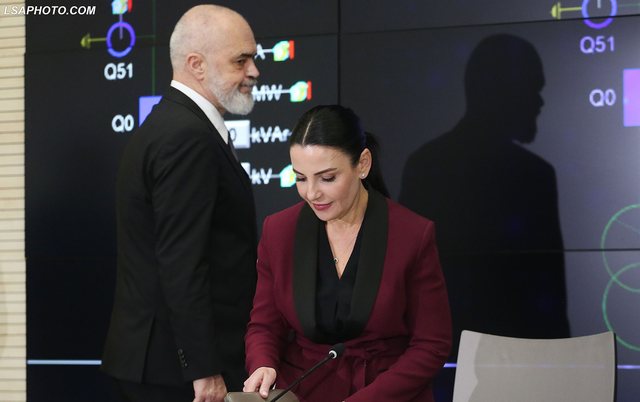
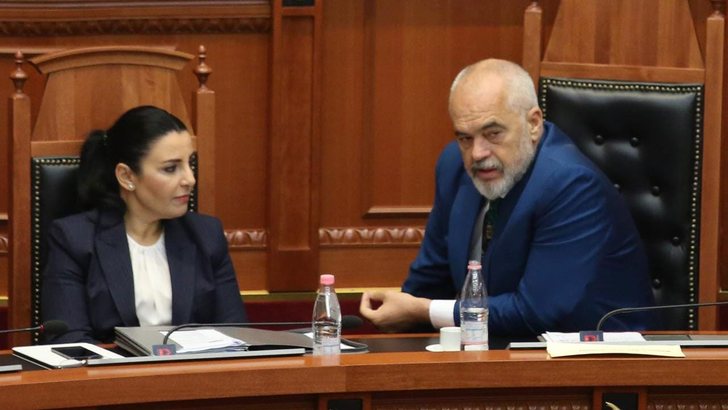
Prime Minister Edi Rama declared on Friday that he has decided to appeal the Special Court's decision to suspend Deputy Prime Minister Belinda Balluku, calling it a 'brutal act of interference in the independence of the Executive Branch'.
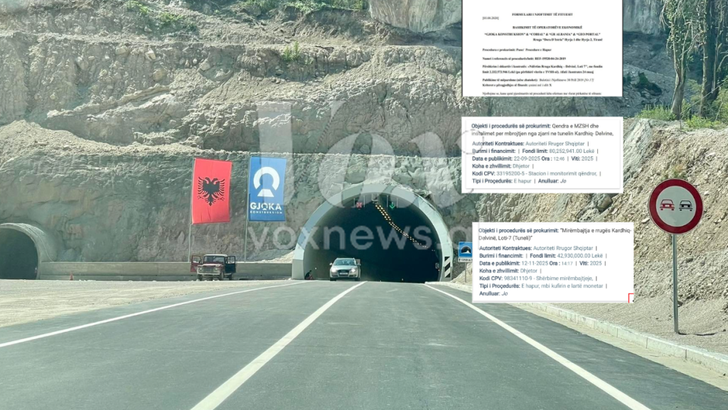
Two days ago, the Special Court against Corruption and Organized Crime decided to suspend Balluku from duty, who is facing charges of violating equality in tenders in at least two cases, while investigations into him continue.
The decision obliges her to cease exercising the duties of Deputy Prime Minister and Minister of Infrastructure and Energy, while the titles of duties she holds can only be removed upon dismissal by the Prime Minister or resignation.
But contrary to expectations, Rama has decided to challenge this court decision by appealing it to the Constitutional Court, which for the opposition shows an "anti-democratic reflex" and being a collaborator in the affairs for which Balluku is accused.
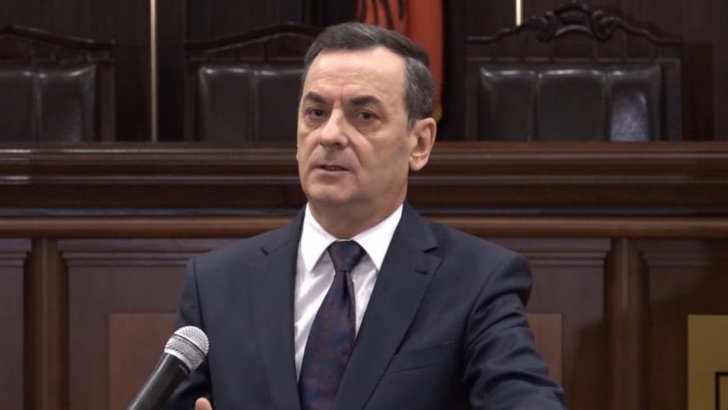
The chairman of the DP parliamentary group, Gazment Bardhi, said in a press conference on Friday that "justice is being openly challenged" and marks a step back for the country with democracy and the rule of law.
"Instead of protecting the interests of Albanians, the country's prime minister is officially the lawyer of a defendant for abuses with public tenders," said Bardhi, among other things.
The decision of the socialist majority to take Balluk's suspension to the Constitutional Court is not expected to produce a change in the court's decision, which, according to lawyers, is based on existing practices and laws in force.
For lawyer Jordan Daci, appealing is a legal right and the GJKKO decision needs 'a constitutional test', given that it is a precedent for the application of articles of the Criminal Procedure Code at the level of government officials. But he told BIRN that "with existing constitutional practices this decision passes the test".
He links his belief to the case of the leader of the Democratic Party, Sali Berisha, who appealed as unconstitutional the security measure, "Compulsory appearance", by the Special Prosecution Office as a restriction of the MP's freedom, but the Constitutional Court ruled in favor of the prosecution.
Daci links the creation of a precedent by the Constitutional Court with a direct impact on the assessment of the measure of suspension from office.
"Since the Court has considered it permissible to impose restrictive measures against MPs as well, there is no longer a constitutional basis to claim a higher standard of protection for ministers or the prime minister," analyzes Daci, who admits that in this practice there is a problem of violating the principle of separation of powers and constitutional balance.
Meanwhile, lawyer Gentian Serjani sees the GJKKO decision as entirely based on Article 135 of the Constitution and supported by Articles 233 and 242 of the Code of Criminal Procedure.
“Following the same logic, if Mr. Rama opposes the implementation of this decision in the Constitutional Court, the question arises: if the GJKKO had imposed a more severe coercive measure, such as prison arrest, would Mr. Rama have again opposed the implementation of the decision by preventing the arrest,” Serjani asks in an analysis for BIRN.
Regarding the interpretation of the articles of the Criminal Procedure Code, which state that this measure does not apply to persons elected under the electoral law, Serjani argues that this category includes MPs and local elected officials; mayors and municipal councils.
"In the case of Ms. Balluku, we are not dealing with a person directly elected under the electoral law for the functions for which the suspension measure has been issued. The GJKKO decision is related to the exercise of her duties as deputy minister and minister, duties that stem from the appointment of the Prime Minister, not from the vote of the citizens," he says, adding that "therefore, this norm cannot be interpreted as protection for her executive functions."
Serjani considers the Prime Minister's claim that his government is left without a deputy prime minister unfounded, because according to him, "ministerial positions are not functions linked to an inseparable individual, but to whoever the Prime Minister decides to appoint."
"In this case, the Prime Minister simply had to appoint a replacement, respecting the decision of the judiciary, that new judiciary which Mr. Rama has often praised as an achievement of his government," he adds.
Prime Minister Rama claimed that the suspension of a government member from the judiciary was "a unique case in the history of Europe...", but political experts say that this claim is unfounded and, more importantly, it contradicts the spirit of the new judiciary.
Afrim Krasniqi, director of the Institute for Political Studies, brought to attention several similar cases around the world where senior officials have been suspended by court decisions, while reminding the prime minister that the European standard that Albania seeks to join foresees ethical, political and institutional obligations where officials accused of corruption resign and then face justice.
"The practice, according to which the resignation is rejected, the state government is used against the prosecutor/judge and the implementation of the judicial decision is refused, has fundamental consequences on the quality of the state and democracy and, in constitutional terms, can lead to an unconstitutional position of the decision-making body itself, the prime minister or the government," he writes in an analysis published on Facebook.
According to Krasniqi, "whoever advised the prime minister differently only thought with the short-term calculation of the "83 mandates" force, not with constitutional logic, long-term consequences and the concept of the rule of law."
Irena Beqiraj, former deputy minister in the Rama government, and later a critic of this government, also commented on the prime minister's statements, speaking of a "culture of instrumentalization of the law" by the socialist majority.
"This is a unique case, because it is also a unique case that a minister and also Deputy Prime Minister is charged twice for the same criminal offense and is not resigned or dismissed," she ironized Rama's statement in a Facebook post.
On the other hand, Serjani brings to attention that the justice reform was approved precisely with the aim of eliminating untouchable officials and if we are to remain faithful to the spirit of this reform, we must also accept such decisions from the new judiciary. / Reporter.al