Is this police force professional and capable of handling violen...
/ 2026-10-16 18:54:07Focus


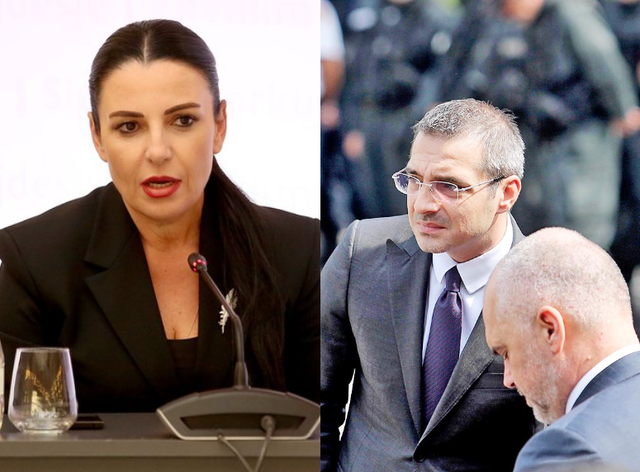
A video recently circulating on social media has brought the issue of political accountability standards in governance vis-à-vis justice back to the center of public debate.
We have two different situations: that of former Interior Minister Saimir Tahiri , who resigned as soon as investigations against him began, and the current case of Deputy Prime Minister Belinda Balluku , who has preferred to continue in office despite public criticism and suspension by the GJKKO.

Tahiri's resignation
Saimir Tahiri voluntarily left office when his name was implicated in a case investigated by the judiciary.
His decision was interpreted by part of the public as a political act intended to avoid creating institutional pressure and aggravating the situation of the government of the time.
However, although the move was praised by some as a benchmark of accountability, Tahiri's critics saw the resignation as merely a tactical move, while the legal processes that followed remained the subject of lengthy political and legal debates.
Balluku facing justice
Unlike Tahiri's case, Belinda Balluku has chosen not to resign from her position, emphasizing that justice institutions must do their job and that she is ready to cooperate in any required procedure.
The GJKKO went even further by suspending him from his duties as Deputy Prime Minister and Minister, but Balluku still chose not to resign.
Double standards?
The issue of political accountability in Albania remains a slippery slope, where precedents are rarely followed consistently.
The Tahiri case is an example that should be taken into consideration by other senior officials, but in the meantime, the practice of voluntary resignations remains unusual.
The video currently circulating has reopened the discussion: should a minister resign the moment an investigation is published, or should a court decision be awaited before taking such an important step?
Opinions are divided, but one thing remains clear: the issue of governance standards continues to be one of the most prominent topics of the Albanian political debate.
The confrontation between the two cases of " Tahiri and Balluku " is not just a personal comparison, but a reflection on society's expectations of politics and the way high-ranking officials react when placed under the scrutiny of justice.
©CopyrightVoxNews
This article is exclusive to VoxNews, and is copyrighted under Law No. 35/2016, "On Copyright and Related Rights". The article may be republished by other media only by citing VoxNews and placing the source link at the end, otherwise any violator will be held liable under Article 178 of Law No. 35/2016.