Is this police force professional and capable of handling violen...
/ 2026-10-16 18:54:07Focus


By Federico Rampini, Corriere della Sera
Xi Jinping does not watch the American version of the TV series "The Problem of the Three Bodies" (on Netflix). And yet there is a scene that speaks for him as well. She is both the most beautiful and the most terrifying. The opening scene of the film takes place in the midst of the Maoist Cultural Revolution.
A Red Guard tortures a physics professor to death. The current Chinese president has suffered under his back the follies of that decade (1966-1976), when Mao Zedong plunged the country into violence and chaos to have absolute power.
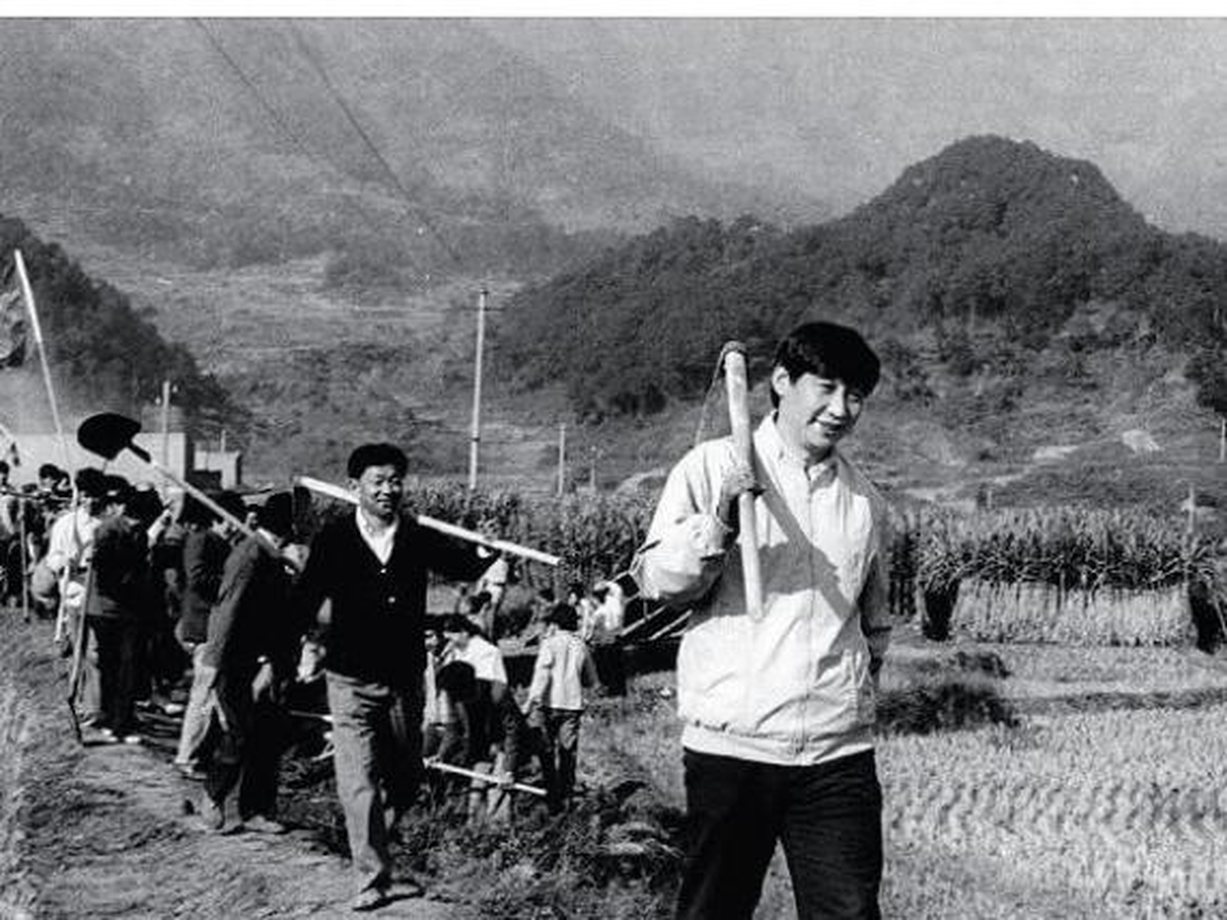
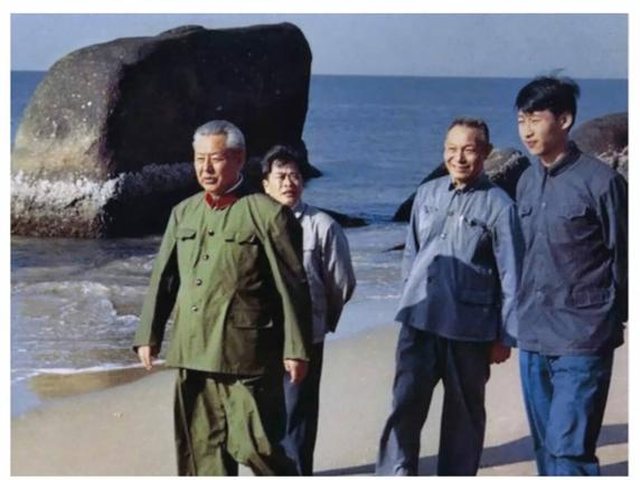
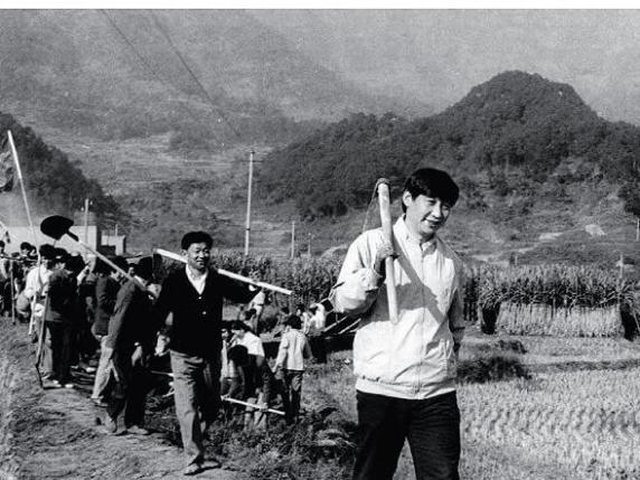
Schools and universities were closed, and Xi like many of his generation was sent to the countryside to work the land, losing precious years to his education, and bringing no meaningful benefit to agriculture. Things went even worse for his father, one of the leaders of the Communist Party.
A former close associate of Mao during the war against the Nationalists, he was among the leaders who were publicly humiliated and persecuted. However, Xi treats that infamous period of national history with respect, almost displaying a kind of nostalgia.
He forbids mention of at least half a million dead during the civil war. He says to today's youth: "Learn to chew your bitterness!". This seems almost like an implicit rebuke to Gen Z's affluence and their high expectations. But his appeal seems to fall on deaf ears, as many young people prefer to stay at home with their unemployed parents, rather than accept a job in a factory or in agriculture.
During my recent visit to China – my first return since the pandemic – I got the impression that Xi is doing a kind of countdown. So he is calculating how long he will need us Westerners, before he is freed from all addictions. Of course, he is not interested in foreign tourism, since the People's Republic is already an almost impenetrable "digital bubble".
Those coming from abroad, without a Chinese app and a local credit card or bank account linked to Weixin or Alipay (mobile payment platforms), are unable to do practically anything: book a train ticket, to visit a museum, pay a taxi or a plane ticket.
On the other hand, everything works perfectly for those who live there. The digitization of everyday life is much more advanced than in the West, but there is no interaction with the outside world. The only foreigners Xi still cares about are top-level managers who bring capital and technology.
But even these not for long. From being a major consumer of German technology for 30 years in a row, today the People's Republic is taking Germany by storm with its electric cars and solar panels. Xi only welcomes those who bring him technologies that Beijing has yet to copy.
He is angry with America over the latter's embargo on supplies of sophisticated microchips, a sanction imposed by Biden. But he is already working to produce them in the country, and maybe one day the big Chinese company Huawei will succeed.
Meanwhile, the foreign manager community in Shanghai has halved compared to pre-pandemic levels. As Beijing also closes its doors to the foreign press and reduces visas for journalists, the quality of our information about the world's second superpower inevitably weakens.
But this does not bother X at all, on the contrary. In the West, and especially in the USA, there is a lot of talk about the crisis of the Chinese model. The most fashionable phrase: The Asian superpower has already reached the "peak", the peak of its rise, and the decline has already begun, which does not know where and when it will end.
In fact, the signs of trouble are real: youth unemployment is at 20 percent, and there is a serious crisis in the real estate sector. However, since the beginning of this year, there has been a recovery of economic growth, 6.6 percent of GDP.
Of course, it is far from the golden age, when in the period 1999-2008, there was annual growth of 10 percent or even more. The nature of this recovery is also known: led by exports. And it's us Westerners who are getting Xi out of trouble. Our markets face a new invasion of "made in China" products.
As the communist leadership plans to transition to less and less dependence on the West, it is convinced that we will not be able to free ourselves from them. There are those who say that everything that is happening is based on Xi's vision.
The domestic consumption crisis originates mainly within the country and is caused by government policies. Returning to his Maoist roots, Xi has expressed his disdain for "Western consumerism" for years, describing it as one of the signs of decay.
And surprisingly for a superpower that emits more CO2 (carbon dioxide) into the atmosphere than Europe and America combined, and that owes its material well-being to its role as the West's 'main factory', Xi's China a moralistic hostility with some environmentalists towards the consumer society.
Let the Westerners squander, his nation must tighten its belt, adopt implicit austerity measures, to channel investment into strategic sectors: advanced technologies, batteries and electric vehicles, armaments.
If the world is moving towards de-carbonisation, the People's Republic already controls the extraction, refining and processing of rare minerals and essential ingredients. What they think about us, Xi and his closest collaborators have told us several times. The head of the Chinese secret service, Chen Jixin, has declared that "the East is rising, the West is falling".
In the official document approved by the Communist Party on the occasion of its 100th anniversary, it is said that "China is closer than ever to becoming the center of the world". Xi himself vigorously accuses America of wanting to "westernize China".
After meeting Putin recently in Moscow, the Chinese president described the upheaval in the balance of power between the blocs this way: "The changes we're seeing now usually happen once in a century, and we're leading them."
In any conflict, Beijing has no hesitation whatsoever. He always takes the side of the anti-Western forces: Russia, Iran, North Korea. Not feeling itself in decline, the Communist leadership is working to build an alternative architecture of the international order, aiming to replace what Xi regards as an order that is still too "American-centric".
In the first decade of his power, he initiated the implementation of three global projects, which are the cornerstones of the new order. In 2013, the Belt and Road Initiative replaced and expanded the New Silk Roads: a gigantic plan to build huge infrastructures around the world, to export the "Chinese model" to developing countries, to connect countries advanced with Beijing, and to solve the problem of over-capacity production of the national industry.
In 2021 it was the turn of the Global Development Initiative, followed a year later by the Global Security Initiative. The first targets the needs of developing countries; while the second aims to build an Asian NATO centered on China, a network of security arrangements to counter the alliance systems of the West.