Is this police force professional and capable of handling violen...
/ 2026-10-16 18:54:07Focus


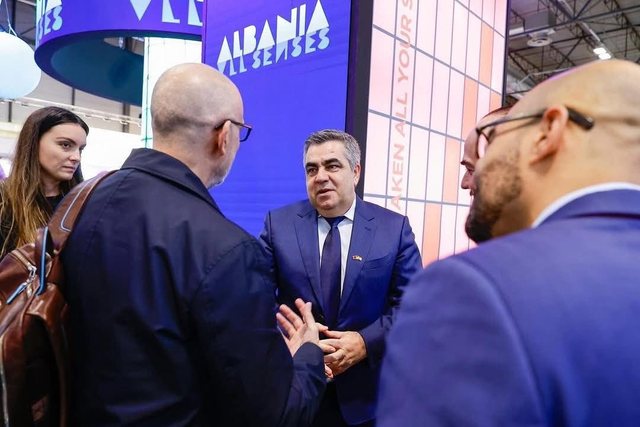
Albania is currently experiencing a defining moment in its tourism trajectory. In just a decade, the country with its Mediterranean and Balkan roots has gone from a virtually unknown destination to one of the fastest-growing markets in Europe, with record numbers exceeding 12 million international visitors in 2025 and forecasts for continued growth in 2026. Before the pandemic, it hosted around 6.4 million tourists and the sector represented just over 20% of GDP; today, its contribution is around 25-26%, driven by improved air connectivity, increased routes to European capitals and the expansion of hotel infrastructure and alternative accommodation.
The country has benefited from a combination of factors: the Albanian Riviera with its pristine beaches, heritage sites such as the Butrint National Park, historic cities such as Berat and the urban dynamism of Tirana, together with competitive prices and a Mediterranean authenticity still largely untapped. This boom has sparked the interest of major international operators: the Spanish company Meliá Hotels International is developing several projects, including the upcoming Gran Meliá Tirana, while groups such as Accor are developing new luxury offerings on the coast, progressively raising the reputation of the destination.
The government has placed tourism at the heart of its development strategy, aiming to combine economic growth with territorial sustainability. In this context, Albania has decided to open a Tourism Office for Spain and Portugal, based in Madrid and coordinated by the consulting firm LeadPro Advisors, to strengthen promotion in a still small market and attract Spanish investment in hotels.
Under the leadership of the Minister of Tourism, Culture and Sports, Blendi Gonxhja, the country is working to consolidate quality standards, regulate coastal development and preserve its natural heritage. Albania has moved beyond the emerging destination stage and is progressing towards greater maturity, visibility and recognition within the European tourism landscape. During the latest edition of FITUR, the Minister spoke with Forbes Travel to share his country’s tourism strategy.
Albania has grown very quickly as a tourist destination. How do you interpret this moment?
We see this moment as both an opportunity and a responsibility. Albania has rapidly attracted international attention, confirming the strength of our assets and the growing interest in the country as a gateway to the Balkans.
However, this rapid growth also requires a very clear direction. Our priority is no longer simply to increase numbers, but to improve quality: better services, longer stays and tourism more evenly distributed across regions and throughout the year. This is essential for tourism to remain sustainable and beneficial to local communities.
As Albania is still in the early stages of tourism development, we have an opportunity to carefully guide this growth. Our role as a government is to ensure that tourism development protects our natural and cultural heritage, while generating sustainable employment and long-term economic value.
Why is Albania particularly attractive for tourism investments now?
Albania is attractive to investors because demand is growing. Investors are gaining access to a destination that is gaining international visibility, but which still offers space to develop high-quality and well-planned projects.
We have invested significantly in connectivity and infrastructure, reducing many of the practical barriers to investment. At the same time, we are improving planning processes and regulatory clarity so that investors can make decisions with a long-term perspective.
We are very consciously promoting investments that raise standards. Albania is positioning itself as a gateway to the Balkans for international travelers, and we want projects aligned with this role: initiatives focused on quality, sustainability, and lasting impact, not short-term volume.
Several major international hotel brands are already operating in Albania. What does this mean for the country?
The arrival of major international hotel brands is one of the clearest signs of a changing perception of Albania. Leading international groups such as Meliá Hotels International, along with Hilton, Hyatt, Marriott, Maritim, Radisson and Accor, are investing in our country with a long-term vision. Their decision reflects a growing confidence in the country’s stability, connectivity, workforce and future demand.
Meliá's role has been particularly important. As one of the first major international groups to establish a strong presence in Albania, it helped demonstrate that the country could successfully host high-end hotels, in line with the standards and expectations of the most demanding international travelers. This was key to attracting greater international interest.
On a broader level, the arrival of these brands signals a shift in Albania’s international positioning. The country is no longer perceived as a niche or emerging destination, but is gradually integrating itself into the Mediterranean tourist map. Beyond increased visibility, the impact is structural: global brands are raising standards in service, training and sustainability, driving a shift from price-based competition to a model focused on quality, sustainability and long-term value.
As tourism grows, what practical changes do you notice in the way the sector operates on the ground?
One of the most noticeable changes is the way visitors travel around the country. Tourism is no longer exclusively focused on the coast. It is increasingly common for travelers to combine coastal destinations with historic cities such as Berat and Gjirokastra, as well as mountainous and rural areas. This change is due to improved accessibility and a more diverse tourist offer.
Clear transformations are also visible at the business level. More and more hotels, restaurants and tour operators are investing in staff training, service quality and organization improvement. International visitors have higher expectations and local operators are realizing that competing on price alone is no longer sustainable. This is leading to more professional operations and an overall improvement in the visitor experience.
How does Albania use its archaeological and cultural heritage to promote itself internationally?
Albania promotes its archaeological and cultural heritage as a central element of its international tourism identity. Within a relatively compact territory, visitors can discover an extraordinary concentration of historical sites that reflect Albania's role as a crossroads of Mediterranean and European civilizations.
Iconic sites like Butrint, Apollonia, and the Durrës Amphitheater highlight the depth of the country's ancient history, while historic castles and World Heritage cities like Berat and Gjirokastra offer immersive cultural experiences, supported by museums and living traditions.
By placing heritage at the heart of tourism promotion, Albania positions itself as a high-value cultural destination, encourages year-round travel, and invites visitors to discover the country as a journey through history, culture, and identity.
How is Albania encouraging longer stays and deeper exploration of the country?
One of Albania's greatest strengths is the diversity of experiences it offers, with the clear objective of creating year-round tourism. Visitors can easily combine coastal excursions with historic cities, rural landscapes and mountainous areas such as the Albanian Alps, going beyond the typical short-stay, single-destination model.
Destinations like Valbona and Thethi in the north, along with historic towns like Berat, Kruja, and Gjirokastra, are gaining popularity on travel itineraries. These places offer unique experiences - nature, hiking, traditional villages, and cultural heritage - that naturally encourage visitors to extend their stay.
Most destinations are located just a few hours away from Tirana International Airport, making travel to many destinations convenient. This allows visitors to combine coastal, cultural and natural beauty in a single trip, extending their stay and enjoying a richer and more balanced tourist experience.
How does Albania protect its identity while welcoming international investment?
Protecting Albanian identity is treated as a practical priority, not an abstract concept. The architecture, traditions, gastronomy and daily life of communities are among the country's most valuable tourism assets, and development increasingly focuses on strengthening them rather than replacing them.
In various regions, historic structures are being preserved and adapted for contemporary uses, respecting scale, materials and local lifestyles. Traditional buildings are being rehabilitated to accommodate visitors without losing their integration into the urban or rural environment, allowing tourism to coexist with the daily life of communities. This approach favors local ownership, supports traditional crafts and preserves the character of historic settlements.
These experiences show that international investment and expertise can generate sustainable value when aligned with local context and identity. When development respects heritage, scale and social structure, authenticity becomes a competitive advantage, ensuring that tourism growth strengthens local identity and generates sustainable economic returns.
How do Albania's gastronomy and diverse tourism offerings strengthen its position as a year-round destination?
Albanian cuisine is deeply rooted in its regions and landscapes, making it one of the country’s strongest and most authentic tourist attractions. Coastal areas are known for their fresh fish and Mediterranean flavors; rural and mountainous regions preserve a rich tradition of locally sourced products; and historic cities combine culinary heritage with local products such as olive oil, wine, dairy products, and seasonal produce. This regional diversity allows visitors to experience cuisine as an integral part of the destination, not just an additional service.
At the same time, Albania offers great potential in numerous tourism segments. The coastline promotes sun and sea tourism; the mountainous regions are ideal for hiking, adventure tourism; and international sporting events - such as cycling races, marathons and international competitions - position the country as a developing sports tourism destination. Wellness tourism, thermal spa experiences and the MICE sector (Meetings, Incentives, Conferences and Exhibitions) complete a diverse offer that attracts visitors all year round and consolidates Albania as a comprehensive and multi-seasonal destination.
His career spans national politics, urban management, and the position of Minister of Economy. How does this experience influence his approach as Minister of Tourism?
The current development of tourism requires a coordinated and long-term vision. During my time as Minister of Economy, Culture and Innovation, the focus has been on creating a sustainable framework for investment, fostering innovation and ensuring that tourism growth contributes to the economic and cultural development of the country. Clear policies and stable regulations are essential for attracting quality investments and moving towards higher value-added tourism.
My experience as Deputy Mayor of Tirana and as Director General of Road Transport has highlighted the extent to which tourism is linked to the daily functioning of cities and transport systems. Urban planning, mobility, public spaces and access to cultural sites directly impact the visitor experience and the sustainability of destinations.
As Albania moves from a phase of rapid expansion to a phase of consolidation, these perspectives become even more important. Tourism must be planned and regulated as part of broader development policies, so that growth improves the quality of life for residents, while offering visitors an authentic and high-quality experience. /Forbes Travel