Is this police force professional and capable of handling violen...
/ 2026-10-16 18:54:07Focus


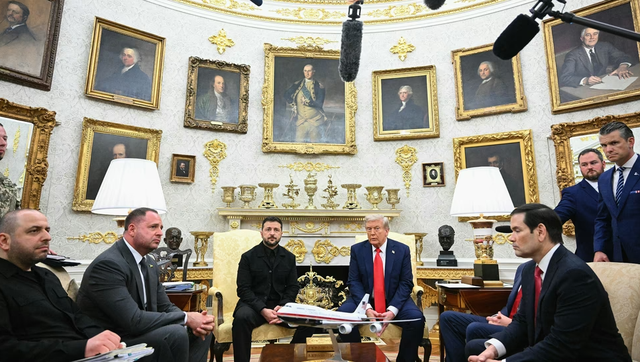
The meeting at the White House today brought some progress toward peace — but things could have been much worse.
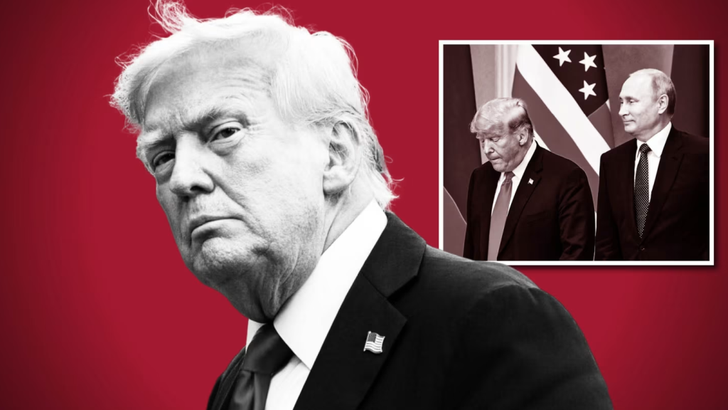
The fallout from Donald Trump’s summit with Russian President Vladimir Putin last week in Alaska continues to grow. On Friday, Trump traveled to a seemingly impromptu meeting with Putin, embarrassing America by hosting as his guest of honor the man who ignited the biggest war in Europe since Hitler. The entire failed summit seemed driven more by Trump’s desire to change the media cycle (especially after weeks of anger from his base over the Jeffrey Epstein dossier) than by any real chance of reaching a deal.
What happened after the handshake, when the two men were locked in a closed-door meeting in Anchorage, remains a secret, but it was hardly pleasant for the American president. When he appeared before the media, Putin spoke first and said nothing of substance, except to reiterate his stance on “addressing the root causes” of the conflict. Trump, tired and unsure, stammered a few short sentences without taking questions. Later, in a calm interview with Sean Hannity, he suggested that Volodymyr Zelensky “should accept” Putin’s deal — an implication that the US supports the Kremlin’s demand for a freeze on the front lines and the partition of Ukraine. Such a solution would give Russia breathing room, leaving it free to strike again in the future.
Trump’s attempt to whitewash the Anchorage debacle did not convince either Zelensky or European leaders. In an unusual display of diplomatic concern, the Ukrainian president arrived in Washington two days after Trump returned (from Alaska), accompanied by five NATO heads of state, the alliance’s secretary general, and the president of the European Commission. This was a stark contrast to the previous visit, when Zelensky faced mockery and insults from Trump and Vice President JD Vance alone. The European reaction this time was the clearest evidence yet that Trump was on his way to selling out Ukraine’s interests to the Kremlin.
Fortunately, it seems that someone at today’s meeting convinced Trump not to move forward with the idea of exchanging territory for a “temporary peace.” This was especially important, since the White House had a map of Ukraine colored almost to Putin’s liking. At the end of the discussion, Trump called Putin and then published a vague statement on Truth Social, saying that he had secured the Russian leader’s agreement to a bilateral meeting between Putin and Zelensky.
The plan – to the extent that it exists – to bring Zelensky face to face with the man who tries to kill him every day, with the aim of then holding a three-way meeting with Trump, seems absurd. The US president has abandoned calls for a ceasefire, claiming instead that he has “stopped wars without ceasefires”. But any serious meeting requires shared objectives – something that is completely lacking here. Without additional US sanctions or new arms supplies to Ukraine, Putin will most likely use a meeting with Zelensky only to repeat the ultimatum: hand over territory and legitimize his gains.
For their part, the Russians are being more cautious about Trump’s offer. The Kremlin’s reading of the phone call spoke simply of “continuing direct talks” and “increasing the level of contacts.” In practice, this means nothing: Putin can pretend to think while continuing to destroy Ukrainian cities.
However, things could have gone much worse. For now, the Europeans seem to have dissuaded Trump from the idea of handing over Ukrainian territory in exchange for a temporary peace. That in itself is a minimal achievement: a dangerous plan that would have given Putin territory in a foreign country has been averted. If the promise of more talks simply pushes the decision forward and avoids a US-imposed partition of Ukrainian territory, that is good news for Kiev.
But in the end, Trump simply bought Putin time. Arranging a meeting with Zelensky while the war is ongoing will take time, and the likelihood is that the result will be nothing more than a repetition of the Kremlin's demands, the denunciation of Zelensky as an obstacle to peace, and the continuation of Russian aggression.
Perhaps the Europeans did the best they could: they somewhat strengthened Trump’s position after his tough showdown in Alaska. But the reality remains clear: Trump’s spectacle did not bring any substantial progress. Putin’s war continues. Yet Alaska is still part of the US, America is still in NATO, and Kiev remains free — and in Trump’s second term, perhaps that counts as a “good enough” day.