"The fate of the homeland is in our hands" - An appeal by Ismail...
/ 2026-10-18 16:09:54Focus


...Mehmet Shehu had been a high-calibre agent, of several agencies at the same time, and because the Party discovered it, he killed himself. - It's good that Mehmet had time to report from one agency to another...
Excerpt from the novel "Mossanga"
In recent decades, it has been proven that most discussions and debates on the communist past in Eastern European countries have mainly focused on the problem of preservation of collective memory and how its pages should serve the history of a nation. Collective memory is an essential factor in shaping the "historical politics" of every nation and state, which is aware of its past.
It is indisputable the fact that the historical education programs of societies, even in literature, are always gaining more and more knowledge, which means that the cycle of time within the individual is making its necessary trajectory. Collective memory processing processes play an indispensable role in shaping the future, in raising the awareness of generations.
Under the taste of a time for which there is a need to write, we suddenly come across an unusual novel.
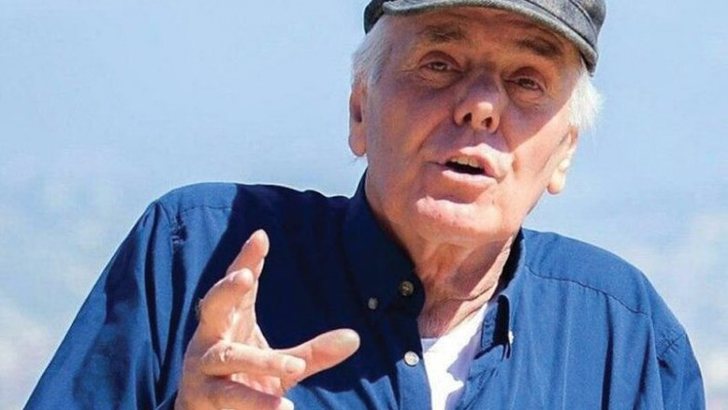
'Mossanga' by Fate Velaj.
The novel is a voice of the time, an artistic work where among a multitude of fast-paced events that lie in a well-constructed structure, the reader learns what was natural in socialist Albania. Life in a not very small city like Vlora to then extend to Tirana, the capital of a country totally isolated even from the socialist camp itself where he had willingly decided to participate. A Vlora that continues to welcome foreigners for centuries, melting its fate into their skin.
Maybe this is the reason why the leaders still continue to covet it as a city, yesterday, today and tomorrow?
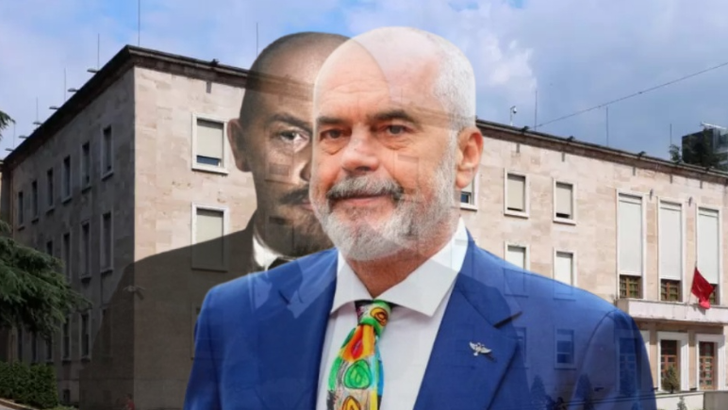
In the novel, we learned that Enver Hoxha wanted to make it like the sunny Alexandria of Egypt. Today, it is Edi Rama who still does not confess the secret dream he has for this city. In fact, what is it that torments him?
It will remain a mystery even for modern writers like F. Velaj.
This city with a deep bank of 'passions' as spoken by its inhabitants apparently seduces.
And his literature suddenly takes on a testimonial character. A literature with very little attention from Albanian authors.
At all times, testimonial literature has been part of the history of writings, so you cannot take "Mossanga" out of your hand without notes outside the text. The author, for each event included in the content, never forgets to provide reference evidence for the era, expressed in metaphorical words and fantastic descriptions of nature, relaxing us from one moment to the next from the anxiety of the time.
Precisely placed in the functions of a witness, chronicler or historian, the literature of F. Velaj in general and "Mossanga" qualitatively, is based on the good tradition of another literature, which today in teaching and not only European schools is also serving as a evidence of a not very distant time. The communist era, about which little is still written today.
The events in the novel know a time-span that is not very usual for a novel. It describes the communist Albania of 1966 with its liberalization, the dark years under the great winter until the arrival of Year Zero.
The beginning again. Shock again. The year 1991, when the characters of the book follow their fragile fate as they leave Albania.
At all times, literature and history have had a mutual conditioning. During the last three decades, this conditioning has appeared in two main forms: as the attitude of literature towards history and as its completion, interpretation and explanation. And maybe this is the time when testimonial literature is experiencing a real flood, becoming a stable part of literary trends.
'Mossanga' is the most beautiful full proof in its meaning. Filled with stories from the world of the communist birth, with well-sculpted characters, there in the room of the boys from the Congo you could find everything the author writes: pain, love, longing, humor, joy where with the absurdity of an unknown future you could have the desire to sing but also to dance.
Cry too.
Although the fear of time was an unavoidable weight.
Albania was a country completely isolated in its own poverty. An isolation that produced darkness where beyond the darkness she "ate" her sons every day. Beyond that, he did not spare other sons. Those who had arrived there from the belief in the same ideology, the Marxist ideology that divided the world in two.
They were from Congo. Six girls and three boys. With everyone's fragile fate, the party in the system did not spare anyone.
Memories clothed in art, by their very inner character viewed not only as literature, they are complementary secondary sources for the writer and also secondary forms of his literary development. Therefore, browsing the pages of the novel filled with exciting events, it is clear that literature and truth are often presented as alternative factors; where literature risks embellishing the truth, while the truth unwittingly risks to some extent the loss of aesthetic value.
But Fate managed to preserve the discovery of the human interior as well as the unspeakables of a by no means easy time in the midst of this danger.
A united Europe is increasingly reaching back to its historical roots as it searches for a cord that binds its common culture over collective memory.
The novel "Mossanga" by Fate Velaj with such a subject, so debatable in the European university environment, is a clear proof of this. And a Mausoleum of another Albania.