"The fate of the homeland is in our hands" - An appeal by Ismail...
/ 2026-10-18 16:09:54Focus


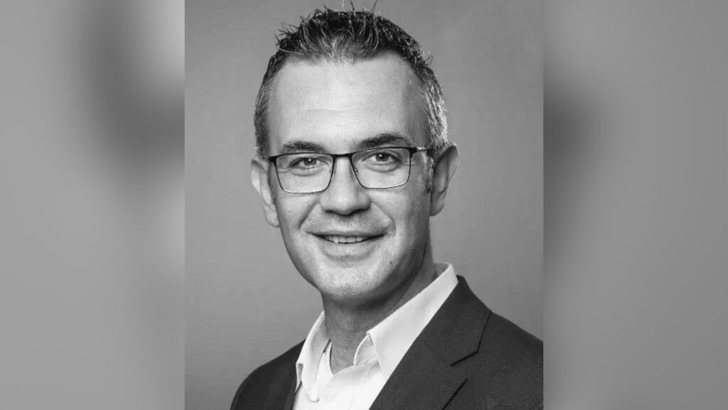
The premature departure of Gerti Bogdani was truly shocking: only 44 years of life, a high school graduate and a student with a gold medal, a politician who stood out for his civic approach, far from the bullshit, blindness and mediocrity of the ardent militants who, unfortunately, often make a career and climb in the first ranks of political echelons. The large participation in the funeral tributes proved that Gerti Bogdani left behind the model of a man with high values who is widely appreciated and respected, beyond the party fences.
However, the values of the man and the politician, brought into relief by the sudden and very premature death, prompt you to join the question that has been repeated often on screens and social networks these two days: why all the wings of politics waited death to be expressed with such assessments?
Based on what the politician said about the deceased, many reason: why these assessments were not articulated in the living, why Gerti Bogdani did not continue to be a deputy, not only a deputy, but also a member of the governing bodies in the parliament, in his party, etc. ? The deceased was widely praised, but the reaction to his death re-raised big questions about morality and hypocrisy in politics and beyond.
2.
The order to value and appreciate a person, especially after death, is a phenomenon encountered not only in our country, but much wider. Obituaries and obituaries rarely, very rarely, talk about the vices and mistakes of the departed, the emphasis is always on values and virtues. Apparently, in the face of death, flight, disappearance, man, even unconsciously, tends to highlight what remains, what continues to live, the values that serve life.
There are researchers who associate this approach or habit with the emotional turmoil that death brings to the public. Most people, when they encounter cases of death, whether consciously or instinctively, also feel their temporality. In the face of death that sooner or later will come for you too, you soften and become tolerant, you feel part of that epitaph on a lost tomb at a crossroads in the middle of nowhere: in the world of chaos and oil, brothers forgive brothers!
When the one who dies is young, the emotions are necessarily stronger, rarely anyone remains indifferent to premature deaths. In addition to human pity, in such cases a person tends to experience a strong empathy, that is, he projects himself or his sons and daughters to the one who ran away.
You can dwell on such reflections, but in the end you will reach the same conclusion: death leads people to become more tolerant, but also more generous in appreciation and kind words for the one who closes his eyes forever. Chances are that in our country this approach to death and the dead is more visible and theatrical.
3.
This theatrical work reminds us of our folklore tradition, the laments of women in dialogue with each other in the south and especially the glasses of men in the north, customs that the lament of Gilgamesh for Enkidu or that of Achilles for Patroclus prove to have been used in peoples and different places and that in the Albanian territories, especially in the deep mountainous areas, in the north and south, they survived until the 60s of the last century. As you can see, theater and rhetoric about death are part of our close traditions and how do you know that, in one way or another, they don't continue to influence today's mortuary discourses.
The tendency to make theater and to articulate rhetoric in deaths that are publicly marked becomes more visible among us also through the mechanism of contrast. We have made it almost a habit to smear public people most of the time. When one or the other of them dies, evaluations and good words flood in, evaluations that seem brighter than they contrast with the daily and continuous mudslinging. White looks like a curse on a black background.
The tendency for inflated and overestimating rhetoric towards public figures who die is made more active by the presence of social networks. In fact, funeral ceremonies in everyday life have been shortened and simplified a lot, but the opposite has happened and is happening in social networks. As a rule, the posts that receive the most attention, accompanied by emojis of sadness and expressions of condolence, are death notices.
Based on this kind of popularity, writings about various kinds of death are becoming super frequent, writings that, I'm sorry, often create the impression that they are not written so much to express pain and appreciation for the departed, but to evoke admiration for that that he writes, to make the reader say: how beautifully I wrote it.
It is no coincidence that politicians are among the most active people who rush to express themselves in cases of funerals and public tributes. Even if one of their ranks dies, the miracle of miracles happens: all parties come to a consensus, praise the departed in unison.
Such extreme attitudes bring to mind that cynic who said: the dead are servants of the living.