Is this police force professional and capable of handling violen...
/ 2026-10-16 18:54:07Focus


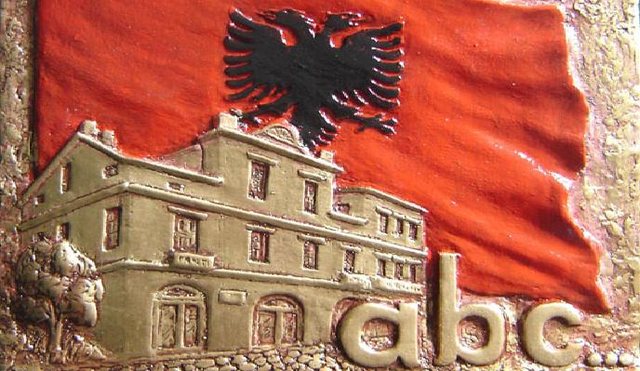
When we talk about the Albanian state, we usually think of November 28, 1912, the declaration of independence, the flag in Vlora, and the political act of leaving the Ottoman Empire. But if we look back, we realize that the Albanian state, in the essential sense of the word, had begun to be built much earlier.
The first real institution that the Albanians created was not a government, an army, or an administration: it was the language. The Congress of Manastir in 1908 was more than a gathering of intellectuals. In the absence of a state, the Congress functioned as the first national parliament. Delegates from all Albanian territories, from Shkodra to Korça, from Ioannina to Kosovo, from the diaspora in Bucharest, Sofia, and Istanbul, sat at the same table to make a decision that would shape the fate of the nation: the unification of the alphabet.
This decision was not technical. It was political in the purest sense. By choosing a single alphabet, Albanians created a common space of communication where schools, the press, books, teachers, and patriots could speak the same written language. At a time when they had no state institutions, this language became the institution that represented everyone.
It was the “administration” that coordinated national thought, the “constitution” that shaped identity. For the first time in history, Albanians had a common mechanism with which they could organize their collective existence. Each letter of the Monastery alphabet was a brick in the foundation of a building that did not yet physically exist: the Albanian state.
The decision to adopt the Latin alphabet also freed Albanians from religious divisions and foreign influences that had previously defined their writing: some used the Arabic alphabet, some Greek, some Latin. With the Congress, language gained sovereignty. It is rare in history for a nation to achieve cultural sovereignty before political sovereignty, but this is what happened to the Albanians.
After 1908, the Albanian press spread everywhere, Albanian schools opened at a rapid pace, the diaspora was organized, international patriots found a common ground. In essence, Albania began to exist as a cultural reality four years before it was recognized as a political reality. This is why many scholars say that the independence of 1912 was possible only because the alphabet had done its job earlier: it had created Albanians as a conscious community.
Therefore, it can be said with full confidence: language was the first state of the Albanians. It gave the nation identity, direction, cohesion and a spiritual ground on which the physical state could later be built. Without the Manastir alphabet, the Albania of 1912 would have been much more fragile, and perhaps would not have even come into being in that form.
We acquired the ability to speak and write as a nation before we gained independence. In history, this remains one of the strongest proofs that language, more than any other institution, has the power to be the first homeland of a people.