Is this police force professional and capable of handling violen...
/ 2026-10-16 18:54:07Focus


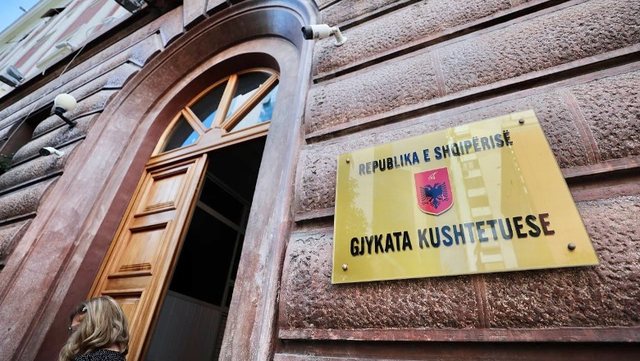
In the Albanian constitutional order, the nature and functions of the Constitutional Court are often (intentionally or unintentionally) confused with those of ordinary courts, especially in the context of examining cases that have criminal elements or relate to public officials.
However, normative, doctrinal and practical analysis clearly shows that the Constitutional Court is not a criminal court and does not exercise criminal jurisdiction. It represents a special body for the control of constitutionality, which stands outside the ordinary judicial system.
1. Constitutional and legal framework.
According to Article 124, point 1, of the Constitution of the Republic of Albania, “The Constitutional Court resolves constitutional disputes and makes the final interpretation of the Constitution.” (1) This constitutional formulation defines its role as a court of constitutional law, not as a body that examines criminal cases.
Article 131 of the Constitution defines the substantive competences of the Constitutional Court, which include: the compatibility of the law with the Constitution or with international agreements; the compatibility of international agreements with the Constitution before their ratification; the compatibility of normative acts of central and local bodies with the Constitution and with international agreements; disputes of competence between powers, as well as between central and local government; the final adjudication of complaints by individuals against any act of public authority or judicial decision that violates the fundamental rights and freedoms guaranteed in the Constitution, after all effective legal remedies for the protection of these rights have been exhausted, except where otherwise provided in the Constitution, etc. (2)
None of these provisions includes the exercise of criminal jurisdiction.
Furthermore, Article 135, paragraphs 1 and 2 of the Constitution stipulates that: “Judicial power is exercised by the Supreme Court, as well as by the courts of appeal and courts of first instance, which are established by law”; “Special courts shall try criminal offences of corruption and organised crime, as well as criminal charges against the President of the Republic, the President of the Assembly, the Prime Minister, a member of the Council of Ministers, a judge of the Constitutional Court and the High Court, the Prosecutor General, the High Inspector of Justice, the Mayor, a deputy, a deputy minister, a member of the High Judicial Council and the High Prosecutorial Council, and the heads of central or independent institutions specified in the Constitution or in law, as well as charges against the aforementioned former officials.” (3)
This provision refers to the courts of the ordinary and special system (first instance, appeal and Supreme Court) and not the Constitutional Court.
This exception is complete and clearly shows that criminal jurisdiction is an attribute of the ordinary judiciary, not the constitutional judiciary.
This distinction is also confirmed in Law No. 8577, dated 10.2.2000 “On the Organization and Functioning of the Constitutional Court”, as amended, where Article 2 expressly states: “The Constitutional Court resolves constitutional disputes and makes the
final interpretation of the Constitution.” (4)
Even with this legal norm, the legislator has excluded any possibility for the Constitutional Court to address issues related to the guilt or criminal punishment of individuals.
2. Doctrinal and comparative approach.
In Albanian legal doctrine, the position is clear and consistent. Luan Omari and Aurela Anastasi emphasize that “The Constitutional Court is not part of the judicial system and does not exercise jurisdiction over criminal, civil or administrative matters; it only exercises constitutionality control.” (5)
This position is related to the functional separation between constitutional jurisdiction and ordinary judicial jurisdiction, a separation that aims to guarantee institutional independence and mutual control between the branches of power.
At the European level, the concept is equally unified. According to the Venice Commission, the Constitutional Court of Albania “is not part of the ordinary judiciary; it deals with the review of constitutionality and not with criminal or civil adjudication.” (6)
Even European comparative doctrine emphasizes that constitutional courts “do not judge individuals, but assess the compatibility of laws with the Constitution.” (7)
3. Clarification through case law.
In its jurisprudence, the Constitutional Court of Albania has repeatedly clarified the limits of its competence and has emphasized that “its competence is limited to assessing the compatibility of laws and acts with the Constitution and not to examining issues that involve the assessment of facts or individual guilt.” (This is a direct confirmation that the Constitutional Court is not a criminal judicial body and does not exercise any investigative or punitive function.
Analyzed as above, it results that the Constitutional Court of the Republic of Albania does not have a criminal nature, competence or function.
It represents a body of control of constitutionality and institutional balance of powers, not an instance that examines criminal violations.
Therefore, any attempt to treat this court as part of the criminal system contradicts the Constitution, Albanian and international legal law and doctrine.
Modest references:
1. Constitution of the Republic of Albania, article 124/1.
2. Ibid., article 131.
3. Ibid., article 135/1/2.
4. Law no. 8577, dated 10.2.2000, On the organization and functioning of the Constitutional Court of the Republic of Albania, as amended, article 2.
5. Aurela Anastasi and Luan Omari, Constitutional Law (Tirana: Botimet Toena, 2021), 341.
6. Venice Commission, Opinion on the Draft Law on the Constitutional Court of Albania, CDL-AD (2016)009, parag. 9.
7. Enrico Gianfrancesco, La Giustizia Costituzionale in Europa (Bologna: Il Mulino, 2018), 27.
8. Constitutional Court of the Republic of Albania, Decision no. 29, dated 25.6.2019.