Is this police force professional and capable of handling violen...
/ 2026-10-16 18:54:07Focus


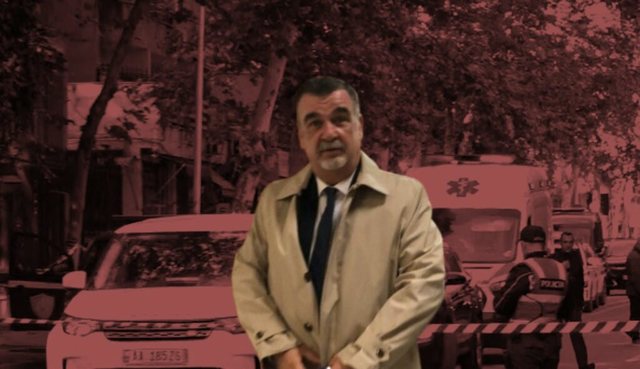
The murder of a judge inside the courtroom was not simply a criminal act, but a manifestation of institutional failure and, worse, of moral collapse. Justice was killed twice: once by a bullet inside the “temple of law” and once by the not inconsiderable congratulations that followed on social media. A society that rejoices over a murder because it sees it as “alternative justice” has previously killed conscience.
This is the painful face of a society that has lost faith in justice and replaced it with the emotion of the moment, with revenge as "retribution." When the system fails to deliver justice, people begin to take it into their own hands, and when this too turns into a public spectacle, we have entered the gray area where crime begins to be confused with morality.
Justice is not retribution, it is a process. It is not passion, but a test. And no injustice, no matter how grave, can justify the taking of a life. When you kill a person, it is as if you have killed all of humanity – it is said in the holy book.
These comments indicate a much deeper wound: the crisis of trust in the institution of the court and the judge. The justice reform, trumpeted as a revolution, focused on punishing high-ranking officials, forgetting the essence – that justice is not a “big fish” or a “small one”, but a system that works for every citizen. While the public expected spectacular results, tens of thousands of files remained in drawers, citizens were immersed in endless waiting, and the files turned into relics.
If before 2016 a process lasted an average of 2 or 3 years, today there are cases that last 15 or 20 years. Justice delayed is justice denied. And when the Prime Minister himself waits 7 years for a decision in the first instance, what can the ordinary citizen expect in the face of a system that resembles more of a dead-end tunnel than a court?
But the crisis of confidence was not born only from the delays. It is fed daily by public bullying towards judges and prosecutors, often initiated by the head of government, who has gone so far as to publish the name, photo, and place of work of the judge, turning him into a target of the mob. And when the figure of the judge is publicly denigrated, when institutions like the KLP and KLGJ remain silent, then the road to moral and physical lynching becomes short.
There will always be those dissatisfied with justice, because every decision is divided between a winning party and a losing party. But no dissatisfaction can be turned into an excuse for violence. In 1997, when the state had dissolved and weapons were on every corner, judges were not touched. Today, in a time of peace and unstoppable reforms, a judge is killed in the line of duty, at the heart of the system, and applause is heard on social networks. This is an alarm signal for anyone who believes that they live in a country where the law should prevail.
To restore reason and the sanctity of life, a comforting and justifying statement is not enough. Nor are promises to toughen punishments. It doesn't work. A reflection is needed, from every link: Politics, which must stop the rhetoric of violence and the use of justice as a weapon for lynching;
The media must stop normalizing hatred, violence, the last word, banality, and strongly promote critical, but not vindictive, thinking!
Pain is not healed with a bullet, and he who sets out for revenge always digs two graves.
If we want justice, we must start by protecting those who administer it. The judge is not the enemy, but a figure who maintains the balance of society. It is in everyone's interest that the judge be not only safe, but also calm, protected, even happy, because only then can he administer justice.
A society that rejoices in a murder is a society that has previously killed conscience. And when conscience is silent, crime begins to speak in the name of justice.
If we want to live in a country where the court is a symbol of hope, not fear, we must rebuild not only institutions, but also public morals. Because, ultimately, a state that does not protect life has no right to talk about justice.