Is this police force professional and capable of handling violen...
/ 2026-10-16 18:54:07Focus


By Aladin Stafa
Humans are nothing more than a being that acts on instinct, immersed in emotions, memories, decisions, and even in a constant monotony, waiting impatiently for tomorrow to bring something new. And that's not a bad thing.
All of life is in fact a whirlwind of unknown dynamics, unanswered questions, happy coincidences, and the mystery of what lies beyond. No one knows what the future holds, yet everyone lives and thinks as if they know. Just as love and hate are separated by a thin thread, the same is true of life and death.
We come into this world undeservedly and we also leave it. Death is the most universal theme of humanity but at the same time the most inexplicable of it. It is always there, an inevitable truth while the fast pace of life distances us from its idea by not accepting that it can even happen.
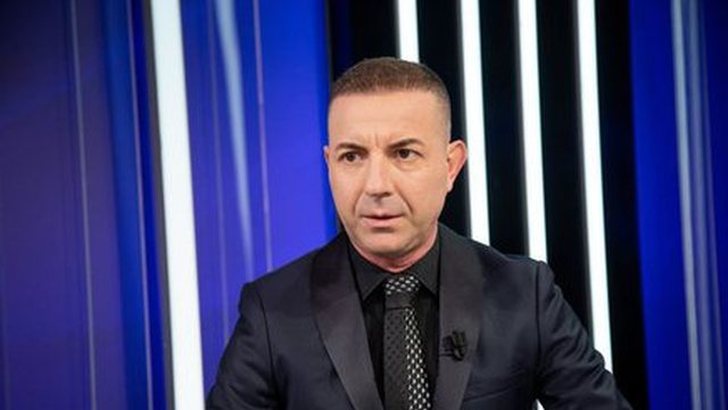
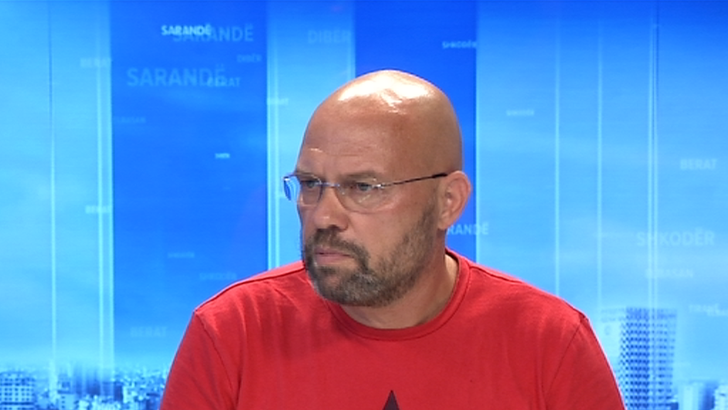
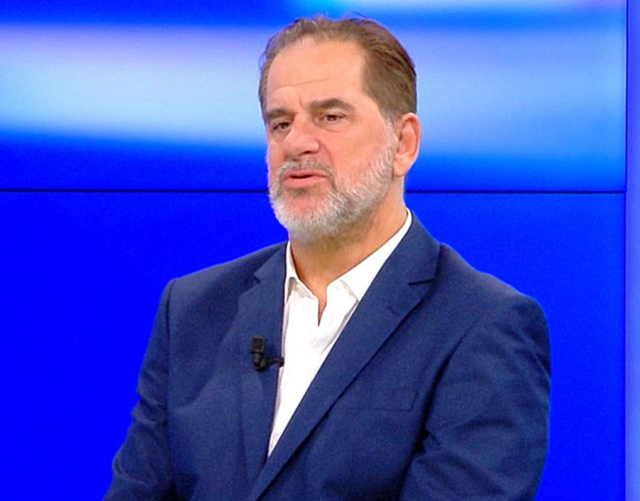
Leaving behind the shock we feel when she suddenly comes to take people we didn't expect. This bitter feeling was made us experience by the sudden separation from life of Artur Zheji, one of the most critical voices of the time and even of my generation. With an intellectual approach supported by strong arguments of thought and knowledge, culture and deep analysis, Zheji will leave behind an immense void in the television studios in the season that is expected to begin.
For those who followed him carefully and attentively, even beyond Albania, he was more than a commentator. He was characterized as a media philosopher whose analyses, beyond political divisions, came with elegance and had a unique style, especially in the use of the Albanian language.
Ironically, it was Zheji himself who, a year earlier, had written about death, describing it as a "Great Lady" - fair, merciless, and incorruptible. According to him, its greatness lies in the equality it imposes.
So if man will never find equality in this life, it is death that smooths out all differences. In the face of it, there are no positions, titles or power to protect you. And not even money. In the face of it, you are nothing more than a number in the line of life, calmly waiting for your turn.
But is death a curse?
Undoubtedly, it can be described as a divine law, an act of justice that establishes balance in the world, bitter or not.
Therefore, it is not in vain that Zheji emphasized in that article that life is temporary and that its value is measured not by its length in time, but by the trace we leave behind. In this sense, every unexpected loss, whether public, family, or social, becomes a lesson for those of us who are left behind.
It invites us to think: What are we leaving behind? What will others remember when we are no longer here?
The answer seems clear: it is words, ideas, intentions, actions, the courage to speak our truth, and the motivation to ignite critical thinking.
Death, this majestic lady and our daily mirror, shows us very clearly how temporary and weak we are. Therefore, the best way to face it is nothing other than living with dignity, leaving a good mark before it comes.
No one knows how much time they have left, but when they think about their existence, every second becomes priceless. To learn once and for all that life is limited and that every word, every deed, and every trace matters. Our good things vary according to our interests, but what unites us is this common “evil” – the end itself, which no one has yet discovered what lies beyond.
Because as Epicurus (341-270 BC) said, death is nothing to us; when we are, it is not, and when it is, we are not. So this is one more reason not to be afraid. Because it is an experience that we cannot live. What counts at the end of the day is our journey with our eyes open, in a world that increasingly keeps its eyes closed.