Is this police force professional and capable of handling violen...
/ 2026-10-16 18:54:07Focus


Emirjon Senja
Otherwise known as the "red car on the Transbalkan highway", the automatic radar located at the entrance to Vlora has become a nightmare for drivers.
A police officer, who has served several times at this radar, told "INA Media" that during the summer they can issue up to several hundred fines during just one shift.
"On busy summer days, we can issue between 300 and 400 fines per shift," he says, requesting anonymity.
After exiting the highway, where the permitted speed is 100-120 km/h, immediately in this segment there is a speed limit of up to 60 km/h, becoming a trap for drivers. As a result, the many visitors to Vlora are automatically fined for every km passed above the speed limit.
Considered a war toll, in the last 5 years, around 1,000 people have lost their lives in road accidents and over 1,200 others have been seriously injured. In 2021, the Road Code was amended, significantly increasing the level of fines. This amendment served as a mechanism to discipline drivers, leading to a reduction in the number of road accidents, and consequently fewer victims on the road. The institutions promised that this measure would also be accompanied by improvements to road infrastructure.
Confidentially obtained evidence questions the effectiveness of this policy and suggests that fines are being used as an instrument to fill state coffers, without creating a culture of safety on the country's roads, which is the primary goal.
Traffic police officers told "INA Media" that there is a verbal order that obliges them to impose a certain number of fines.
During informal conversations with various Traffic Police officers, in confidentiality, they talk about a number of "no less than 30 fines that should be imposed per shift."
The Highway Code, adopted in 1998, has been amended 13 times so far. In 2023, the advisory measure was introduced for the first time, without a fine, but with a system-wide report, with the aim of educating drivers.
Official data shows that while traffic fines have quadrupled, counseling has been forgotten, while accidents have increased by 20%.
According to INSTAT (Q2 2024), Albania has around 914 thousand vehicles of various types circulating on the country's roads. Of these, more than 738 thousand are cars, the majority of which move on the roads of Tirana, doubling compared to 10 years ago.
"We are dealing with a situation where punishment for violating traffic rules deviates from its main purpose," the experts insist.
28 million euros in fines in one year
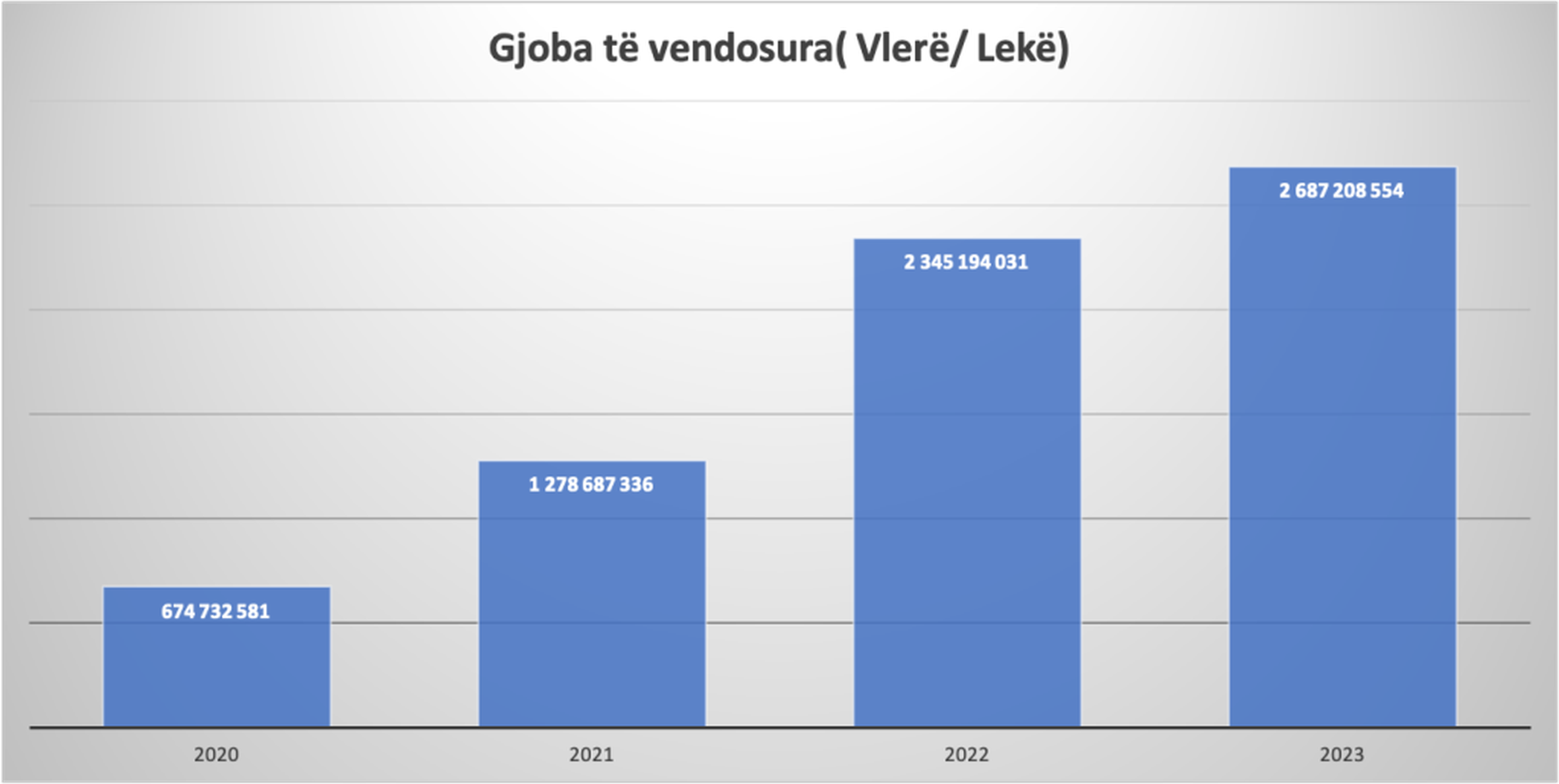
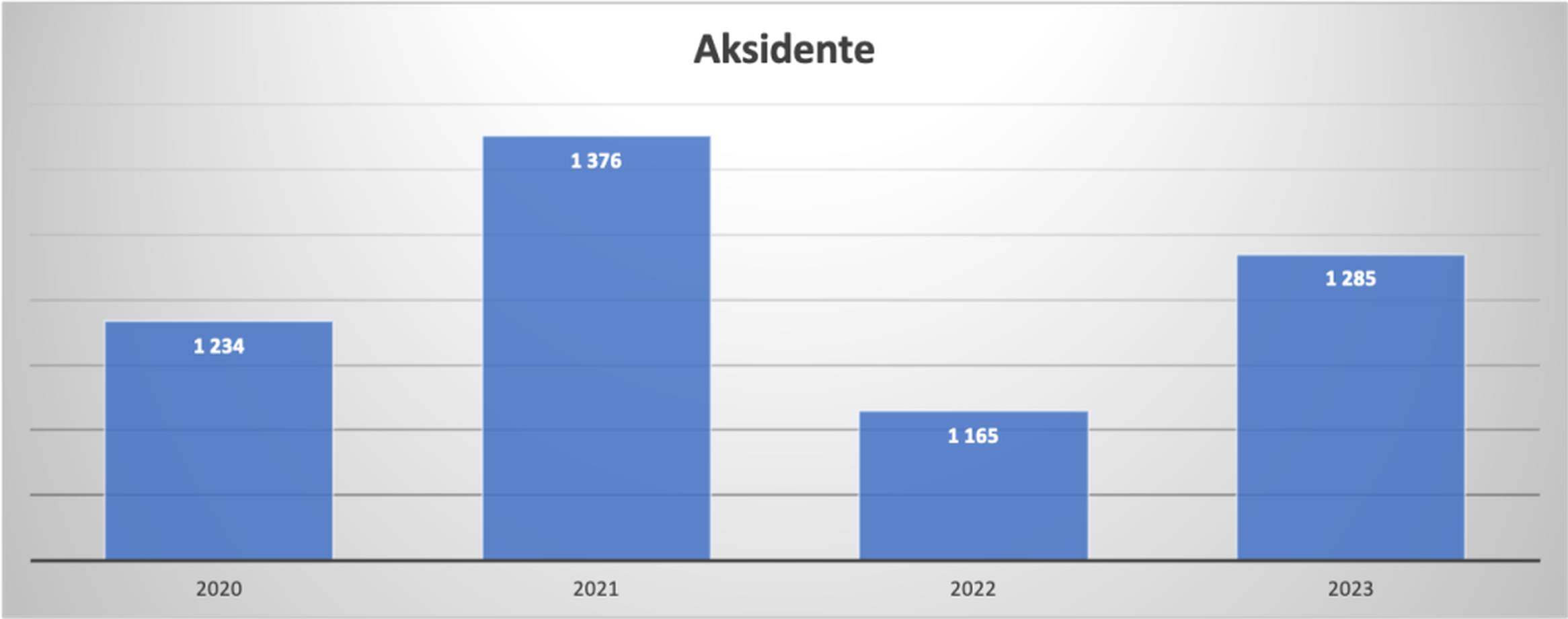
For the period 2020-2023, penalties for drivers have quadrupled. According to data obtained by "INA Media" through a request for information from the State Police, these fines were imposed only by the Traffic Police for violations of road traffic rules with the aim of raising awareness to reduce the number of accidents. However, according to official data, the number of accidents during the same period is the same, and has even increased during 2023.
The number of those who lost their lives and were seriously injured in accidents during the same period also increased.

More specifically, according to official State Police data, it results that Traffic Police officers alone imposed 674,732,581 lekë (6.7 million euros) in fines in 2020 on drivers who violated road traffic rules.
In 2023, according to official data, this figure reached 2,687,208,554 lekë (~28 million euros), a four-fold increase compared to 2020 (see above).
The largest number of violations is related to incorrect parking, while the largest amount of money in the state coffers has been generated by fines for violations related to speeding, which are considered more dangerous.
The State Police told "INA Media" that during the past year, around 265,000 administrative measures were imposed for parking/stopping in unauthorized places, while speeding beyond the allowed limits has counted more than 219,000 fines with more than 700 million lek coming into the state coffers.
Meanwhile, the introduction of automatic radars has significantly increased the number of fines for exceeding the allowed speed limit, increasing the amount of fines in value by more than 6 times compared to 2020.
The entrance to Vlora, due to the high number of visitors during the summer season, is one of the important points monitored by radar and also has the highest number of fines.
Other areas known for the high number of fines through automatic radar are the segment from Liqeni i Thatë to the roundabout at the exit of Tirana, towards Elbasan; the Durrës-Kavajë; Elbasan-Peqin or "Uji i Ftohtë" Tepelenë - Gjirokastër axes.
Likewise, the Ardenica-Fier roundabout segment on the Lushnje-Fier axis is another area known for the high number of fines for violations caught by automatic radar, alongside other axes such as Elbasan-Librazhd, at the exit of Elbasan or Kakavijë-Gjirokastër, near the village of Goranxi, etc.
Increasing fines does not reduce the number of accidents.
The increase in penalties provided for in the Road Code, resulting in a quadrupling of fines, has not had an impact on improving the behavior of drivers on the road.
Road safety experts view the interventions in the Highway Code with suspicion, suggesting that the reporting of a high number of vehicles is done to hide the failure to reduce the number of accidents.
"Penalties for drivers have increased, but we are seeing that accidents are not decreasing, and in fact during the first seven months of this year they have increased by 20%. Every year thousands of Albanians flee, but cars that are never in circulation are added to the list and this is done to justify the increasing number of accidents," says road safety expert Artur Sulçe.
Expert Sulçe told "INA Media" that he is aware of the fact that traffic police officers receive orders to impose fines.
"We are increasing the penalties, but even this has a limit because you cannot increase the fines as you wish. Traffic Police officers have a set number of fines they must impose each day," he says, adding that there is an approach by the Traffic Police to impose as many fines as possible in the service of filling the state coffers with revenue from penalties against road users.
The panorama presented by Sulçe is also accepted by the Traffic Police officers themselves.
"Failing to meet the norm of 30 fines per shift translates into criticism from superiors. But if you meet or exceed this norm, there is no bonus," the police officers confess.
Engineer Artur Sulçe links this "norm" set by superiors to the fact that when it comes to serious accidents, police officers fine both drivers involved, without waiting for the expertise and review of the case to identify the culprit.
"This is done to help insurance companies, but also to increase the number of fines against drivers, without even waiting for the culprit to be identified," he says.
According to data provided by "INA Media" through a request for information to the General Directorate of Police, accidents have increased by 10% in 2023 compared to 2022, while the number of lives lost in these accidents has averaged 190-200 per year over the last four years, without any noticeable downward trend.

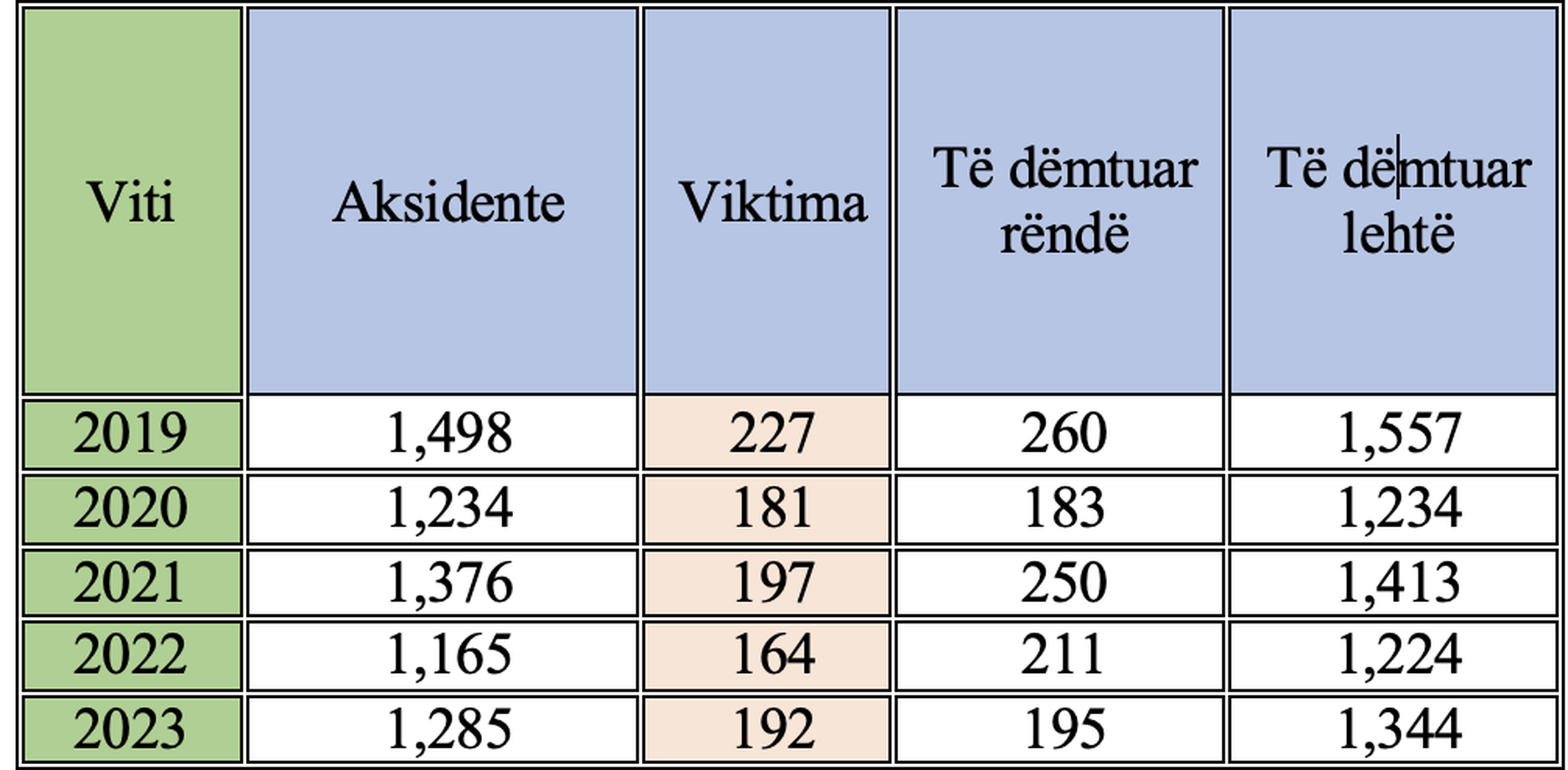
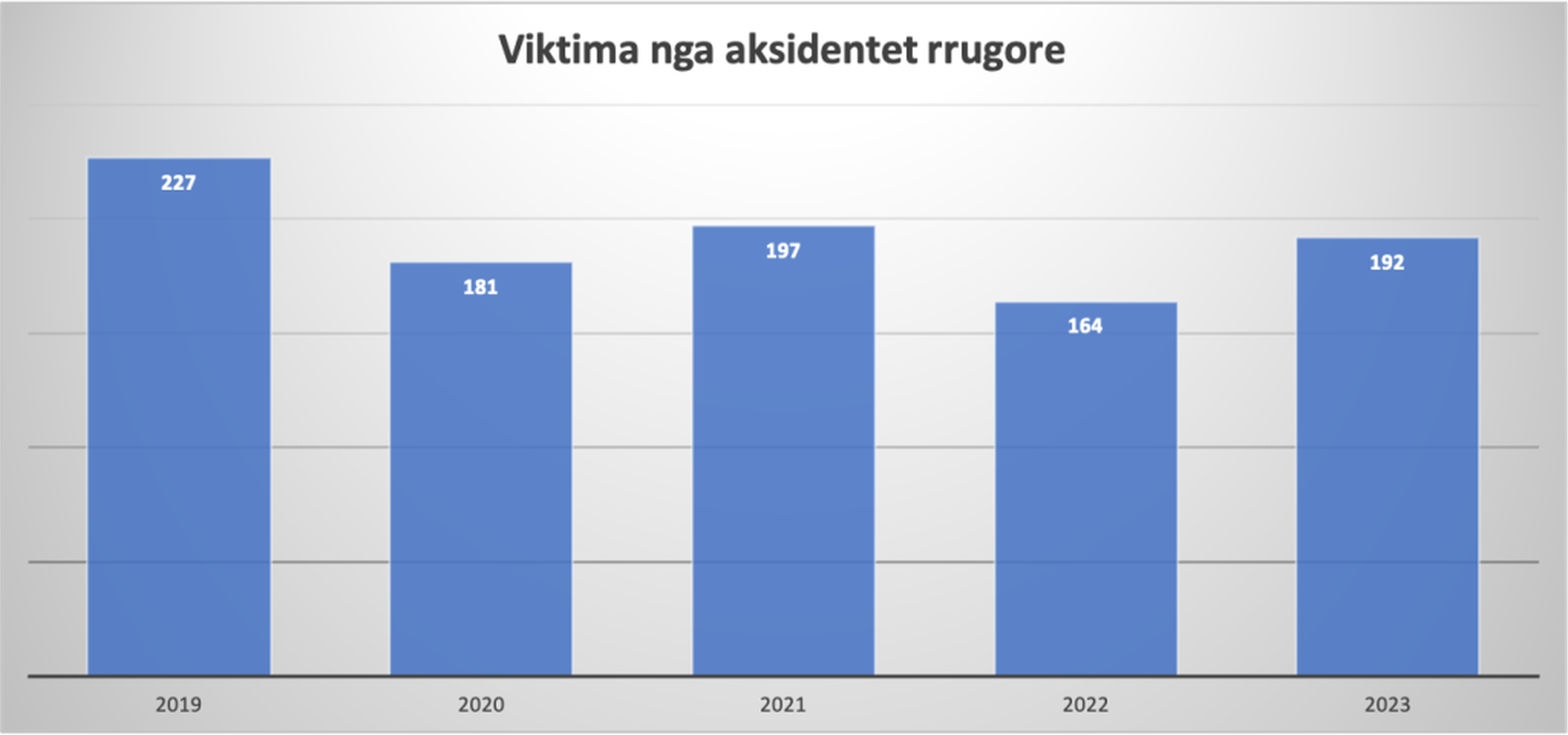
According to official data, in 2019 there were 227 deaths from road accidents, a year later, due to the pandemic, where traffic jams were applied for days, the number of people who lost their lives in accidents dropped to 181, while the following year there were 197 victims. The year 2022 marked 164 victims, while 2023 had a worse balance with 192 victims.

Over the last five years, around 1,000 victims and over 1,200 seriously injured people have been recorded in Albania due to road accidents, while INSTAT reflects an increase in the number of accidents and injured people during the first half of this year.
Number of people seriously injured in road accidents during the period 2019-2023. Source: State Police
Road Code – restrictions, but also relief for bad drivers
Changes to the Highway Code in recent years have provided for fines to be accompanied by the removal of points on drivers' licenses for serious violations, such as driving under the influence of alcohol, speeding, using a cell phone, or not wearing a seat belt while driving, as a form of coercion against problematic drivers.
All these interventions aim to raise awareness among drivers in order to reduce the number of accidents.
The Head of Tirana Traffic Police, Besmir Qibini, told "INA Media" that more than fines, the application of removing points from licenses has had a positive impact on improving driver behavior.
"Over time they feel the cost of this penalty, which is more long-term than a monetary penalty."
The Traffic Code currently provides that the penalty is halved if paid within 15 days of receiving it.
At the time of discussion of the changes to the Highway Code, a good number of experts reacted against this relief for violators, as, according to them, this would minimize the impact of the fine on drivers.

The bonus-malus insurance system does not reward regular drivers.
On September 19, 2024, through Board Decision No. 156, the Financial Supervisory Authority approved the regulation on "Determination of risk factors included in the calculation of promises for compulsory insurance products in the transport sector".
In a response to "INA Media", the Financial Supervisory Authority said that the new regulation was drafted with the aim of charging based on the risk borne by each insured, with a focus on consumer protection.
"With its entry into force, scheduled for January 1, 2025, the regulation is expected to bring a positive change to the insurance market, by offering a fairer and risk-based pricing system. For motor vehicle users, this regulation is expected to encourage more responsible behavior and contribute to improving road safety in Albania," explains the AFSA.
The regulation focuses mainly on the criteria for determining the premium for compulsory vehicle insurance, taking as risk factors the district where the vehicle is registered; the age of the vehicle driver and the time when he obtained his driving license and, above all, the driver's history of behavior on the road.
Risk coefficients for drivers according to the number of accidents in the new AMF regulation. Source: AMF
Referring to this regulation, every driver who has at least one accident per year will have to pay an insurance policy 25 percent more during the following year. Meanwhile, every driver who has registered two or more claims during the last three years will have to pay an insurance policy 50 percent more expensive than the initial premium.

The cost increases even more if we are dealing with young drivers or vehicles older than 11 years, which also have higher risk coefficients.
Where does the inequality lie?
The logic of the bonos-malus system is to reward regular drivers and punish irregular drivers, with the aim of convincing them through financial pressure, making the roads safer. Meanwhile, in the AFSA regulation we are mainly dealing only with punishment and not with reward, since anyone who has not caused any accidents is rewarded with a reduction in the initial price of the insurance policy from 2 to 5 percent, while a bad driver pays 25 to 50% more.
Risk coefficients according to the driver's age in the new AMF regulation on TPL premiums. Source: AMF
If an insurance policy for a car today costs an average of 17,000 lek, a driver who has caused one accident will pay a minimum of 21,250 lek, while one who has caused two accidents or more will pay 25,500 lek.
What happens to good drivers?
Unlike bad drivers who are severely punished, good drivers are not rewarded to the same extent.
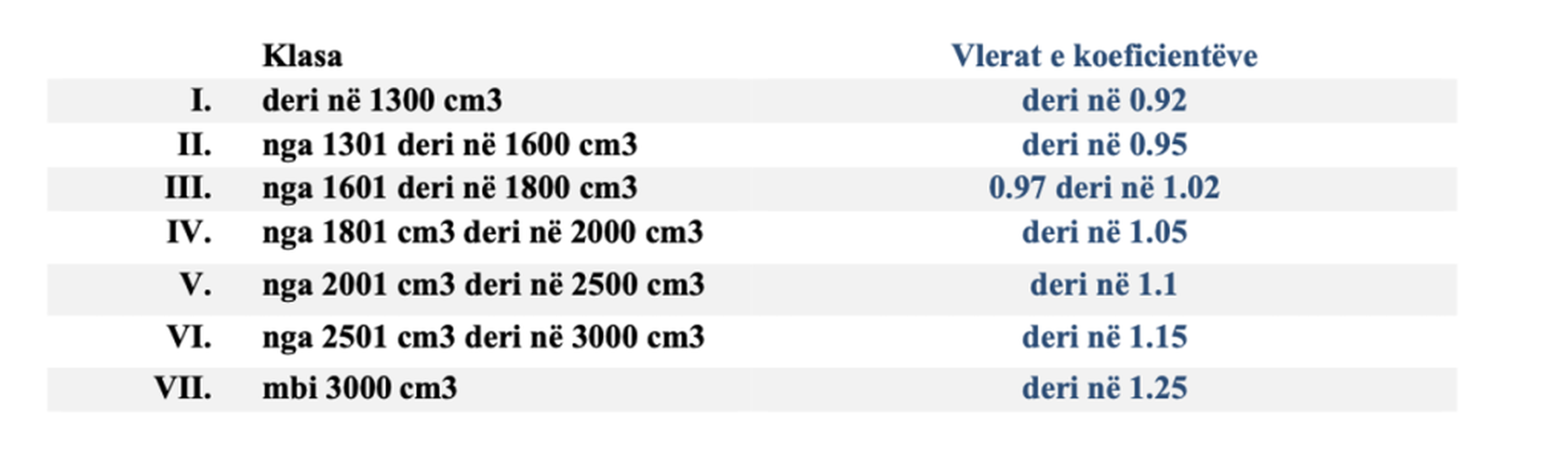
Risk coefficients according to the time of obtaining the license in the new AFSA regulation on TPL premiums. Source: AFSA
According to the regulation of the Financial Supervisory Agency, if the average price of a car insurance policy is 17,000 lek, a driver who has not caused any accidents during the year will not be able to buy it for less than 13,940 lek even if he meets all the conditions of low risk.
According to the above coefficients, the price of an insurance policy can increase by up to 125 percent, but decreases by no more than 18 percent when dealing with a driver and a vehicle that pose a low risk in traffic.
"INA Media" requested a comment on the regulation in question from several insurance companies, but as of the publication of this article, there was no reaction.
Despite the fact that the AMF says that a bonus-malus system will be applied, in the way the risk factors and coefficients for each category are determined, it seems that only half of this system is applied: only malus. That is, punishment through higher prices of compulsory vehicle insurance policies for bad drivers, while good drivers are given little or no incentive.
For Fadil Likaj, a road safety expert, the solution is not difficult. He suggests that fines cannot be the only mechanism to reduce the number of accidents, but that road infrastructure and traffic management must be improved.
"Without improvements in infrastructure and without effective monitoring of driver behavior, increasing fines alone may not have the desired impact. Countries that are successful in this regard apply a combination of approaches: toughening fines-improving infrastructure-education and rigorous monitoring of driver behavior," Likaj told "INA Media."
"Increasing fines can contribute to reducing the number of accidents and improving road safety, but only when it becomes part of an integrated strategy with other preventive and educational measures," he concludes./ inamedia