


"Condemned" protesters?! Who trapped Rama inside the Prime Minis...
/ 2026-10-23 16:02:00Focus


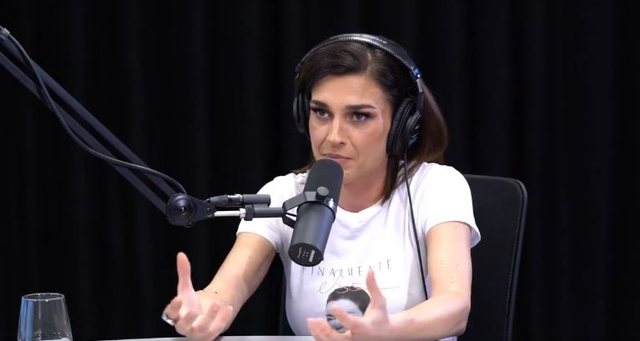
The well-known singer, Elsa Lila , has confessed the suffering she experienced in the cells of Italy, after she was arrested as being involved in a criminal group .
The artist, who was released from prison after 2 months, said that she spent the first two weeks in isolation, in a cell where there were no windows, and the first days she did not eat or sleep.
"I spent 2 months, of these 2 weeks in isolation. Isolation means isolation, it means a room without windows, without anything. The days are very long, they never end", said Elsa Lila in Prime Minister Edi Rama's "Flasim" podcast, made after her first recital concert. in Tirana, entitled "Finally".
Elsa Lila said she had no sense of time and oriented herself with the meals served.
"I was guided by the meals that were served. So, lunch came and it must have been more or less 1 o'clock. There wasn't even light in there, so I couldn't orient myself with the sunlight, but it's such a strong psychological experience that you're not the same afterwards. After the first 3 days that I remember as in dreams because I didn't eat, I didn't drink, I didn't sleep, I didn't lie in that bed, I sat in a chair sitting in that room, because I don't want to call it a cell, because in the end it is not her fault, why call her a cell.
I knew I was going to get out soon, since I had no connection to that story, so I decided to experience it as one of the extraordinary, crazy experiences that have happened in my life and use it as a means of psychological and spiritual growth and not as a vehicle. - destruction", Elsa Lila said.
The artist said that her biggest wish is to travel around the world, but when her daughter Evita has grown up, she can take her with her.
"After 10 years I will be 52, Evita will be 22. One of my wishes is to travel around the planet, travel around the world. My home is my planet and I absolutely want to go around the world and at that moment I can do it since Evita will be grown up and I can take her with me or she didn't want to follow me, no. Of course I will be doing baroque music and I dream of finally being accepted in theaters, just like a singer of Calisian music, but with a natural voice doing my baroque music.
I dream that in the meantime I have escaped from Rome and be in nature, in a hut or a country house, and in the meantime I have also studied a lot about herbalism, how to heal with plants", the singer said.
She confessed that she has a good relationship with Evita's father, while regarding her personal life she emphasized that she does not want to have a long-term partner, but only friends.
"A husband or boyfriend? Let's say I'm a free spirit and I'd rather have more than one exclusive friend, not only in that sense, but having only one exclusive life partner often limits other relationships, while I'm already used to it, I'm an independent woman who raised Evita alone and in the meantime I had my friends, my experiences, my loves, my pleasures, of course and I will continue like this.
I don't like to be someone's exclusive, nor for someone to be mine because no one is mine and I am no one's," said Elsa Lila.
Rama: The ninth episode of the second season of the podcast "Flasim", there is a star that, unlike other stars, appears, disappears, reappears and by reappearing disappoints those who thought it was just a meteor that shone for a moment, fell into darkness and disappeared.
The re-emerging star is Elsa Lila. Welcome!
Elsa Lila: Glad I found you! Thank you for the invitation!
Rama: We see each other forever after 10 years.
Rama: And I, too, almost became like those who think that Elsa Lila is gone, she is no more. It disappeared forever, but for a little while, because just when I too could have fallen prey to this wrong thought, you reappeared in Tirana with a concert that had a title that is also on your chest, Finalmente. I mean finally Elsa reappeared which translates, we finally found out that Elsa is alive.
Elsa Lila: Yes, Eddie. Just like you said, just like you said..
Rama: Leave "you-in"...
Elsa Lila: Ok, as you said, it has been a long time away from the cameras, away from the public, but for me time is totally relative. I don't measure time in months, in years, but in the quality of the time spent and I have felt it necessary to be away from the public, away from the eyes of the cameras for a long time for many reasons. The first, for family reasons, the second for artistic reasons. Forgive me for my voice, but yesterday was a long night post-concert, as I waited for the audience until late and my voice is a little tired because after the concert they wanted, I waited for about 1500 people who came to meet me and take autographs and photos and it was a live meeting and after 10 years with them, I couldn't spare Elsa a hug after the concert, since they hadn't seen her for so many years. So why did I disappear? Maybe it's people's curiosity. I didn't actually disappear. I lived. I lived in Rome. I studied baroque music. I have had many other experiences that have enriched me and allowed me to come back even stronger, more artistically prepared, with more innovative ideas also because I have evolved in my artistic ideas, although in my concert, which was a revival of these 27 years of career that I have done since 1996, so to speak I performed the songs that I have performed in these 27 years, but in the meantime I have evolved conceptually, artistically as I am dealing with baroque music, i.e. music that happened between the 1600s and the mid-1700s, experimenting with natural sound. Of course, music cannot be expressed in words, it must be heard and soon I hope to be able to come to Albania, to the opera this time, because it is a music that is more suitable for opera. Finally, I'll tell you concretely about this famous baroque music that I've been talking about for a long time in interviews.
The idea is quite revolutionary in fact. This music has been sung for 300 years, so I'm talking about baroque music sung, not played. It is sung with an imposted voice, that is, with a classically imposed voice, and I think that this kind of imposting, takes the simple listener a little away from the baroque materials. The baroque stuff is a bit hard to listen to, but when it's delivered in an imposted voice, – which is great of course, my dad is a tenor and I adore imposted voices. I grew up in the opera of Tirana, I grew up among imposed voices, - the audience that has an uncultivated ear with this kind of music, gets a little scared, it creates a kind of distance between the performer and the listener, while ..
Rama: How is baroque music imposed? Can you do it here?
Elsa Lila: With this voice today, it's... It's like Joe Cocker would do it.
Rama: What about the natural voice?
Elsa Lila: I don't even have a natural voice, for example. The idea is that..
Rama: I can't get away... With Joe Cocker's voice, how is baroque music?
Elsa Lila: For example Vivaldi…. (sings)
Rama: Besides Vivaldi, what else?
Elsa Lila: I have realized in the meantime…. I have recorded all of them, Stabat Mater, Giovanni Battista So I have thought of performing baroque works with a natural voice. It is a difficult process. In the literal sense, not from my side, but to serve the public. It's hard for them to chew and I'm bringing them very gradually. For example, yesterday at the concert, in the concert I did in Tirana, I sang a part of Moxart. Moxarti is not baroque, he is a little later than he was born in '56, in 1756, but with a dropper, so to speak.
Rama: How was the part of Mozart?
Elsa Lila: Moxarti was an experiment that I did as it is a piano concerto..
Elsa Lila: I put together Lasgush Poradeci, "Dremit Liqeri" and attached it to Moxart. I have transformed it from a piano concerto into a song and it is an experiment that in Italy, the baroqueists who have heard it, have called it a fantastic madness. I really want you to listen to it, because when you listen to it, you will understand the experiment. That is, the artistic world in which I lived was no longer enough for me.
Rama: Now, your madness has always been fantastic actually.
Rama: My craziness, I don't know if it's fantastic, but your craziness has always been fantastic. I made the sentence, I built it in a baroque way..
Elsa Lila: I'm glad you think so
Rama: I remember a fantastic madness of yours, which was to go on hunger strike with others there.
Elsa Lila: It was a fantastic experience.
Rama: Yes, fantastic madness. For example, I remember a crazy thing you told me about back then, that you were into scuba diving and that you wanted so badly to get to a point under the water where you could stop breathing and then live without breath for as long as you could. and then with the dilemma of whether I should really go out again to look for the breath again or wait for another breath to take me that is not breath. Did you reach the point where you could breathe?
Elsa Lila: Yes, I lived 4 years in Madagascar, in Africa, and since my ex-boyfriend, Evita's father, was a professional diver, I became an almost professional diver, let's say. So, in those years I lived more under water than on land and the silence of living under water, since I dived three times a day, I also dived at night with him because the depth is fascinating and the ocean always takes you lower and lower. Like thoughts. The ocean is like thoughts. The deeper you go, the lower you go and then you need a hand to pull you out of those complicated thoughts that we have.
Rama: Then? Was Madagascar in front or in between?
Elsa Lila: I was in Madagascar when I was on hunger strike. It was a pit stop in Albania and I happened to be here, those days for family reasons when that fantastic madness that you all created together was happening.
Rama: Then after Madagascar you came back to Rome.
Elsa Lila: After the birth of Evita, after she turned 1 and a half years old, I decided to return to Rome since things between me and my ex-husband did not go well. I was tired of being on an island. The island was very close to me, I wanted to return to civilization, to Rome. And I came back. And when I came back I was immersed in the baroque from the Indian Ocean.
Rama: From then on, he immersed himself in the baroque!
Elsa Lila: Yes, from the Indian Ocean I dived into the Baroque.
Rama: Haven't you ever left the surface of the baroque for some other fantastic madness?
Elsa Lila: They ask me to go outside the baroque and I do it because I know how to do it with my voice.
Rama: No, I don't want to take the baroque out, but I'm asking, wasn't there a phase when you left the baroque for a moment under water and you did another crazy thing on the water?
Elsa Lila: Beyond music, you say?
Rama: Now diving into the ocean beyond music was.
Elsa Lila: It's close to the music.
Rama: Have you done anything else close to music or beyond music?
Elsa Lila: What do you mean, what does diving have to do with diving? Because the calmness of the ocean, but also when you hear the sound of whales coming from afar in the water. It is a separate music that is deeply embedded in the soul, in the mind. It is such a strong contact with nature.
Rama: Why are you avoiding the question, you are not known for avoiding questions, you answer the questions.
Elsa Lila: No, it was a clarification. You know what I learned to do? I learned to work with wood. I have become a very good carpenter. There came a moment when I wanted to work with my hands. To use my hands. You know because you create with your hands and you know how necessary it is to create with your hands from nothing, something. Or transform it from a material. So my passion for woodworking was born and I started building wooden objects, I still do. It is an art.
Rama: Where do you do it, at home or do you have a studio?
Elsa Lila: I do it at home because I have a very large space and a very large terrace that allows me to work. For a period I had a carpenter in Rome with whom I worked to learn how the work was done. Above all, in the treatment of wood, what should be put on top, the first layer, the second layer, etc., so that it will then live. So, I did carpentry and botany, flowers, plants. I was born with a passion for plants. I started growing plants, on my terrace I have about 150 plants that I planted myself from the beginning, I play music, Vivaldi mostly, they like it a lot. You immediately see how their faces change when you play music. It's all a kind of way to keep in touch with nature, with the energy of nature in a city as big as Rome and chaotic and noisy, to take away the soul, to take away contact with the truth, with reality. So, between woodworking and plants, growing plants is kind of a way to stay firmly grounded in reality.
Rama: I don't know what Rome is like to live every day for months, for years, for years, but I know that it is a place to visit and enjoy for a few hours or a few days, there is no other.
Elsa Lila: A few months isn't enough to visit, really.
Rama: It's one thing to live there and have your whole life there, to have your job there, to have the problems of living there, another is to visit it. When I went to Rome for the first time, I had a very special and very unforgettable and unique experience, except when I went to Paris. But for two different reasons. When I saw the setting of the sun and the coming of evening in Rome, it seemed to me that I was in the place where the sun goes into bed to close its eyes. Meanwhile, in Paris it seemed to me as if I was in the place where the sun wakes up. I also said, I don't know what it's like to live daily in Rome with the Italians, with the problems, with the stories, with the chaos, with the extraordinary dirt, which especially in recent years turned into a story that exceeded the borders of Rome and all they started talking about it; with potholes in the road. But when you visit that part, it seems as if it is part of the whole and a harmony of a chaotic soul.
Elsa Lila: It is a very difficult reality. It is a city that you love and accept as it is, as I have done, or escape as many others have done. Even Romans themselves have left Rome to live a little more quietly.
Rama: How did Tirana seem to you this time you came? You have come before!
Elsa Lila: I come, I've been coming to Tirana all the time. I just didn't show up. I came with my Evita every year. I mostly spend the New Year here, I spend Easter here. I often come in the summer because Evita prefers to spend the summer in the south of Albania. So I have seen Tirana develop gradually, clean up gradually, evolve gradually and we have reached a fantastic moment, I say where I come with my Italian gang and half of them say they want to move here, it's so nice. How clean it is compared to Rome, how safe it is as a city compared to Rome, I talk about the crime on the streets at night, in the center. There, I don't go out alone in the evening unaccompanied, because it is dangerous to go out, since many ethnic groups live together and crime has reached very high levels. I like the Tirana of recent times so much that I am thinking that when Evita finishes this cycle of studies, why not move here, life is very good now, it is no longer the Tirana of the past. You all did a fantastic job together as a team.
Rama: Now Tirana has reached that point where it is very enjoyable when you visit it. Meanwhile, when you live in it keep in mind that it has its own problems like any other country and there are still many things to do. I think that they are possible, I think that it is a time in Tirana, and in Albania, when not only things are possible, but there are also people who can do them, and in addition to this, what is most important is that there are always many not all of them, but there are many people who believe that things can be done and do better and better things, always better, so to speak, without cursing, things that have no cursing, you can make remarks, but since at this point we are, and of course then this translates itself into a lot of tourism. Tirana, for example, this year has had a super tourism boom that it has not had before. Even when more tourists started coming to Albania, it's not that they focused on Tirana, but mainly came to go to other countries. This year has been something extraordinary. For the first time, maybe because it was massive, I didn't notice it in other years, for the first time I noticed it in July, but especially in August, when Tirana was usually only for those who didn't have the opportunity. or they didn't want to go on vacation at that time, it was just theirs. In summer, Tirana has become international.
Prime Minister Edi Rama: Totally international, you enter bars, you enter the streets...
Elsa Lila: It's absolutely true. You have done a fantastic job. It's always nicer for me when I come back here.
Prime Minister Edi Rama: We are doing some woodwork, which I will show them when they come out here, and the entrance is blocked from where I usually go in and out, and I leave from the opposite side. It is very rare that I go out and not see a group of foreigners, or a couple of foreigners, in the 100 meters that I am in front of the prime minister's office, it is very rare. Even today as we speak, we are practically at the beginning of November.
Elsa Lila. Yes, it has become international, absolutely, there are many foreigners, I noticed this too. Eddie, I wanted to go back a little bit to the beautiful craziness of these 10 years that have happened. In Rome, I participated in two very important theater occupation actions. I was one of the occupants of the Valle theaters. Teatro Valle is one of the oldest theaters in Rome, which was closed and no longer worked, it is located behind Piazza Navona, so in the center. A late 1600s theater, wonderful inside where Moxarti had come to see "La prima", the first premiere "Così fan tutte ", etc., etc. Me and a group of artists.
Prime Minister Edi Rama: It was closed and no longer working because?
Elsa Lila: Because the Ministry of Culture did not provide funds to keep the theater alive. And that theater was dead, then a group of artists, musicians, actors, directors, screenwriters, painters, sculptors, dancers, choreographers, etc., etc., there were about 100 of us, we went, so to speak, with slightly peaceful methods because they could not be otherwise , we tore down the doors of Corporal Valle, got inside and lived, for almost 5 years.
Elsa Lila: It has been 5 years of occupation.
Prime Minister Edi Rama: You lived in the theater for 5 years, 100 people?
Elsa Lila: We slept there at night, we did it in shifts, we slept with 20 people, we slept with 30 people, that is, everyone gave their availability, I also slept in the theater for many months, we alternated. Two days a week or three days, it depended on the commitment of each of us in order to keep alive the reality of the theater.
Prime Minister Edi Rama: Meanwhile, what were you doing? Did you do a show?
Elsa Lila: Yes, yes. It was fantastic, the theater started to live completely again, as lighting technicians, sound technicians, stage designers, etc., etc. came voluntarily and spectacles were built voluntarily.
Prime Minister Edi Rama: Were spectators coming?
Elsa Lila: Yes, absolutely and the beautiful thing was that the price was "as much as you want". And in a box at the entrance they came, whoever didn't have money could see the next show for free, because this was our philosophy that art is for everyone and if you want to contribute to art, contribute, if you don't have the power to do it, we give it to you possibility to watch the show anyway. So, there were people who paid 100 euros to contribute and there were people who gave 1 euro or nothing and participated in various shows that we have established.
Prime Minister Edi Rama: Then this brought the Ministry of Culture back into play?
Elsa Lila: Yeah, that brought him back after 5 years. They decided, I don't know how many millions of euros available, and now the Valle theater has been completely renovated and is back in business. But we were forced, in that theater I did a historic concert because each of us gave our own artistic contribution. As a singer, I also don't look like a singer today with this voice, I assure you that..
Rama: You look more than a singer to be honest? This is probably because my ear is not very cultivated.
Elsa Lila: I did a fantastic concert, which became emblematic and there began the tradition of this concert, which is 100 cellos. 100 cellists were called to the stage led by Giovanni Sollima, who is an Italian cellist, a very famous master in the world, he plays the cello Ruggeri is my master, my maestro, I have learned a lot from Giovanni, also about baroque music. As it were, I also gave a concert in the Valle theaters with 100 cellos, which has remained historic . The end and the closing was spectacular as 10 people from the collective from these and I were arrested. We came out, they took us out of the theater like criminals, we had our hands in our pockets. It was a small alley when you exit that theater behind piazza Navona, and we found 100 policemen in spacesuits.
Rama: What you had been waiting for 5 years?
Elsa Lila: Yes, yes of course. We knew that from one day to the next they would come to take us out, but while many other artists fled when they found out that the police had come.
Rama: And you were working for that?
Elsa Lila: Yes, of course. That was the historic moment and I was waiting for it.
Rama: A dive into the sea of police...
Elsa Lila: The police of Rome and the 10 of us heroes who appeared in front of the police and said "Order, arrest us. Yes, we are the ones who tore the doors of the theater and lived for these years". They put us in a police van and the charge was destruction of public buildings and illegal occupation of public buildings. Meanwhile, we had not destroyed anything inside, except with the funds we had added beauty to that theater, we had given life to it, we had cleaned it, we had changed it....
Rama: How long did the police keep you?
Elsa Lila: We were kept for several hours, those procedures...
Elsa Lila : No, then no. I tried the cell one more time. It's an experience in itself, to be honest.
Rama: How did you test the cell, in what case?
Elsa Lila: I tried the cell when I was arrested last year.
Elsa Lila: According to them for distributing narcotics; big lie, yes big, very big lie.
Rama: How long were you in the cell at that time?
Elsa Lila: I spent 2 months, of these 2 weeks in isolation. Isolation means isolation, it means a room without windows, without anything. The days are very long, they never end.
Elsa Lila: Absolutely not. I oriented myself with the meals that were served. So, lunch came and it must have been more or less 1 o'clock. There wasn't even light in there, so I couldn't orient myself with the sunlight, but it's such a strong psychological experience that you're not the same afterwards. It's a borderline moment, where you know you're innocent and you're going to get out of there, or you use that moment to meditate hard and evolve mentally and spiritually a notch higher, as I always try to do, or it goes back and you never go back indietro.
There is a fairy thread that separates that moment and I after the first 3 days that I remember like in dreams because I didn't eat, I didn't drink, I didn't sleep, I didn't lie in that bed, I sat in a chair sitting in that room, because I don't want to call it a cell, because in the end it's not her fault, why call it a cell. After all, it was where I lived for two weeks and I tried and loved that room so I wouldn't worry too much.
The walls were with names, dates, messages, poems, there was a lot to see through the walls and to fantasize and not only that, but if you focused, there was a lot of energy left inside by all the people, the pain they experienced inside. Again, because I knew I was going to get out soon, since I had no connection to that story, I decided to experience it as one of the extraordinary, crazy experiences that happened to me in my life and use it as a means of psychological and spiritual growth and not as a means of self-destruction.
Rama: Then how did that nightmare end?
Elsa Lila: That nightmare ended because I didn't have a lawyer from the first moment I entered there, because I didn't have a lawyer because I've never needed a lawyer in the life I've lived. Then, my family abroad found a lawyer because it is very necessary for the bureaucracies. And I insisted, through the lawyer I knew afterwards, to be questioned. I wanted to be interrogated because I have no connection at all.
And finally, the questionnaire and the day arrived and it has been a very strong experience. It was about 6-7 hours in a row, interrogatorio with Pubblico Ministero, with the General Prosecutor of my case and more than one interrogatorio, then it was transformed into an interview. He was soon softened by me. He had been dealing with real criminals all his life, and luckily intuition guided him to the conviction that I really do not, cannot be part of this kind of life. In addition to the others, the investigations were also closed at the same time, so my mobile phone was checked and I don't know what other investigations they are doing, which did not result in anything on my person. The facts were compelling.
Rama: But to close this, how did it happen, what happened that the door opened and you went back out and returned home? Was there a trial or how did it happen? Just that prosecutor...
Elsa Lila: No, the prosecutor PM (Pubblico Ministero), directly filled out the right documents, so to speak, and it was called "Liberacione imeditata di Elsa Lila".
Rama: This was the most successful interview of your life, wasn't it?
Elsa Lila: Yes, absolutely yes. And since you mentioned the book of my life, which I will write one day...
Rama: You cannot write the book of your life, it will take volumes.
Elsa Lila: Volume yes, but I will write something about this episode. I will write something, first for personal catharsis and second because it is very interesting. Beyond the pain, it is a very interesting experience and there are many anecdotes in there, both to laugh and to cry. It is a very concentrated life in there, there are many colors in there and it is a sin not to summarize them and forget them later. I want to do it as long as my memories are fresh.
Rama: There will come a moment when you will leave the baroque and deal with letters and literature, I'm sure. When that moment comes, put this on the list and do it, no problem.
We are coming to the end, because in a conversation with you you have to bring it to an end because it never comes on its own. I heard the plans, I heard them all, I want to ask a few things. I want to ask you a few different questions.
First, if you could go back and influence what the stars have written about you, would you change a lot, a few things, or change everything?
Elsa Lila: I wouldn't change one iota of anything that the constellations have decided for me to experience because otherwise I wouldn't be who I am today or who I will be tomorrow with all the other experiences I'm sure will happen to me. , because we are not done yet, we are on our way. The only thing I would change maybe, the only thing that stardom would have eliminated that moment of my mom, I would still have it today. The only one, she. As it did not happen naturally, but happened artificially.
Rama: The constellation has placed you in different stages of life, it has placed you on narrow paths, it has placed things on you, but you yourself, in relation to the positions where life has placed you and the interactions you have had, you have things for regret what you have done and what you would do differently? You yourself.
Elsa Lila: How to say, as the saying goes, to become a bride once and I'll tell you how to get married. Of course, when I think of many episodes that happened, for some I am proud of the choices I made or the solutions, for others not of course. I am human and I am often impulsive, I make mistakes. And yes, of course I often would have done otherwise, but it's too late. It's already done..
Rama: I believe you look at the wall of your imagination from time to time at yourself after a few years. If you could write a poem and take it to the stars and say "this is how I want to be", let's say in 10 years, what would this Elsa be like in 10 years?
Elsa Lila: Because many things have happened to me, every time I make plans, I don't make plans.
Rama: I'm not talking about plans, I'm talking about a projection of your desire.
Elsa Lila: After 10 years I will be 52, Evita will be 22. One of my wishes is to travel the planet, travel around the world.
Rama: Are you still not tired of shooting?
Elsa Lila: No, because it all feels like my home and it seems absurd to me to die without visiting my home. My home is my planet and I absolutely want to go around the world and at that moment I can do it since Evita will be grown up and I can take her with me or she didn't want to follow me, no. Of course I will be doing baroque music and I dream of finally being accepted in theaters, just like a singer of Calisian music, but with a natural voice doing my baroque music. I dream that in the meantime I have escaped from Rome and am in nature, in a hut or country house, and in the meantime I have studied a lot about herbalism, how to heal with plants. I am very interested in this thing I have learned and how it is a science that never ends, but I am studying how to heal with nature.
So, I see it as a complex between withdrawing from the city, escaping to the baroque and the theaters and meanwhile for several months of the year, visiting the home of our planet, earth, and gathering in writing, since I always write down my thoughts, I'm not talking about a book, but writings.
Rama: Do you and Evita's father have a good relationship even today as we speak?
Elsa Lila: Yes, I have many good relationships.
Rama: Yes, in your projection after 10 years, you don't see yourself with..
Elsa Lila: A husband or boyfriend? Let's say I'm a free spirit and I'd rather have more than one exclusive friend, not only in that sense, but having only one exclusive life partner often limits other relationships, while I'm already used to it, I'm an independent woman who raised Evita alone and in the meantime I had my friends, my experiences, my loves, my pleasures, of course and I will continue like this. I don't like to be someone's exclusive and I don't like someone to be exclusive to me because no one is mine and I am no one's.
Rama: It comes very naturally to me to say "God bless you".
Rama: This was the free spirit that does what it says, says what it does, loves what it does, but also what it doesn't do and doesn't love, it falls back on that it ends up loving and soon let's hope it will to be lucky enough to experience the product of a long effort to sing baroque music with an unimposed voice because Elsa Lila anything can be, anywhere can be found, anything can happen to her, but only one thing is certain, that in no case and for no reason I know and will not be imposed.


