Protests, violence, curfews: From France to Albania, why Europe'...
/ 2026-10-20 23:47:20Focus


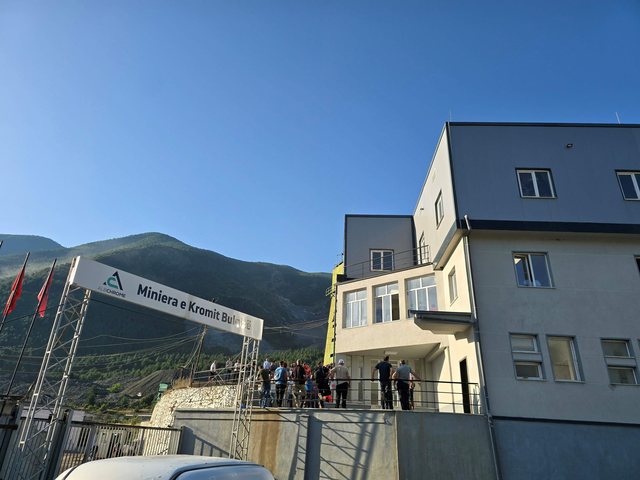
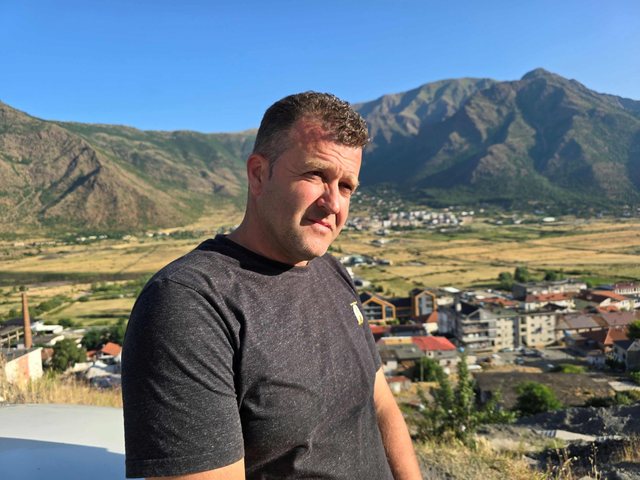
Altin Kola, one of the miners at the Bulqiza Chrome Mine and part of the workers' representative group in negotiations with the Albchrome company, has been fired with immediate effect.
“They fired me, they took away my children’s bread. I am the fourth in the family and my only income was my salary,” Kola tells BIRN, concerned by the company’s decision. He adds that, although investments have been made in technical safety, working deep underground – up to 1,100 meters – and with gas, for minimal wages, is unjustifiable.
"There are employees who work with 700 thousand old lek. I, who am in the production group, reach up to 1 million just by working above the norm. We simply asked for a salary increase, but we were punished," he adds.
The official letter of dismissal, signed by Albchrome's general manager, Cemil Acar, states that Kola has damaged official company materials and contributed to the escalation of the situation with employees. But according to Kola, the dismissal came after, irritated by the reactions of colleagues, he tore up a company notice placed in the workplace.
The company announced that, after a meeting with a miners' representative body, a deadline had been agreed for the demand for a salary increase until the end of July. "The workers did not agree to this extension and rightly accused us as the representative body. We were in the middle of two clashes, and in a fit of anger, I tore up the notice. This was my fault, for which I am now unemployed," he says.
His dismissal has sparked reactions from unions and miners, who have described the action as an act of revenge and an attempt to intimidate critical voices within the underground. The unions reacted with public statements and describe the dismissal as an act of revenge and a threat to the freedom of trade union organization.
The Confederation of Trade Unions of Albania (KSSH) has described his dismissal as “illegal and abusive”, while publicly condemning the “psychological and administrative violence” inflicted on the miners. KSSH has warned that it will pursue legal avenues to protect workers and will inform international trade union and employer institutions about the situation in the mine.
“The termination of the employment relationship against Altin Kola is a pure act of revenge for his participation in organizing workers. The distribution of statements of individual responsibility is a clear form of intimidation and union oppression,” the KSSH statement says, calling on the state to intervene and hold Albchrome legally accountable.
The United Miners' Union of Bulqiza (SMBB) has described Kola's dismissal as an "attempt to intimidate all miners" and to silence any dissenting voices. "Altini has always been at the forefront of the protests. He is not alone. The miners are not alone!", reads the SMBB's response, which demands Kola's immediate return to work and the implementation of the protest's demands.
The Labor Inspectorate in Dibër confirmed to BIRN that they have become aware of the case – after it was published in the media – and will begin an inspection of the company following the decision to dismiss the employee. “There will be an inspection team for the case that will conduct the relevant verifications and determine if there is a violation of the Labor Code. We will also contact the miner,” said Roland Kurti, head of the inspectorate.
The practice of firing workers involved in protests is not an isolated case for the Albchrome company. In the 2019 protest, four miners were fired after they were identified as part of the union organization and demands for better working conditions. This approach has been criticized by labor and human rights organizations.
Contacted by BIRN electronically, the Albchrome company has not given any official position on the case of the dismissal of miner Altin Kola until the publication of this news.
Meanwhile, after the resumption of the protest in the public areas of the Chrome Mine in Bulqiza, the Albchrome company had described the workers' protest as an "illegal strike". After the two-day protests, the company also distributed an "Individual Responsibility Declaration", where workers were asked to distance themselves from any collective action and to sign a statement that predicted serious consequences for those who disobeyed orders. This was seen by many workers as a form of pressure to divide and intimidate those who dare to demand their rights.
The Bulqiza mine has faced repeated protests over the years, fueled by workers' dissatisfaction with low wages, difficult working conditions and lack of security in the mine.
In an attempt to ease tensions, the company increased wages by 5% at the beginning of the year. But this increase, considered minimal and delayed, has not satisfied the workers, who had demanded a 10% increase in March.
Kola says that the workers felt abandoned, as neither the existing union within the mine nor other representative structures really intervened to solve their problems, forcing the workers to organize themselves and create a representation that could negotiate directly with the company. “We simply asked for a salary increase, as living conditions have become difficult. A workers’ representation was created. This is because neither the union nor the company administration could come to an agreement,” he says.
Kola has over 11 years of experience in mining and was one of five representatives chosen by the workers themselves to negotiate with the company. He was also one of the founders of SMBB and was part of the long strike of November 2019, as well as a survivor of a serious accident in the Albchrome chrome galleries.
Albchrome is one of the largest companies in the mining sector in Albania, with activities in Bulqizë, Mat, Klos and Elbasan. After the sale in 2022 by Balfin Group, the company was administered by the Turkish group “Yildirim International Mining Investments BV”. The mining sector in Albania remains one of the most dangerous for workers, with difficult working conditions and a significant lack of social protection. Many accidents over the years have resulted in fatalities or with permanent consequences for the life and health of miners./ reporter.al