"Condemned" protesters?! Who trapped Rama inside the Prime Minis...
/ 2026-10-23 16:02:00Focus


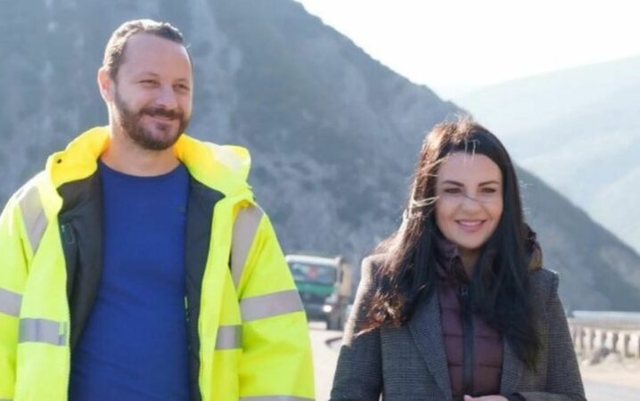
One of the things that contributed to the collapse of the system on June 21, 2024 in our country was the lack of planning for infrastructure projects in relation to energy projects, projects which are under investigation by the Special Prosecution Office.
It should be noted that the construction of new roads requires relocations and changes to transmission lines, such as the case of Thumanë-Kashar and the Outer Ring Road.
The irony with the Transmission System Operator projects is the fact that the former partner of the former Director of the Albanian Road Authority Evis Berberi, Valter Begaj, appears on the scene. The latter has been arrested together with Evis Berberi, after the former Director of the ARRSH is accused of having transferred public funds to the company for profit purposes, transferring them to another company.
According to electrical engineer Azmer Dulević, public companies in the energy sector have problems with the administration of public funds.
"Unfortunately, I must say that it is one of the sectors where the greatest abuses have occurred, in all these 34 years in the country and the sector where these abuses have occurred, the lack of investment, the lack of production," said Eng. Dulevich to "Vetting".
In 2019, Valter Begaj's company "Net Group" together with "ILLYRIAN CONSULTING ENGINEERS" shpk won the tender for the supervision of works during the implementation of works contracts, foreseen in the investments of OST sh.a. for 2019 with a winning bid of 13 million lek or 100 thousand euros.
Even “ILLYRIAN CONSULTING ENGINEERS” shpk is part of the consortium of companies that won the concession of the Milot-Thumanë road segment, together with “Gener 2”, “IDK-KONSTRUKSION”. This concession is a scandal previously highlighted by the “Vetting” editorial team, as in a possible conflict of interest, former Deputy Prime Minister Balluku signed the VKM for the family member of her subordinate Blendian Dalipi, the current administrator of the Distribution System Operator.
These contracts may be related to one of the most notorious projects of the Transmission System Operator and the Ministry of Infrastructure for the construction of the Tirana-Rrashbull transmission line (Energy Ring) financed by a loan of 45 million euros and divided into two components (lots) the Tirana-Rrashbull line and the 110 kV Tirana Ring.
This project under the direction of administrator Skerdi Drenova and minister Belinda Balluku has been amended several times, costs have increased by about 25% more than the initial total value and there are still elements of the agreement that raise questions about interest and delays. In the report of the Supreme State Audit, this is presented as one of the most problematic projects of the Transmission System Operator.
The contract for this project was signed with the Portuguese company “Efacec Engenharia e Sistemas, SA” on November 14, 2018, about 7 years ago, and the company would end up with problems with shareholders. However, through successive amendments, especially with amendment no. 3, the deadlines were extended to March 2024 for section 1 and August 2025 for section 2, while the total value of the contract increased to 23.9 million euros.
This increase of over 4.7 million euros has been justified by the contractor with its claims for additional compensation, periodically submitted since 2020, including claims for pandemic delays, international price increases and direct claims for contract cost escalation. These claims were added to in the 2022 meetings, where the contractor requested a review of the price and deadline while the OST had not yet made a final decision, leaving the contract open to further cost increases.
Despite the contractor's obligations, the situation on the ground for the Rrashbull substation remains one of the most obvious failures. Furthermore, the work inspections were carried out by groups established by internal orders of the OST, but some of the members of these groups did not possess the mandatory licenses, directly violating Law No. 8402 "On the control and discipline of construction works".
On the other hand, the project has also suffered from technical and institutional chaos created by the continuous changes in the line configuration. According to the loan agreement, the line was to be built for 220 kV. At the Technical Council meeting on 14 November 2016, the Council decided that the line would be built with poles for 400 kV, but with conductors only for 220 kV, creating a hybrid project outside the provisions of the loan and the initial study.
So, despite the increase in the contract value, practical implementation has lagged behind, creating another deep discrepancy between the funds spent and the real volume of works.
The same thing happened with the Lot 2 contract, which was signed in November 2018 with the foreign company "Energoinvest Sarajevo, Bosnia & Herzegovina" and entered into force in May 2019 as a "turnkey" project, the scope of which includes the supply of goods and equipment, their installation and construction works worth 18.4 million euros.
This contract has been amended, bringing the costs to 19.9 million euros. But the value of the contract of the consultant "Fichtner Bauconsulting GmbH", which is also the project supervisor, has also increased by 75%, bringing the cost increase to 1.8 million euros.
Vetting verifications show that around 70% of the shares of the company "Efacec Engenharia e Sistemas, SA" were owned by Isabel Dos Santos, who until a few years ago, according to Forbes magazine, was considered the richest woman in Africa, now dethroned.
She is the daughter of the former president of Angola, the late José Eduardo dos Santos, who ruled Angola for almost 3 decades. In fact, in January 2020, the "Luanda Leaks" scandal was published, an investigation by the International Consortium of Investigative Journalists (ICIJ) and 36 partner media outlets, which revealed the affairs of Isabel Dos Santos, which allegedly, due to the influence of her father's power, made dos Santos the richest woman in Africa and left Angola, rich in oil and diamonds, among the poorest countries in the world. / VETTING-News 24 show