Is this police force professional and capable of handling violen...
/ 2026-10-16 18:54:07Focus


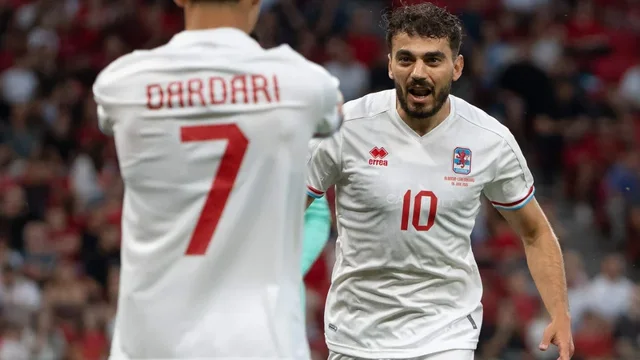
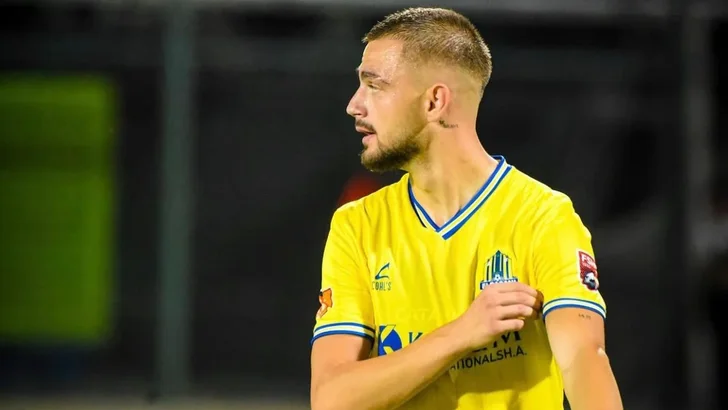
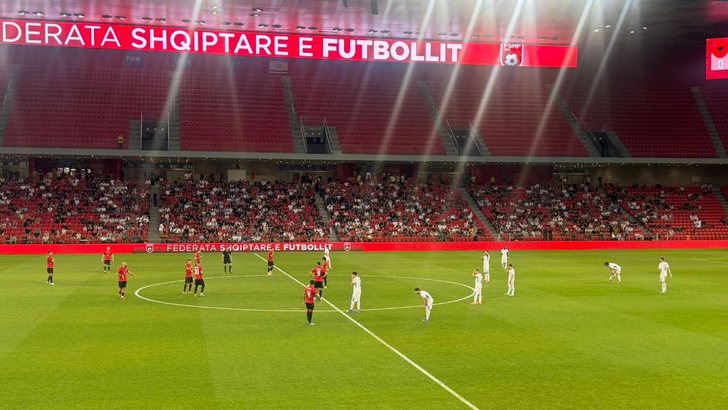
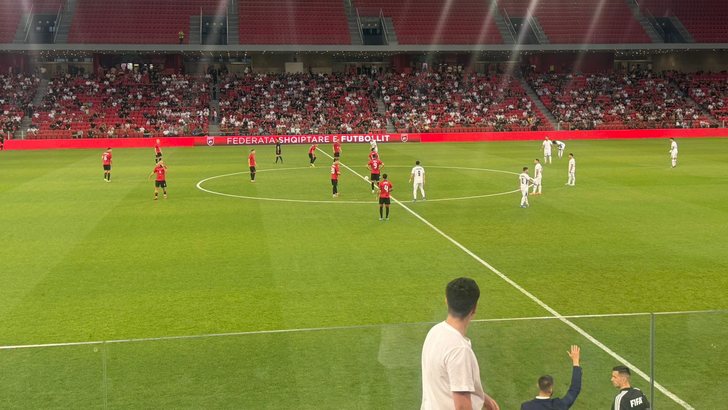
Yesterday's match at the "Air Albania" stadium left a very bitter taste for our football. The 0-1 loss against Luxembourg, the fifth in a row for the red and black national team under the leadership of Rolando Maran, highlighted not only the crisis of results, but also a unique story related precisely to the author of the only goal of the match: Danel Sinani.
For many sports fans watching the match, the first and last name of Luxembourg's number 10 immediately sounded Albanian. His family roots lead directly to Kosovo, but his history of identity is a complex Balkan labyrinth, where patriotism and ethnicity follow a completely different path than expected.
Who is Danel Sinani and why does he play for Luxembourg?
Born on April 5, 1997 in Belgrade, Sinani has built his life and career far from Albania and Kosovo. His parents were born and raised in Dragash (Sharr), in southern Kosovo. However, after his family moved to Luxembourg during his childhood, Daneli grew up in a completely different environment, where he was also formed as a footballer.
When the question “Why doesn’t he play for Albania or Kosovo?” is raised in sports debates, the player himself has always been clear in his public statements: he has had no federative or emotional connection with the red and black colors. Moreover, he has chosen not to identify as Albanian.
What does it mean to be “Goran”? (Between Albanian Law and Regional Paradox)
To understand Danel Sinani's decisive choice, one must enter the labyrinth of the identity of the Goran community, a population group that carries completely different interpretations depending on the country you are in, and the legal framework of official Tirana only adds to this paradox.
Ethnic Definition: The Gorani are a Slavic-speaking Muslim minority, traditionally originating from the mountainous region of Gora (the Dragash area in Kosovo, as well as some border villages in Albania and North Macedonia). They speak a transitional dialect of South Slavic, known in their language as “našinski”.
If on the playing field Sinan declares himself simply as a Gorani, on the legal and geopolitical level, this identity is divided into several windows:
According to Albanian Law (Bulgarian Umbrella): The Albanian state does not recognize any specific minority with the name “Goran”. According to the law on the protection of national minorities adopted by the Albanian Parliament, the Gorani people of the Kukës area, together with the Gollobordasi people in Bulqiza and the population of Small Prespa, are officially recognized as a Bulgarian national minority. The law “absorbs” them under this designation, which has led to many residents of these areas being issued with Bulgarian (and consequently European) passports in recent years.
In the International and Regional Environment: Unlike Tirana, Kosovo (his parents' country of origin) constitutionally recognizes the Gorani community as a unique and distinct ethnic minority, guaranteeing them seats in Parliament. On the other hand, Serbia (Daneli's birthplace, in Belgrade) has historically drawn Gorani into its sphere of influence through documents and education in Serbian. In North Macedonia, they are often seen as close to the Torbesh (Muslim Macedonians).
This legal and geopolitical tangle best explains why Luxembourg's number 10 never accepted to be recognized as Albanian. Faced with an identity torn between the law in Albania (which calls them Bulgarians), the constitution in Kosovo (which calls them Gorani) and the influence in Serbia (where he was born), Sinan has chosen the most pragmatic path: self-declaration as Gorani and loyalty to Luxembourg, the country that raised him and made him a Bundesliga player.
From Bundesliga to free agent status
At club level, Sinan is not just a household name. He broke through with F91 Dudelange, scoring historic goals in Europe, before moving to England to Norwich City (with loan spells at Huddersfield and Wigan).
Most recently, he played for three seasons in Germany with FC St. Pauli, managing to play regularly in the Bundesliga during the last season (2025/26), where he scored 5 goals, including those against Dortmund and Freiburg. With St. Pauli's relegation and the end of his contract on June 30, 2026, Sinani is currently a free agent, and yesterday's goal against Albania serves as the best calling card for his next destination.
The irony of fate at "Air Albania"
What happened in the 8th minute of yesterday's match was a pure irony of modern football's fate. A young man with roots from Sharr, Kosovo, who never felt like an Albanian, found space in our defense and with a precise shot defeated the red and blacks in the middle of Tirana.
In the era of global football, where borders blur and personal identities take on a variety of forms, Danel Sinani proved that on the pitch, it is not surnames that matter, but desire and organization. For Luxembourg, he remains a national hero; for Albania, a bitter memory./top channel