Is this police force professional and capable of handling violen...
/ 2026-10-16 18:54:07Focus


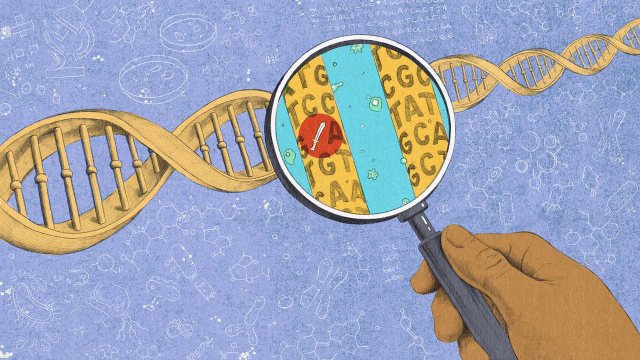
In 2009, a man named Abdelmalek Bayout faced a nine-year prison sentence in Trieste, Italy, after stabbing to death a man who had taunted him in the street. His lawyer used an unusual argument to reduce the sentence.
According to him, the client's DNA showed the presence of the so-called "warrior gene" - a mutation that has been linked by scientific studies for decades to aggressive behavior. The argument was that due to the genetic predisposition, he could not be held fully responsible for his actions. The appeal was successful and his sentence was reduced by one year.
By the 1990s, scientists had begun to find links between violent behavior and a variant of the monoamine oxidase A (MAOA) gene, which in 2004 earned the media nickname "the warrior gene," writes the BBC.
But today, the way science understands the influence of genes on human behavior and personality has changed significantly.
"It was initially believed that behaviors were controlled by a few genes with very large influence," says Aysu Okbay, professor of psychiatry and genetics of complex traits at Amsterdam UMC.
In the past 15 years, scientific research has revealed a much more complex picture. Even traits that were once considered highly heritable, such as body height, have proven much harder to link to specific genes.
Today, researchers believe that personality is shaped by the combination of thousands of small genetic variants, each with minimal impact, but which together create who we are.
Modern personality science is based primarily on the theory of the "Big Five Traits": openness to experience, conscientiousness, extraversion, agreeableness, and neuroticism.
Studies with identical and non-identical twins have been the main way to understand the influence of genes for decades.
A large analysis published in 2015, which included more than 2,500 twin studies and nearly 18,000 human traits, found that about 47% of differences in temperament and personality are related to genetics. The rest is related to environment and life experiences.
However, even identical twins, who share 100% of their DNA, do not have identical personalities.
One of the most famous cases in the history of psychology is that of the "Jim twins".
In 1979, American psychologist Thomas Bouchard studied identical twins separated at birth. He discovered striking similarities between them.
Two identical twins, both named Jim, were separated in infancy and reunited at the age of 39. Both had married women named Linda, then divorced and remarried women named Betty. One had named their son James Allan, the other James Alan. Even their dogs were named Toy.
Although genetic technology has advanced significantly, scientists still face a major problem: they cannot fully explain the genetic influence on personality.
Modern DNA studies show that genetic heritability for personality traits ranges between 9% and 18% – much less than the 40-50% that twin studies suggested.
This is known as the "missing legacy" problem.
According to researchers, the main reason is that personality is "polygenic," meaning it is influenced by thousands of small genetic variants distributed throughout the genome.
If genes don't determine everything, then how important is environment?
Here too, the answer is complex. Studies show that major life events – like winning the lottery, losing a limb, or other major trauma – do not change personality as much as previously thought.
"The biggest surprise has been that even very traumatic events in adulthood don't leave such a big mark on personality," says Brent Roberts, a professor of psychology at the University of Illinois.
Trauma during childhood has a greater impact, especially in increasing neuroticism and psychological problems later in life.
Meanwhile, researchers are also examining the impact of stress during pregnancy. Some research suggests that maternal stress may affect a baby's temperament through epigenetic mechanisms—changes that affect how genes are activated, without altering the DNA itself.
Today, scientists believe that personality is a complex combination of genes and environment.
No single gene and no single event can fully explain who we are.
"Genetic predisposition does not mean that a person will always behave the same in every situation," says Jana Instinske, a research assistant at Bielefeld University in Germany.
The latest studies are analyzing the DNA of hundreds of thousands of people to better understand the links between genes and personality.
Recent research by Daniel Levey at Yale University suggests that a gene linked to the body's response to stress may play an important role in neuroticism, depression, and anxiety.
Another study is examining the role of the brain's prefrontal cortex - the area that controls planning and decision-making - as the main center of personality traits.
For decades, science has tried to reduce human behavior to a few genes or life events.
But so far, these efforts have failed.