Is this police force professional and capable of handling violen...
/ 2026-10-16 18:54:07Focus


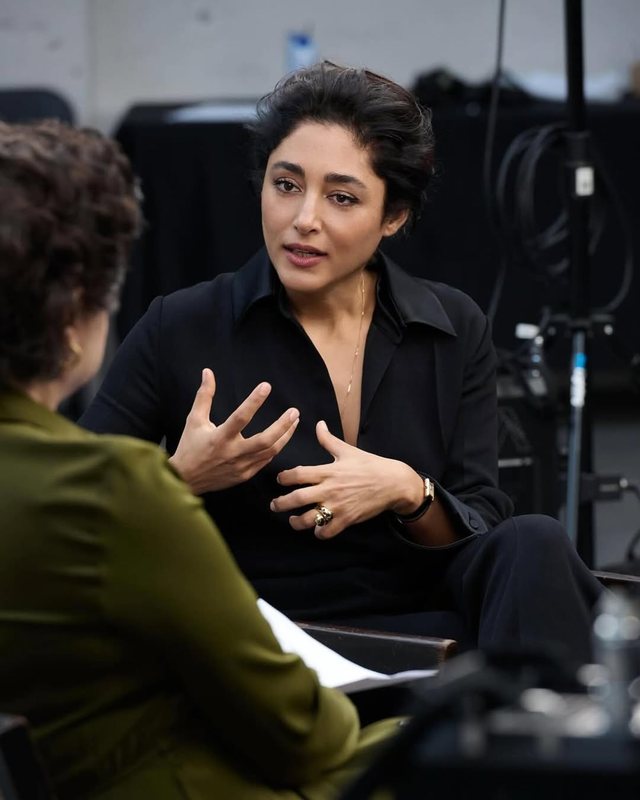
The third and mysterious person said to be behind Brigitte Macron's famous slap on Emmanuel Macron, according to French media, is Iranian actress Golshifteh Farahani.
According to Paris Match magazine political journalist Florian Tardif, in his book titled "A (Almost) Perfect Couple," the messages that Brigitte Macron saw on her husband's phone and that caused tension between the couple, contained comments about the actress, saying that she "is very beautiful."
Tardif also claims that the French president had developed a "platonic liking" for the actress for several months.
"This has been confirmed to me repeatedly. The messages created tensions that ended up turning a private debate into a public issue. At one point, the impression was created that everything was a misunderstanding, even a serious misunderstanding, that had ended. But that was not the case," says the Paris Match journalist.
Who is Golshifteh Farahani?
Iranian actress Golshifteh Farahani is the name that has brought back media attention to Emmanuel Macron's private life. Known not only for her artistic talent, but also for her strong political and social stances, Farahani has often criticized the Iranian regime for its restrictions on women and lack of artistic freedom.
Golshifteh Farahani was born and raised in Tehran. Her father, Behzad Farahani, was a theater director and actor, and her mother, Fahimeh Rahiminia, was a theater actress. Her sister, Shaghayegh Farahani, is also an actress.
From a very young age, she showed a penchant for art. At just 5 years old, she began playing the piano, and later focused on acting, gaining experience as a teenager.
The name "Golshifteh" was created by her father and means "the flower that loves," while her official name is Rahavard, which translates as "gift of the road."
Her career took off in 1998, when she was just 14 years old. She was cast in the lead role in the Iranian romantic drama “The Pear Tree.” The film was highly acclaimed both in Iran and internationally, making Farahani a household name and paving the way for other leading roles in films such as “Two Angels,” “The Fish Fall in Love,” and “The Music Man.”
In 2008, Farahani entered the American film market. She starred alongside Leonardo DiCaprio and Russell Crowe in the action-thriller film “Body of Lies,” immediately gaining public and critical attention as one of the most promising actresses of Iranian origin.
Following this success, offers for international roles increased significantly. Films such as “Just Like a Woman,” “Rosewater,” and “Exodus: Gods and Kings” consolidated her status as a world-famous star.
In 2016, Farahani starred alongside Adam Driver in the film "Paterson," directed by Jim Jarmusch, which was released in December of that year.
Childhood between war and fear
In an article published in Le Monde, the actress confessed that the first years of her life were filled with fear.
"The fight against dictatorship and occupiers is in our blood. I was born in 1983, during the war with Iraq and after the Islamic Revolution. The first years of my life were full of fear. Fear for my father, who was forced to flee because he was part of the opposition. Fear of bombs and the darkness," she wrote.
Farahani's career moves between independent European cinema and major Hollywood productions. For him, balancing these two worlds is essential.
"I don't want to fit into any 'box'. I can act in small independent films, in action films and perform in eight different languages. When I left Iran, I thought that in Hollywood they would only offer me terrorist roles in films about the Middle East. I didn't want that and I did everything to break that stereotype," she said in an interview.
"I believe that being an artist today is a form of resistance to this crazy world we live in. Art is the heart and fire that warms the soul of society in these dark times," Farahani declared.
Asked about Iran's future, she replied: "When you hope, you can be disappointed. I don't think we need hope anymore. We are convinced that Iran will be free."
Farahani has been living in exile since 2008, after Iranian authorities banned her from returning to the country because she refused to wear a hijab while performing in international films.
She has publicly supported the protests following the death of Mahsa Amini. On October 28, 2022, the British band Coldplay invited her to perform with them a version of Shervin Hajipour's song "Baraye", considered the anthem of the Iranian protests, during a concert at the River Plate stadium in Buenos Aires.
The concert was broadcast live to more than 3,500 cinemas in over 70 countries around the world.