Is this police force professional and capable of handling violen...
/ 2026-10-16 18:54:07Focus


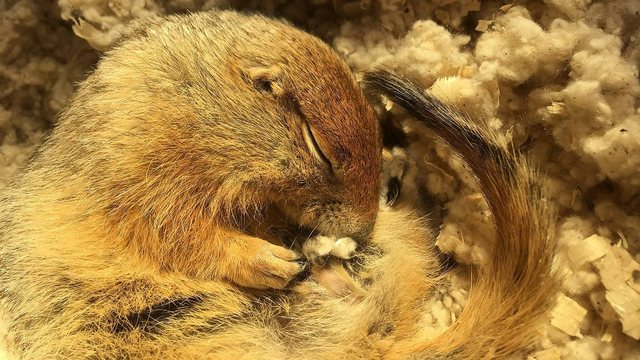
Scientists believe that studying this mammal could open new avenues for treating medical emergencies such as heart attacks, strokes and traumatic brain injuries.
A small animal that lives in the icy regions of the Arctic is attracting the attention of scientists around the world for its extraordinary ability to survive in temperatures that would be fatal to almost any other mammal. It is the Arctic ground squirrel, a species that during hibernation lowers its body temperature below freezing and can remain in this state for months.
Scientists believe that studying this mammal could open new avenues for treating medical emergencies such as heart attacks, strokes and traumatic brain injuries.
As winter approaches, the Arctic squirrel accumulates food and fat reserves before retreating to its burrow underground. During hibernation, breathing and heart rate slow significantly, while body temperature drops to extreme levels.
The brain temperature can reach 0 degrees Celsius, while some parts of the body drop to -2.9 degrees Celsius. No other known mammal can survive such low body temperatures.
For nearly eight months, the squirrel remains without food and water, waking up only occasionally, until the arrival of spring restores it to normal activity.
According to researchers, the ability to slow down metabolism could have great value in medicine. If doctors were able to create a similar condition in humans, patients who suffer heart attacks, strokes, or serious injuries would have more time to receive the necessary treatment.
Currently, doctors use body cooling methods to protect vital organs after some medical emergencies. However, the human body often responds by trying to restore normal temperature through shivering and other protective mechanisms.
Scientists think that lowering metabolism would allow the body to cool naturally without these biological responses.
Research has identified a molecule called adenosine as one of the key factors that helps initiate hibernation in arctic squirrels. Experiments have shown that substances similar to adenosine can also induce a hibernation-like state in mice, which do not normally hibernate.
This discovery has raised hopes that similar biological mechanisms may exist in humans, although their practical use is still far away.
Another interesting feature of the Arctic squirrel is its resistance to damage that occurs when blood supply is restored after a lack of oxygen, as occurs during heart attacks or strokes.
Scientists have found that during hibernation, the level of iodide in the animal's blood increases significantly. Laboratory experiments have shown that this substance can reduce tissue damage caused by the lack and restoration of oxygen.
Based on these results, clinical trials in humans have also been developed to test the potential of iodide-based drugs in protecting the heart after a heart attack.
Researchers are also studying how the Arctic squirrel maintains muscle mass during long months of immobility and how it manages to completely suppress the feeling of hunger during hibernation.
These mechanisms could help develop treatments for patients who are bedridden for long periods of time, as well as create new anti-obesity therapies.
The potential of this research is not limited to terrestrial medicine. Scientists believe that one day the knowledge gained from the Arctic squirrel could be used to place astronauts in a state of suspended animation during long space trips.
Such a state would reduce the need for food, reduce muscle loss, and help protect against cosmic radiation.