Berisha: Altin "Troplini" Dumani amnestied electoral crimes, SKA...
/ 2026-10-19 11:44:20Focus


Mark Savage and Ian Youngs – BBC
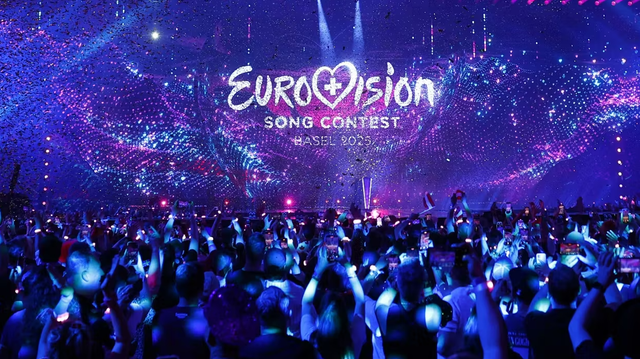
Thursday marked the biggest crisis in the history of the Eurovision Song Contest. Four countries withdrew from the competition over Israel's continued participation in the contest, and others may join them.
The boycott includes Ireland, which has won seven times, a record shared only by Sweden and the Netherlands, who have won five times. Spain, one of the contest's biggest financial backers, and Slovenia are also out.
This conflict reveals a deep division within the Eurovision family. And this situation has been developing for years, due to tensions over Israel's behavior during the war in Gaza.
There has also been concern over the voting and campaigning processes after Israel came in first in the public vote this year, finishing second overall after the jury votes were counted.
Meanwhile, Israel called the decision to keep it in the race a "victory" over critics who tried to silence it and spread hatred.
'We debated and listened'
Thursday's meeting with the European Broadcasting Union (EBU) highlighted divisions within the Eurovision family.
There was no direct vote on Israel's entry in Eurovision, but the country's future participation was effectively tied to a vote among broadcasters on proposed new rules on campaigns and public voting.
65% of EBU members voted in favor of the change. 10% abstained.
Roland Weissmann, director general of ORF, the public broadcaster in Austria, next year's host country, said there were heated discussions but that the process was fair.
"We debated and listened to the arguments of others, and after that we held a secret vote. This is democracy and the majority voted for stronger rules in the competition," he told the BBC World Service.
The result also meant that Israel was allowed to compete, but caused others to withdraw.
According to Spain, the crisis was avoidable.
"This point should never have been reached," the president of broadcaster RTVE said in an angry post on social media ahead of Thursday's summit.
Jose Pablo Lopez said he had lost faith in Eurovision organizers, saying they were influenced by "political and commercial interests."
He added that the organizers should have addressed Israel's alleged manipulation of the public vote with sanctions "at the executive level," rather than asking EBU members to decide on the consequences.
Israel denies it attempted to influence the vote and says its public campaigns were acceptable under Eurovision rules.
Other countries that may boycott
Other countries that could join the boycott include Iceland, which said it would not confirm its participation until the board meeting next week.
On Friday, Belgium and Sweden, who were also considering their positions, confirmed they would remain in the competition.
Finland said its participation would be conditional on securing a "large number" of other participants, adding: "Costs for participating organizations should not be increased unreasonably."
Eurovision author and scholar Dean Vuletic told BBC Radio 4's Today programme on Friday: "The next few weeks will be tense as countries confirm whether they will take part in Eurovision next year. But I think we will see more boycotts."
The deadline for countries to confirm participation is Wednesday, December 10th.
The freedom of expression factor
Amidst all the drama, a small detail in the EBU announcement illuminates why many countries were willing to keep Israeli broadcaster Kan in the contest.
During a “wide-ranging discussion”, it said, fellow broadcasters “used the occasion to highlight the importance of protecting the independence of public media and the freedom of the press to report, not least in conflict zones such as Gaza”.
This is because Kan is independent of the Israeli government and has often clashed with the administration of Prime Minister Benjamin Netanyahu.
Cannes' association with Eurovision is believed to have protected it from threats of closure or cuts, because the government recognizes the good PR power that participation in the contest brings.
If Israel had been excluded on Thursday, the future of the country's access to a free press could have been jeopardized.
Smallest budget
The financial impact will be a key question for the organisers. Spain was one of the "big five" countries that automatically qualify for the final, due to the size of the financial contribution to organising the competition.
In recent years, this contribution has been between 334 thousand and 348 thousand euros, according to data published by the Spanish broadcaster RTVE.
Now other countries will have to cover this expense, although the costs are supposed to be shared among all competitors, with France, Germany, Italy and the United Kingdom bearing the largest share.
And if other countries withdraw, the cost to each competing country will increase.
"Losing some of the biggest financial contributors has a huge impact, and it also has a knock-on effect for some of the smaller countries," said Jess Carniel from the University of Southern Queensland, a Eurovision researcher.
"This probably means we could have a smaller show [in 2026], unless the Austrian broadcaster can secure more funding to hold the show."
Competition severely damaged
This means that the competition is severely damaged, but the wounds are not fatal… yet.
Thursday was "a very seismic day in Eurovision history," according to Callum Rowe of The Euro Trip podcast.
Fans are "as angry as they are disappointed about what happened," he told BBC Radio 5 Live.
"We are losing countries that have a bright and glorious history in the competition."
The four boycotting countries will not change their minds before next May's competition in Vienna, Rowe said.
"Whether they will change their minds for 2027 is another question. If they see that Israel does not perform very well in Eurovision 2026, they may think that the new rules have had the desired effect. But at this point it is difficult to say."
Eurovision director Martin Green predicts that 35 countries will participate next year in Vienna.
The loss of four competitors is offset by the return of three others, Moldova, Romania and Bulgaria, who had been absent in recent years.
Not 'united by music'
The conflict will cast a long shadow over the competition next year, and perhaps even in the years to come.
With much of the music industry supporting Palestinian causes, it may be harder than usual to find artists willing to share the stage with Israel.
The competition has failed to live up to its motto, "United by music."
But Weissmann insists he does not think the boycott will be detrimental to Eurovision as its 70th anniversary approaches in 2026.
"It was built 10 years after World War II, united by music, and that's its essence. It's a difficult situation all over the world with crises [and] wars, and now it's our duty to keep in touch, to listen to each other, to debate, but then to find democratic ways to solve it."
However, at this point, it is difficult to see how the ties severed on Thursday can be reunited.