


"Condemned" protesters?! Who trapped Rama inside the Prime Minis...
/ 2026-10-23 16:02:00Focus


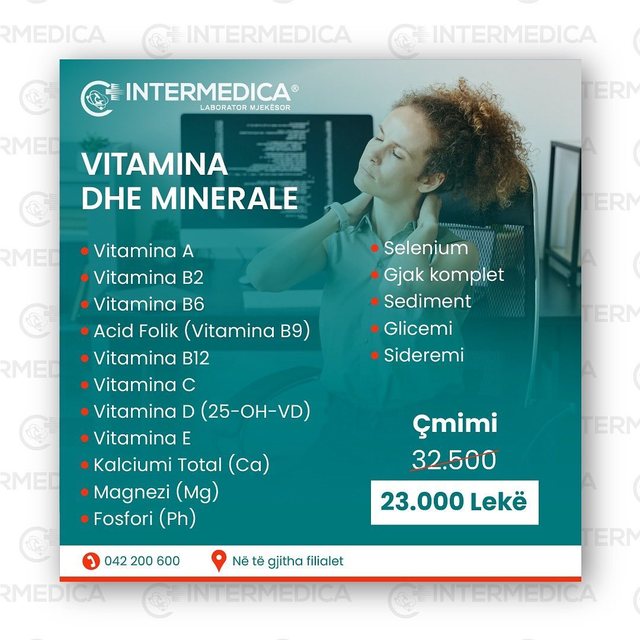
Vitamins and minerals are essential nutrients, because they perform many important functions in our body.
They help strengthen bones, heal wounds and strengthen your immune system, they also convert food into energy and affect the regeneration of cellular damage.
There is a balance between taking enough of these food supplements (which is necessary for maintaining the homeostasis of the organism) and overdose (which alters its function). This balance is maintained by evaluating the blood concentration of these essential elements.
Vitamin and mineral testing is an excellent screening method to assess your overall health and nutritional regimen.
By knowing their concentrations in the body, you, in consultation with specialist doctors, can guide your body towards receiving the vitamins or minerals your body needs in a certain dose and duration to stay healthy.
When should a vitamin and mineral test be done?
If you feel tired all the time (for the same food and physical regime) or your food regime does not meet the body's needs (physical fatigue, mental stress, other concomitant diseases that prevent the absorption of these elements from food), it is the moment to to be tested.
Vitamin and mineral tests are also recommended for people who are at risk for vitamin deficiency, but also for those who take supplements in an uncontrolled and unmonitored manner by a doctor.
You should be tested if you have any of the following symptoms:
• fatigue, muscle weakness, joint pain or brittle nails
• A history of malabsorption syndrome or other conditions that affect nutrient absorption
• A vegetarian or vegan diet
• An eating disorder
• Excessive consumption of alcohol
• Chronic stress
• A family history of several vitamin deficiencies
Function of vitamins and minerals in the body:
• Vitamin A helps to form and maintain the health of teeth, bones, soft tissues, mucous membranes and skin.
• Riboflavin (vitamin B2) interacts with other B vitamins. It is important for body growth and the production of red blood cells.
• Vitamin B6 is also called pyridoxine. Vitamin B6 helps in the formation of red blood cells and maintenance of brain function. This vitamin also plays an important role in proteins that are part of many chemical reactions in the body. The more protein you eat, the more pyridoxine you build up.
• Folic Acid or Folate (Vitamin B9) works with vitamin B12 to help form red blood cells. It is needed for the production of DNA, which controls tissue growth and cell function. Every woman who is pregnant should be sure to get enough folate. Low folate levels are linked to birth defects such as spina bifida.
• Vitamin B12, like other B vitamins, is important for metabolism. It also helps in the formation of red blood cells and in the maintenance of the central and peripheral nervous system.
• Vitamin C, also called ascorbic acid, is an antioxidant that promotes healthy teeth and gums. It helps the body absorb iron and maintain healthy tissues. It is also essential for wound healing.
• Vitamin D is also known as the "sunshine vitamin", as it is produced by the body after exposure to the sun. Ten to 15 minutes of sunlight 3 times a week is sufficient to produce the body's vitamin D requirements for most people in most latitudes. People who do not live in sunny countries may not produce enough vitamin D. It is very difficult to get enough vitamin D from food sources alone.
Vitamin D helps the body absorb calcium. You need calcium for normal tooth development and healthy bones.
• Vitamin E is an antioxidant also known as tocopherol. It helps the body form red blood cells and use vitamin K.
• Calcium is important for healthy bones and teeth; helps muscles relax and contract; important in nerve function, blood clotting, blood pressure regulation, immune system health, etc.
• Magnesium is found in bones; needed for protein production, muscle contraction, nerve transmission, immune system health, etc.
• Phosphorus is important for healthy bones and teeth; found in every cell; part of the system that maintains acid-base balance
• Selenium is a mineral or nutrient that people need to stay healthy. It plays a role in many bodily processes, including reproduction, thyroid function, DNA production, and protects the body from free radicals.





