Protests, violence, curfews: From France to Albania, why Europe'...
/ 2026-10-20 23:47:20Focus


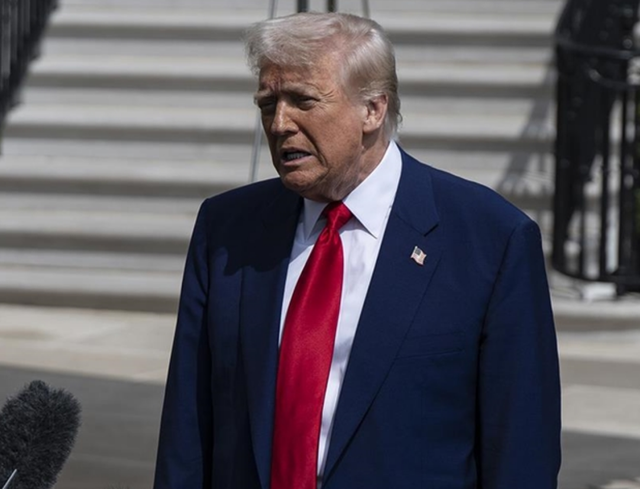
US President Donald Trump said on Tuesday he has no intention of firing the head of the Federal Reserve and announced a "significant" reduction in tariffs he has imposed on China, causing relief in global markets.
Hopes for a possible easing of tensions between Beijing and Washington, following Trump's tariff announcement, sent Asian stock markets higher today, from Tokyo to Hong Kong, and allowed the dollar to recover.
Furthermore, the Republican assured that he "has no intention" of firing Federal Reserve Chairman Jerome Powell, despite the harsh criticism he has leveled against him.
On the sidelines of a White House ceremony, Trump admitted to reporters that the additional 145% tariffs he imposed on Beijing “are very high,” adding that they “will be significantly reduced.” “No way are they going to be anywhere near that number,” the US president stressed, although he explained that “we’re not going to go back to zero.”
“We’re going to be very nice, they’re going to be very nice, and we’ll see what happens,” Trump said, referring to China. “Ultimately, they’re going to have to make a deal because without it, they’re not going to be able to trade with the United States anymore,” he warned.
"We determine the terms of the agreement and it will be a fair agreement." "I believe it is a process that will move quite quickly," he assessed.
Trump imposed additional tariffs on US trading partners, mainly in Europe and Asia, in early April, causing turmoil in markets. Then, a week later, he lowered the additional tariffs to 10% for all countries except China.
The additional tariffs imposed by the Republican on Beijing amount to 145%, with China responding by imposing additional tariffs of 125% on imported American products.
Although Beijing has not confirmed that talks with Washington are taking place, US Treasury Secretary Scott Besant assessed yesterday during an event in Washington that the current situation is not sustainable for either side.
Bessant believes that the additional tariffs act as a trade embargo and hinder the exchange of products between the US and China.
White House spokeswoman Caroline Levitt said for her part that talks to reach a trade deal with Beijing were progressing "very well."
At the same time, China called on Britain and the EU to defend global trade against US aggression.
"In the current context of widespread unilateral bullying, China and Britain have a responsibility to safeguard the multilateral trade order," Chinese Foreign Minister Wang Yi told his British counterpart David Lamy in a phone call.
In another conversation with his Austrian counterpart Beate Meinl-Reisinger, Wang Yi noted that "China and the EU should shoulder international responsibilities, safeguard the multilateral trading system with a common understanding, and work together to build an open world economy."