Is this police force professional and capable of handling violen...
/ 2026-10-16 18:54:07Focus


In 2016, the French luxury fashion house Hermès decided to withdraw an item it had donated to a charity auction after it appeared to have been purchased by Jeffrey Epstein. In an email made public this month in Epstein’s files, Epstein’s assistant says someone at the auction platform told them that Hermès “didn’t feel comfortable” with Epstein as a donor and that he would be refunded. It’s a reminder that institutions — and the people at their helm — can, when they choose, still recognize a line they won’t cross. No sermon, no press release: just a quiet act of moral maintenance that now reads like a lesson in basic civic hygiene.
France is discovering how rare this reflex has been in its own country. The latest Epstein files — emails, memos and legal documents released by the U.S. Justice Department — do not reveal a hidden French pedophile ring. So far, the only confirmed French sexual connection to Epstein remains Jean-Luc Brunel, the modeling agent who died in police custody in 2022 while being investigated on suspicion of trafficking women to Epstein. Instead, the new files trace how Epstein worked his way into the ranks of the country’s political and cultural elite, providing private jets, presentations and overseas facilities to people who had long been accustomed to thinking of themselves as above reproach.
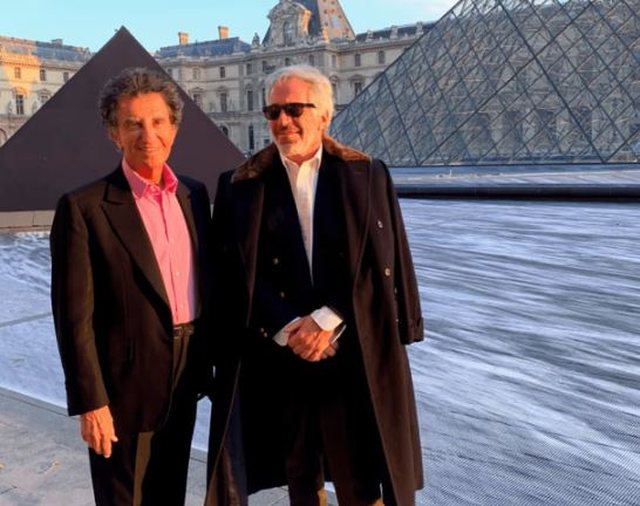
At the center of the French storm is Jack Lang, now 86: former Socialist minister of culture under François Mitterrand, architect of the Fête de la musique and until this week president of the government-funded Institut du monde arabe. His name appears hundreds of times in documents: dinners, messages, film projects, birthday parties and, above all, favors. In a 2017 message, Lang thanks Epstein for his “endless generosity” and then asks if he can “abuse” him again by borrowing a chauffeur-driven car to attend a birthday dinner hosted by the Aga Khan, 60km from Paris. It is the language of the royal court, not that of the Republic.
Faced with the correspondence, Lang has declared himself in good faith. He says he met Epstein “about 15 years ago” at a dinner hosted by Woody Allen, that he does not usually ask friends for their criminal records and that he “knew nothing” about the financier’s past, even though Epstein had already served a sentence in Florida for crimes involving minors. However, on Friday evening, prompted by the Élysée Palace, he “proposed” his resignation from the Arab World Institute after France’s National Financial Prosecutor’s Office (PNF) opened a preliminary investigation into suspicions of tax fraud and money laundering targeting him and his daughter Caroline.
It is Caroline Lang who gives the case its most contemporary dimension. A seasoned film producer and former executive at Warner Bros. in France, she co-founded a company in the U.S. Virgin Islands with Epstein in 2016, funded entirely by him and apparently intended to market works by young French artists. The structure was not declared to French tax authorities. Two days before Epstein’s death in 2019, he named her in his will as the beneficiary of $5 million — an amount she insists she did not know about and never saw.
On French television, Caroline Lang described herself as “extremely naive,” spoke of a “generous sponsor” and “a friend, not a close person,” and stressed that she faces no criminal charges. The case against her is fiscal and ethical, not sexual. This distinction matters—and also exacerbates the concern. What is troubling is the comfort with material dependence on a man whose wealth was already inseparable from documented abuse.
A familiar feature of French public life emerges: a political-cultural caste that leaves the cost of its lifestyle to “friends.” For decades, Jack Lang embodied the grandeur of the cultural left. Epstein’s documents also describe him as a regular user of private jets and chauffeured cars, the expenses of which were paid for by a “kind, charming, and generous” American acquaintance. Lang’s daughter updates the model for the age of limited liability companies and tax havens.
Epstein’s influence on French democracy lies less in sexual exploitation than in money and political influence. In 2018 and 2019, Steve Bannon, Donald Trump’s former strategist, corresponded with Epstein about how to prop up the debt-ridden finances of Marine Le Pen’s National Rally party, which at the time relied on loans from a Russian bank (there is no evidence that Epstein ever provided funding). The correspondence places France’s main far-right party within a transatlantic ecosystem in which private finances and ideological outreach blur democratic boundaries.
As if to underscore the point, the Kremlin has now added a more overtly hostile layer. This week, French authorities uncovered a Russian-linked disinformation campaign that sought to link Emmanuel Macron to Epstein, using a fake news website, manipulated screenshots, and massive amplification on social media. The episode shows how Epstein has become a kind of narrative solvent: a name that easily attaches to anyone a hostile state wants to discredit.
France is not alone. Embarrassing correspondence is also emerging in London, Rome and Washington. But in France, the issue is shattering an old self-image: that of a republic held together by culture, great institutions and venerable left-wing figures, supposedly immune to dirty compromise. The Lang family could not refuse a free flight, a luxury car or a promised inheritance. Hermès achieved this with a short email and a refunded credit card. Moral courage is not guaranteed by office, status or culture – it is chosen, one email, one decision at a time.