How Belinda Balluku is fabricating the rumor about Top Channel's...
/ 2026-10-19 16:19:00Focus


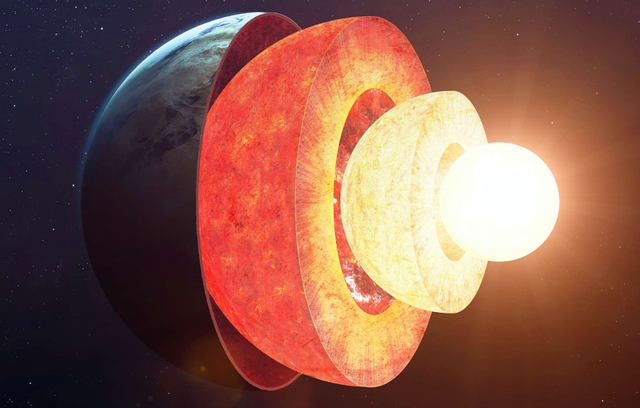
The Earth's core is undergoing unexpected structural changes, a group of scientists has said. They have discovered that the inner core of our planet is changing its physical nature.
These changes may have also slightly affected the length of the day, researchers believe.
While scientists have long been aware of changes in the Earth's inner core, most research assessing it has studied the way it rotates. But now scientists have discovered that other types of activity are happening beneath our feet.
The inner core lies 4,800 kilometers below the Earth's surface. Gravity holds it within the liquid, molten outer core.
The researchers had begun their work by looking to analyze the slowing of the inner core's rotation. But while studying this, they found evidence that the inner core is not rigid in the way previously thought.
This was discovered when scientists looked at the work of seismographs over the decades, which describe earthquakes. The solid core of the Earth appears to be turning into a liquid form.
In fact, the core can go through a process known as "viscous deformation," where its shape changes and interacts with the outer core.
The researchers were initially puzzled by the data, which included 121 repeated earthquakes from 42 locations near the South Island of Antarctica. The researchers noticed a group of seismic waves that seemed distinct, indicating that there was more physical activity in the inner core.
"The molten outer core is widely known to be turbulent, but its turbulence had not been observed to disrupt the inner core on a human timescale," said John Vidale, of USC Dornsife's College of Letters, Arts and Sciences and the study's lead researcher.
"What we are observing in this study for the first time is likely that the outer core is influencing the inner core."
The work is described in a new paper, "Annual-scale variability in both the rotation rate and surface near Earth's inner core," published in the journal Nature Geoscience.