Protests, violence, curfews: From France to Albania, why Europe'...
/ 2026-10-20 23:47:20Focus


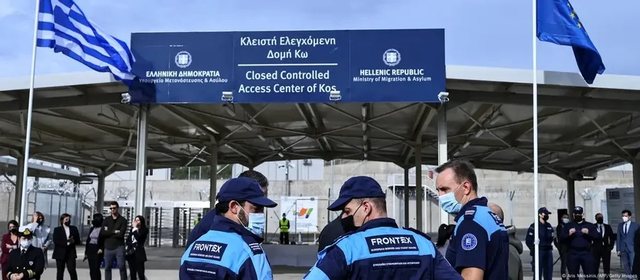
After several months of internal investigations, the official responsible for human rights at Frontex made serious accusations against the staff of this European border control and monitoring agency, who were stationed in the Mediterranean. According to the reports, reviewed by NDR and WDR, border guards have made serious mistakes regarding the possible illegal return of migrants across the borders - where they came from. In two cases, the staff seriously violated their duties, according to the investigation reports.
Frontex – the EU agency for the protection of land and sea borders, announced that it is currently examining in detail the recommendations presented in the report of human rights officials.
Allegations of illegal "pushback" operations
NDR and WDR first reported in the spring that there had been two incidents in the Mediterranean Sea and reviewed the course of events. According to the information gathered, the migrants were returned from Greece, that is, from the territorial waters of the European Union to Turkish waters - while Frontex and the Greek coast guard were present in this country. It is suspected that Frontex has once again been involved in the so-called illegal "pushback" operations.
One event in particular raises concerns: According to the review of the event by the team of NDR and WDR journalists, on the morning of February 19, 2024, about 30 people, including men, women and children, were on a dinghy in Greek waters. Video footage shows them calling for help, while at least two other ships are close by. One of these larger vessels carries the flag of the Bulgarian coast guard, which monitors the borders between Greece and Turkey as part of Frontex in the Aegean Sea. Despite requests for help, the EU's Border Surveillance Agency has apparently failed to respond and help.
Frontex ships ignore requests for help
The Frontex investigation confirms the information of NDR and WDR: It was a Bulgarian ship in the Frontex mission that encountered a raft with migrants. The crew, despite calls for help, reportedly did not respond. Frontex staff did not report any incidents of migrants at risk on the high seas either. The report states that during an internal investigation, the Bulgarian Frontex crew denied seeing or encountering the migrant boat during their shift. But internal investigators believe there is evidence, which confirms that the Frontex crew encountered migrants near the island of Lesbos. And they note with great concern that the crew's reports were incomplete.
The Bulgarian Interior Ministry did not respond to questions about the incident. The Greek Coast Guard took over the coordination of the mission, as the Frontex operation took place in Greek territorial waters. The Greek Coast Guard said its officers had saved many refugees' lives in the past and had acted in accordance with the law, and that the investigation could be reopened if new information emerged.
Using batons against refugees on boats
In another incident, internal investigators also found clear wrongdoing. The video shows how at the end of January 2024, an overcrowded raft with about 30 people was floating in the sea. The video shows a boat approaching him, which according to the signs can be safely said to belong to the Greek coast guard. The masked people from the boat did not help the refugees, but apparently threatened them with sticks. A larger Frontex vessel can be seen in the background.
The investigation now confirms with "certainty" that the migrant boat entered Greek waters and was intercepted twice - once by a Frontex vessel near the border and the second time by the Greek coast guard near the island of Lesbos. It was also confirmed that the Greek coast guard's boat with its maneuvers at a short distance from the dinghy created waves, so that the dinghy with the migrants began to sway and was in danger of overturning. The Greek crew used the sticks in an "extremely dangerous manner". The safety and lives of immigrants were endangered by these actions.
The return of the migrants to Turkey, where they were then rescued by members of the Turkish coast guard, cannot be considered completely voluntary, the report further states. However, the investigators have not been able to determine the exact motives, why the immigrants turned their boat towards Turkey. As in the first incident, also in the second, the Frontex staff's reports are incomplete and inaccurate.
Illegal pushback operations are difficult to prove
The result of the investigations shows that concrete evidence of illegal returns and identification of participants is almost impossible to collect, since such incidents often take place for hours in the middle of the open sea. Even the current investigation failed to prove specific illegal "pushback" operations. But investigators point out that the methods observed are consistent with previous "pushback" operations.
Within the EU, there is a fierce debate about how the protection of European borders is implemented. Various international reports, including that of the European Anti-Fraud Office (OLAF), have shown in recent years that illegal "pushback" operations have been carried out on the Turkish-Greek border. Similar charges exist against Croatia and Poland. A few weeks ago, Finland legalized "pushback" operations at the national level, arguing that Russia is deliberately sending asylum seekers to the border to threaten the security of neighboring countries.
Frontex must ensure respect for human rights
Forced return operations are considered illegal under many international rules, as such actions prevent people from applying for asylum and force them to re-cross the EU's external border and return to where they came from. These actions are contrary to Frontex's mandate, which includes border protection while respecting basic human rights. According to internal regulations, Frontex staff are even obliged to "proactively identify persons and inform them of their rights if they seek international protection".
Frontex director Hans Leijtens is now facing serious pressure. He took office in early 2023, promising that Frontex would no longer engage in illegal "pushback" operations. In an interview with Reschke Fernsehen, Leijtens explained that the conduct of operations is always in the hands of the host country - in this case, Greece. However, in questionable situations, he expects his staff to at least report back to him on the situation and actions. And exactly this, as the investigation of human rights officials showed, was not done in these cases. There was no help for the immigrants - no information or reports about these developments./DW/