Protests, violence, curfews: From France to Albania, why Europe'...
/ 2026-10-20 23:47:20Focus


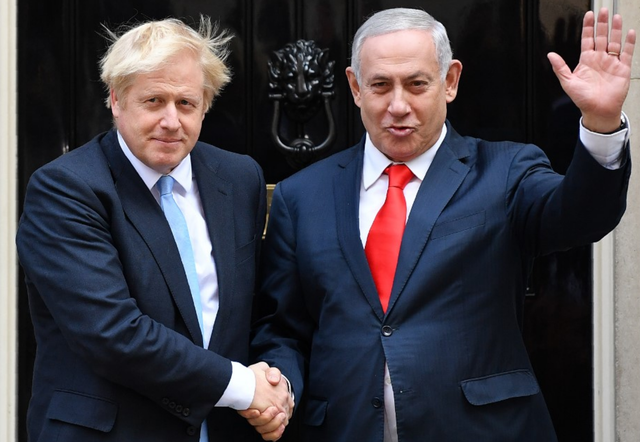
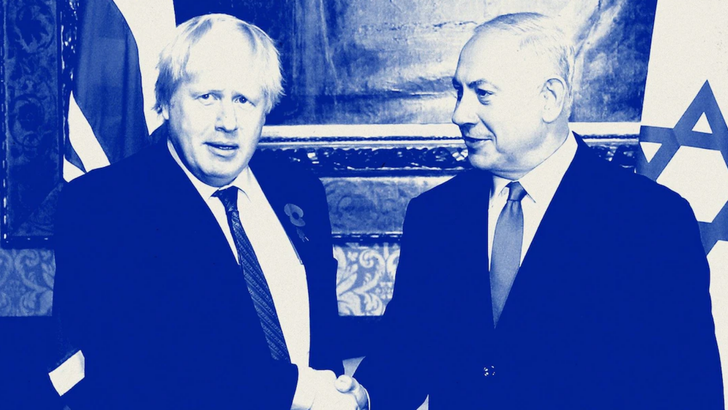
Former British Prime Minister Boris Johnson has confessed in his book that his security team while in government as a minister found a surveillance device in his personal bathroom at the Foreign Office in London after a meeting he had with Prime Minister Benjamin Netanyahu, reported The Telegraph, which cited an excerpt from the conservative politician's new book.
Calling Netanyahu by his nickname Bibi, Johnson, who was UK foreign secretary at the time, says the Israeli prime minister went to the toilet in his "secret annex" during a meeting in 2017.
"There Bibi mounted it for a while, and it may or may not be a coincidence, but I'm told that later, when they were doing a regular sweep for bugs, they found a bugging device," Johnson writes in "Unleashed." "
When the Telegraph asked the former British prime minister for more information, Johnson replied: "I think everything you need to know about that episode is in the book."
The Nixon wiretaps
But an episode with heads of state who complain about the sophistication of the Israelis with methods of interception or even control of key segments of institutions in the West happened during the presidency of Richard Nixon.
The conversation between Billy Graham an evangelical pastor and President Richard Nixon about the Jews took place on February 1, 1972, at the White House. It was secretly recorded and later released as part of the Nixon tapes, a series of tapes that emerged during the Watergate investigation. This conversation focused particularly on Graham and Nixon's perceptions of Jewish influence in America, particularly in the media, and it shocked many given the public persona of Graham's involvement.
Billy Graham expressed concern about what he perceived as Jewish control of the American media, echoing anti-Semitic conspiracy theories. He suggested that Jewish people had a powerful influence on the entertainment and news industries.
He stated that Jews were a key factor in the "secularization" of America and making it more difficult to promote Christianity through the media.
Nixon agreed with Graham's perceptions and shared his anti-Semitic views during the conversation, expressing frustrations with the Jewish people, especially in the context of his political opposition.
Nixon made remarks about Jewish individuals in government and the media who he believed were opposed to his presidency.
"This control must be broken or the country will collapse," Graham said.
"Do you believe this?" says Nixon after the "suffocation" comment.
"Yes, sir," says Graham.
"Oh, boy," Nixon replies. "Me too. I can never say that, but I believe it."
"No, but if you get elected a second time, then we might be able to do something," Graham replies.
The Nixon-Graham conversation took place during a 90-minute session following a prayer breakfast they attended on February 1, 1972.
The long conversation opens with Graham praising Nixon's words about the morning of prayer. “There were a lot of people in tears when you finished this morning and it's very emotional. That's the best thing I've heard you say on one of those mornings.”
After offering Nixon advice on his preparation for major speeches as well as strategy for his re-election campaign, Graham notes that he was invited to lunch with the editors of Time magazine. "I was quite surprised as this is the first I've heard from Time since (Time founder) Henry Luce passed away."
Later, Graham mentions that he has friends in the media who are Jewish, saying that they "group around me and are friendly with me." But, he confesses to Nixon, "They don't know how I really feel about what they're doing to this country."
Nixon then opens up about a subject he "can't talk about publicly," namely Jewish influence in Hollywood and the media. He quotes Paul Keyes, a political conservative who was executive producer of NBC's hit show "Rowan and Martin's Laugh-In," as telling him that "11 out of 12 reporters are Jewish."
"Yeah, right?" says Graham, prompting Nixon to claim that Life magazine, Newsweek, The New York Times, the Los Angeles Times and others are "totally dominated by Jews." He calls network anchors Howard K. Smith, David Brinkley and Walter Cronkite "front-line people who may not be of that persuasion," but whose reporters are "95 percent Jewish."
Nixon counters that this does not mean “that all Jews are bad,” but that most are left-wing radicals who want “peace at any price, except when it comes to supporting Israel. The best Jews are actually Israeli Jews."
"That's right," agrees Graham, who later agrees with a Nixon assertion that a "powerful bloc" of Jews confronts Nixon in the media. "And they're the ones who point out the pornographic stuff," adds Graham.
Nixon claims that "every Democratic candidate owes the Jewish people their votes," but he won't.
Then there's a fade-out with the next voice heard being Graham's, alluding to AM Rosenthal, editor-in-chief of The New York Times.
“But I have to lean a little, you know. I go and see Mr. Rosenthal's friend at the New York Times, and people of that sort. And everyone, I don't mean all Jews, but many Jews are my great friends and are friendly with me because they know that I am friendly with Israel and so on.
Nixon replies, "They don't have to know."
The conversation turns to religious magazines, postage, and Nixon's unkind opinions of certain cabinet members. Graham then leaves and, a few minutes later, Nixon tells Haldeman, "It was good that we got that point about the Jews." / Hashtag.al