Protests, violence, curfews: From France to Albania, why Europe'...
/ 2026-10-20 23:47:20Focus


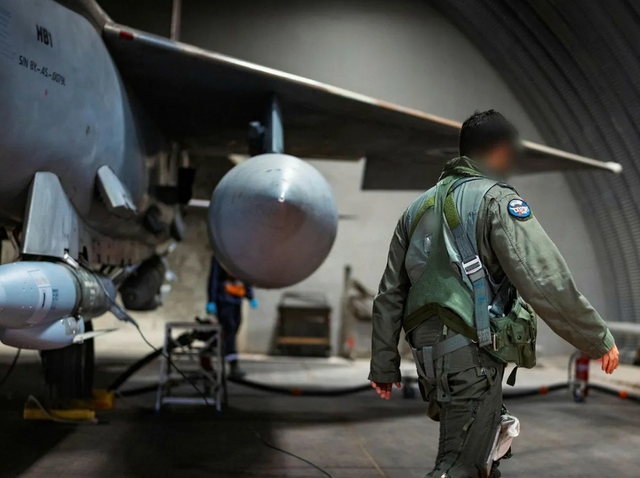
For many air force pilots, the possibility of them flying over Iran's skies and attacking its nuclear plants was considered "an impossible dream"
“When we dreamed about attacking Iran over the years, I imagined something different for myself,” Major N., 31, married and the father of a daughter, told Haaretz.
He serves as a fighter pilot in the F-16 fighter jet group that led the attack. For years, the Israeli Air Force has been preparing for the possibility that it would have to attack Iran.
The scenarios, targets, and munitions have changed over the years, but the destination, Iran, has never left the table of Israeli Air Force commanders in the last two decades.
For many air force pilots, the possibility of them flying over Iran's skies and attacking its nuclear plants and surface-to-surface missiles, and of circling Iran's skies without interference, under their constant surveillance, was considered "an impossible dream."
"We prepared for the possibility of encountering a much more effective defense than what we have seen and are seeing today in Iran," says Major N.
He does not attribute the IDF's achievements in Iran and its air superiority to a failure on the part of the Iranian military. "It is a powerful army that even today has high capabilities, and we must remain modest," he asserts.
"We prepared for a very long time for an attack on Iran and for a number of scenarios, which led to a situation where this whole system is working well. All our systems worked in coordination, which would make it possible at such an early stage to undermine the capabilities of Iranian defense and hit them hard to get to the situation we are in today," he added.
"The information we receive is simply incredible," he emphasizes.
"There is almost nothing that surprises us. The level of intelligence that the IDF has of all intelligence organizations is at the highest level."
"For years, we have been preparing for this thing that we would need to achieve in Iran, and we have reached a situation where we are at a very high level of preparation."
When they first set off for Iran, the air force identified footage of Iranian fighter jets.
"But this is something we prepared for," Major N reassures us.
He says the air force "also had scenarios of a threat from fighter jets and air battles against enemy aircraft."
As for N., like every fighter pilot in the IDF, air battles against enemy aircraft are the most prestigious operational extreme, to which every aviation cadet aspires from the first day of the pilot training course.
"There is no pilot who does not dream of air battles. When we saw the takeoffs of the Iranian Air Force planes, there was also a slight feeling of joy," he said.
But after a few minutes, he said, there was some disappointment.
"We saw them flying east, smuggling their planes out of places where they feared we would attack them, so that we wouldn't harm them - to my regret and their delight, they got away from us."
The Israeli Air Force has operated non-stop since the attacks against Iran began, at a distance of over 1,500 kilometers from the country, with each flight lasting between three and five hours, mainly over Iranian territory due to the country's large size.
For Major N., the sense of mission and consensus regarding the importance of the activity are an integral part of it.
"The fact that the IDF system is creating non-stop operational activity 24 hours a day - not only does it strengthen me operationally, but there's an insane sense here of mission and pride that we're fighting an enemy that's threatening to destroy us, and we're strong against it," he says.
At the tactical level, Major N. asserts that fighting against a sovereign country and an organized army, as opposed to fighting against terrorist organizations operating from within a civilian population, prevents harm to uninvolved civilians.
"Compared to terrorist organizations that are embedded in the population as a human shield, in Iran, things are much clearer. This is a country with a powerful, significant and organized army," he says.
"In that sense, it's something that makes us at least very happy. We never try to harm civilians and we're not trying to fight against the Iranian people, but against a regime that is threatening the future of the State of Israel."
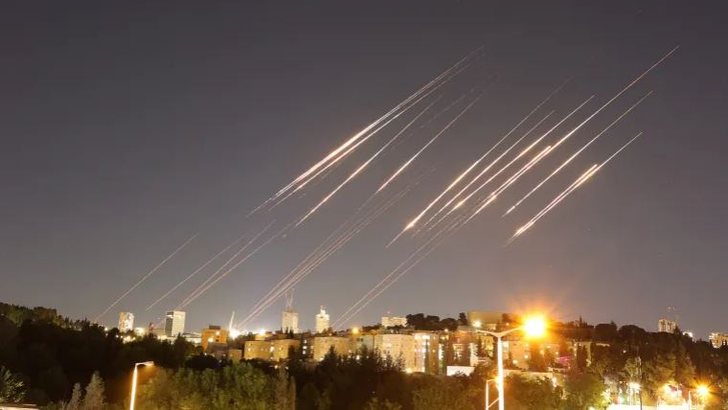
When air force planes fly around Iran, pilots sometimes spot Iranian ballistic missile launches heading toward Israeli territory.
"We see the launches towards Israel. We see the interceptions and, to my regret, the landings in city centers," says Major N.
"As far as I'm concerned, every surface-to-surface missile we destroy is one less missile that will be launched against Israeli civilians, and every launcher we destroy is another blow to their ability to harm us. It's clear to all of us what we're doing there."
N. wants to make it clear that despite the achievements of the air force, we must not forget the day the war began.
"For me, as a pilot in the Israeli Air Force, on October 7, we were at a low and difficult point, and today we are in a different place - but we are not forgetting our hostages in Gaza for a moment, and we will do everything possible to get them back."