Details of the storm in the administration, here's who will resi...
/ 2026-10-22 22:25:00Focus


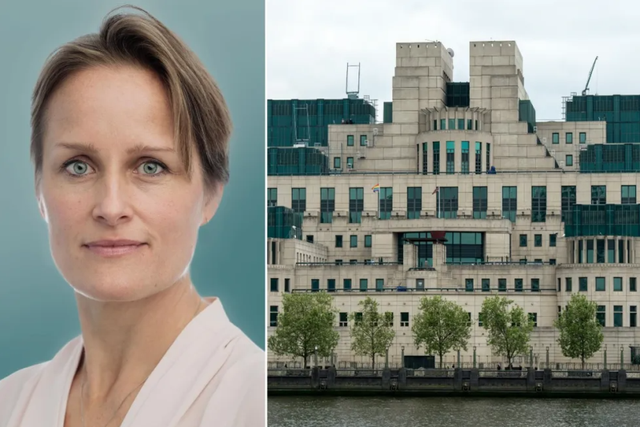
The UK's Foreign Intelligence Service (MI6) will have a woman at its head for the first time in its 116-year history. Blaise Metreweli will take over the agency later this year, succeeding Sir Richard Moore as the 18th head of MI6.
Metreweli, who joined MI6 in 1999, currently heads the service's technology and innovation department. She said she was "proud and honoured" to have been entrusted with the role.
British Prime Minister Sir Keir Starmer described the appointment as a "historic moment", at a time when, according to him, "the work of intelligence services has never been more vital than today."
MI6 is tasked with gathering intelligence abroad to ensure the security of the United Kingdom, with the primary purpose of combating terrorism, disrupting the activities of hostile states, and strengthening cybersecurity.
The head of MI6, also known as "C", is the only member of the agency to be publicly identified.
Metreweli, 47, is currently the Director General of “Q,” leading the department that focuses on maintaining agent secrecy and developing technologies to counter threats like biometric surveillance from China.
"MI6 plays a vital role, alongside MI5 and GCHQ, in protecting the British people and promoting the UK's interests abroad," she said.
Metreweli studied anthropology at Cambridge University and previously held senior positions at MI5, the British domestic security agency. Most of her career has been focused on the Middle East and Europe.
In an interview with The Telegraph in December 2021, when she was part of MI5 and operating under the pseudonym "Director K", she emphasized that threats to the United Kingdom's national security are "truly diverse."
"We are protecting the government, our secrets, our people, including counter-terrorism measures, as well as the economy and sensitive technologies," she explained.
According to her, the activities of the Russian state still pose a threat, while China, with its growing global influence, presents both opportunities and risks for the United Kingdom.
What job does "C" do?
“C” is the head of MI6, officially known as the Foreign Intelligence Service, and reports to the Foreign Secretary.
“C” is also part of the Joint Intelligence Committee, along with the heads of other agencies and senior government officials. This committee receives intelligence reports, analyzes developing situations, and advises the British prime minister.
It's a common misconception that the "C" stands for "Chief." This is not true. The first British spy agency was called the Secret Service Bureau and was created in the early 1900s.
It was headed by a Royal Navy officer, Captain Mansfield Cumming, who always signed his letters with the initial "C" and since then, this name has remained as a pseudonym for the head of MI6.
Captain Cumming always wrote in green ink. To this day, the head of MI6 is the only person in Whitehall (the center of the British administration) who writes in green ink.
Does “C” give his agents a “license to kill”?
No. But the Foreign Secretary can. Under Section 7 of the Intelligence Services Act 1994, an MI6 agent can be authorised to carry out acts that would otherwise be unlawful, including the use of deadly force. However, this is a lengthy and complicated legal procedure.
The organization that Metreweli will lead faces numerous and unprecedented challenges.
Geographically, these challenges come primarily from Russia, China, Iran and North Korea, four states that are cooperating ever more closely to undermine the interests of the UK and the West around the world.
But there are also technological challenges.
MI6's role is to recruit human agents to steal secrets from Britain's adversaries, including both hostile states and non-state groups such as al-Qaeda.
In an age of rapid digital innovation, MI6 must move faster to stay ahead of its enemies and remain relevant, at a time when much of its intelligence is gathered via the internet or satellites.
Last September, outgoing chief Sir Richard Moore, along with CIA director William Burns, warned that the international world was “under threat in a way not seen since the Cold War”.
In an article for the Financial Times, they emphasized that beyond the war in Ukraine, the two intelligence services were cooperating closely "to thwart the dangerous sabotage campaign in Europe being carried out by Russian intelligence."