Is this police force professional and capable of handling violen...
/ 2026-10-16 18:54:07Focus


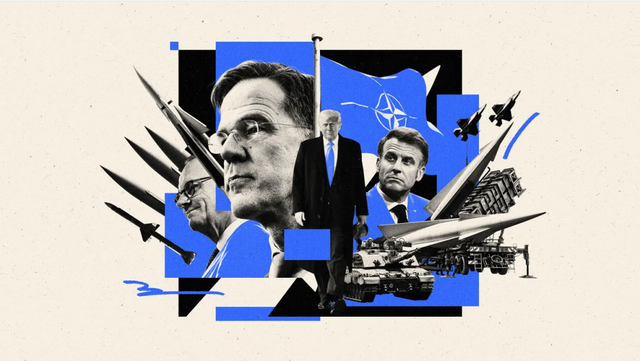
It is a step backwards for the Americans within NATO and, consequently, a step forward for the Europeans.
The Alliance's Supreme Military Command remains under the control of the United States, namely General Alexus Grynkewich, who oversees all operations from headquarters in Mons, Belgium.
But yesterday, February 10, the Military Committee, made up of representatives from the 32 member countries, confirmed the decision to redistribute tasks among the three operational centers, the “Joint Force Command”, which report directly to Grynkewich. The United States will leave the Naples Command to Italy, while the United Kingdom will take over the Norfolk Command in Virginia.
At the third center, based in Brunssum, in the Netherlands, a Polish general will accompany his German colleague, Ingo Gerhartz.
The changes, according to NATO's website, will occur gradually over the years.
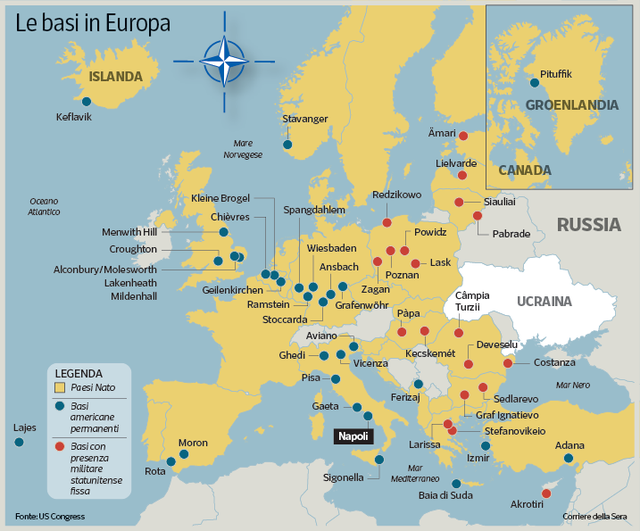
There are no rules that define the length of a commander's term at this level, but it is usually 2-3 years. In Naples, US Navy Admiral George Wikoff took office on November 19, 2025, so it seems likely that it will be some time before an Italian official takes over his role.
However, this is an important change.
The Ministry of Defense, under the leadership of Guido Crosetto, considers this decision as a recognition for the Italian government, which has long emphasized the strategic importance of NATO's southern flank.
Similar reactions come from the United Kingdom: the British will lead the activities of the Norfolk base, ensuring the security of transatlantic routes and the defense of Greenland. This is an interesting detail, even though the tension around the Arctic Island, fueled by potential threats of annexation by Trump, has significantly decreased.
The Germans and Poles, on the other hand, will jointly manage the Eastern European region from Brunssum. Here too, the burden of responsibility given to Poland, one of the countries most determined to support the Ukrainian resistance against Vladimir Putin's aggression, is clearly visible.
The President of the Military Committee, Admiral Giuseppe Cavo Dragone, commented on the new scenario through a post on the "X" platform:
"It is a historic achievement, European allies, including new members, are called upon to play a stronger role in the military leadership of the Alliance."
Cavo Dragone emphasizes that the United States confirms "strong commitment to NATO."
Washington, in addition to remaining at the top of the hierarchy, also completes the chain of three tactical commands, taking control of the "Allied Maritime Command" (Marcom), located in Northwood, near London, from the British.
The other two centers under American leadership are "Air Command" in Ramstein, Germany, and "Land Command" in Izmir, Turkey.
NATO documents explain that the three "tactical" structures are "additional" to the three operational commands, but Northwood, Izmir and Ramstein provide the analysis necessary for managing crises or emergency situations.
These are the technical-military aspects, which naturally stem from the political change imposed by Washington.
The United States has been demanding greater cost-sharing from allies since the time of Barack Obama.
Donald Trump is pushing for a step further: not only the costs, but also the responsibilities of command in the regions where leadership can be delegated should be shared. The Atlantic is protected from immediate threats and for this it can be trusted to the closest partners, the British.
The Mediterranean is constantly under the surveillance of the US 6th Fleet, so NATO coordination can be left to Italy.
As for the East and Ukraine, this move fits in with Trump's line: let the Europeans manage./ Corriere della Sera