Is this police force professional and capable of handling violen...
/ 2026-10-16 18:54:07Focus


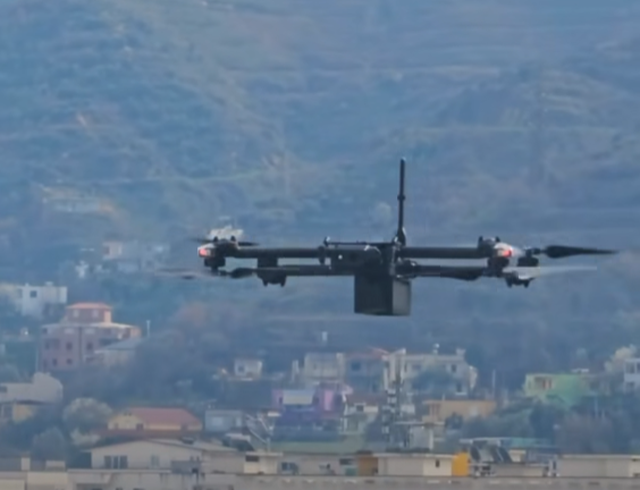
For two centuries, military innovation has sought to eliminate what strategists call the “fog of war” – the uncertainty, lack of information, and chaos that accompanies every battlefield.
Today, Artificial Intelligence is promising to do this better than any technology before: replacing human intuition with massive data processing, instant analysis, and decision-making at unprecedented speed.
In theory, the advantages are clear. AI systems could send cars into the most dangerous areas ahead of soldiers, process vast amounts of information from sensors and satellites, and coordinate complex air defense systems to intercept ballistic missiles in real time.
But the reality of modern warfare is showing another side of this technology: AI is not eliminating the fog of war – it is creating a new, more dangerous fog, built not on the lack of information, but on its excess.
The three main fronts of modern warfare – Ukraine, Gaza, and Iran – are serving as living laboratories of algorithm-driven warfare.
In Ukraine, Artificial Intelligence has significantly increased the effectiveness of drones, improving the ability to identify and strike targets in a grueling defensive war.
In the Middle East, Israel has used integrated AI-supported command systems to coordinate missile interceptions in real time, linking American systems like THAAD with Israeli platforms and Aegis Combat System ships.
Meanwhile, the US has used the LUCAS drone in combat for the first time during Operation Epic Fury, a system that uses visual recognition of objects instead of fixed satellite coordinates.
However, the use of AI in warfare is raising serious concerns.
One of the most discussed cases is the Israeli Lavender system, which used probabilistic analysis to identify thousands of potential Palestinian targets based on surveillance data.
The problem? The system had difficulty distinguishing military targets from civilians. Reports show that human analysts had an average of just 20 seconds to verify a target – a time that experts consider insufficient for decisions that could result in the loss of life.
Another parallel system, Gospel, generated about 200 recommendations for infrastructure targets in less than two weeks – a pace that would previously have required months or years of human analysis.
This is the crux of the problem: AI is compressing the cycle of identification, analysis, and attack to the point where human oversight remains formally there, but practically empty.
Instead of the human making the decision, it is turning into a signature on the machine's decision.
This creates a crisis of accountability. In traditional warfare, the chain of command was clear. With AI, responsibility is spread among software developers, data engineers, procurement officers, operators, and commanders, until it becomes unclear who bears the legal and moral burden for a fatal mistake.
In this global vacuum, Europe is being seen as the actor that can set standards.
The European Union has begun building its military technology base through initiatives such as BraveTech EU and the 2026 drone and anti-drone security plan.
But experts argue that Europe must do more than just keep up with the pace of technological militarization.
Its advantage could be the creation of strong legal rules, ethical boundaries, and real human control mechanisms before the technology is deployed on the battlefield.
Because the question is no longer whether AI will become part of the war.
The question is: who will set its boundaries – and will it be too late when that happens?