Is this police force professional and capable of handling violen...
/ 2026-10-16 18:54:07Focus


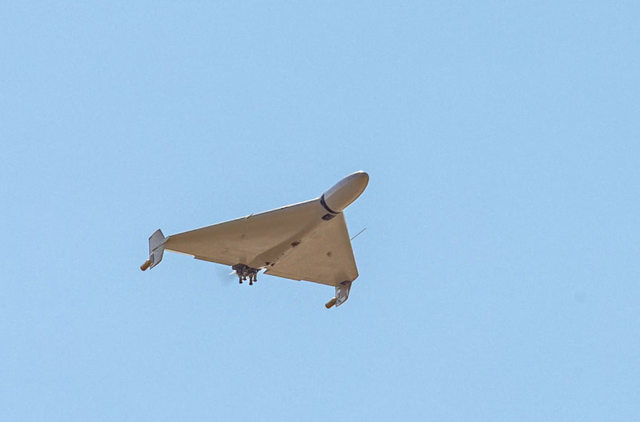
Chinese companies continue to massively supply Russia and Iran with components for the production of "Shahed" suicide drones, openly ignoring sanctions imposed by the United States, reports the Wall Street Journal.
According to Chinese customs data, hundreds of containers with technological parts are being sent to factories in Iran and the Russian Federation.
These include engines, microchips and other components essential for the production of the "Shahed-136" drones, which Russia uses in attacks on Ukrainian cities.
At the center of the report is the Chinese company "Xiamen Victory Technology", which sells "Limbach L550" engines, one of the key components of the "Shahed-136" drones.
On the company's official website, next to the advertising slogan "Innovative solutions for aircraft engines," an image of a "Shahed" drone appears.
According to senior US Treasury officials and arms experts, Chinese exporters have for some time used false data to evade US and European sanctions, but now in many cases they are no longer even trying to hide the shipments.
Former US Treasury officials say China has long served as a transit point for components manufactured in the United States and Europe, which then ended up in drone factories in Iran and Russia.
According to them, more and more of these parts are now produced directly in China, often in small factories that are not afraid of Western sanctions.
A US Treasury Department investigation found that almost all US and European parts were diverted through authorized distributors to sellers in mainland China or Hong Kong, to then be shipped to Iran or Russia.
Payments were usually made through shell companies registered in Hong Kong, which served to hide the final destination of the cargoes.
In 2024, the US Treasury imposed sanctions on a network of shell companies in Hong Kong linked to Hamed Dehgan, a Tehran businessman whose company was considered a key supplier to Iran's drone and missile programs.
However, a year later, a new network of companies in Hong Kong continued to cover his activities.
"It turned a blind eye to this flow, even as its role was repeatedly exposed in public reports and during the imposition of sanctions," said Miad Maleki, a former official at the Office of Foreign Assets Control at the United States Treasury Department.
The British organization Conflict Armament Research, which investigates illegal arms trafficking, said it had observed a "significant increase" in the use of Chinese-made components in Shahed drones.
According to the report, Chinese customs data shows that domestic companies are increasingly willing to openly trade drone components, despite US and European sanctions.
Current and former American officials acknowledge that the United States cannot completely stop this trade, so the main objective remains to increase costs for Iran and the Russian Federation.