"Condemned" protesters?! Who trapped Rama inside the Prime Minis...
/ 2026-10-23 16:02:00Focus


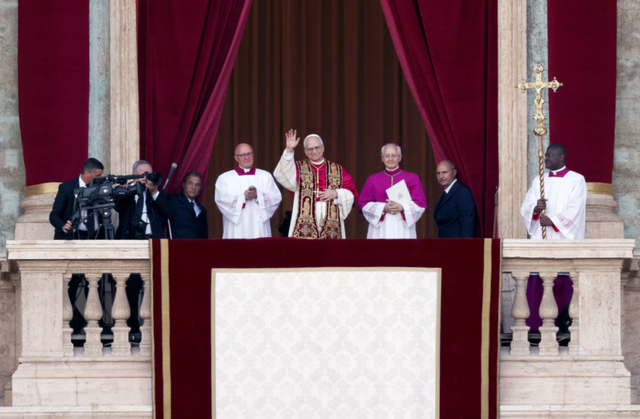
A long day reminds us that Popes do not choose Baptismal names, but change them, although this was not always the case, especially in the first centuries of Christianity. Popes often chose the names of their immediate or distant ancestors, out of respect, admiration or a desire to maintain continuity, but also different names to mark novelty.
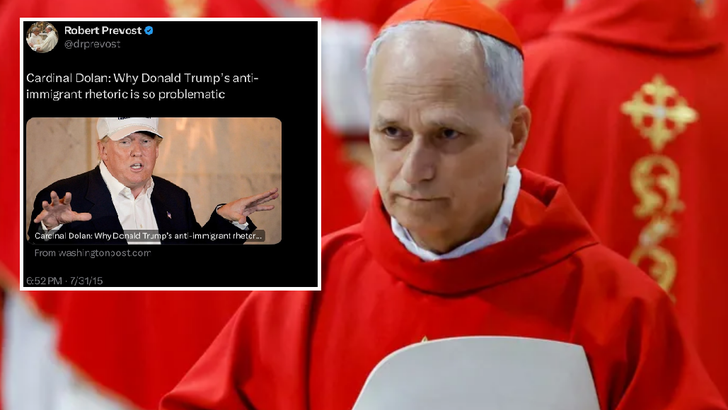
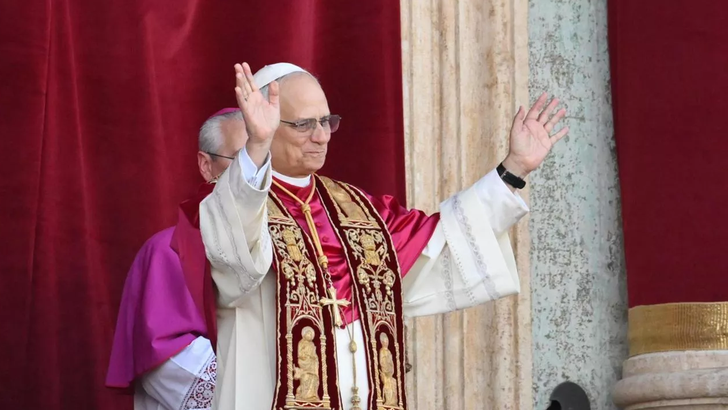
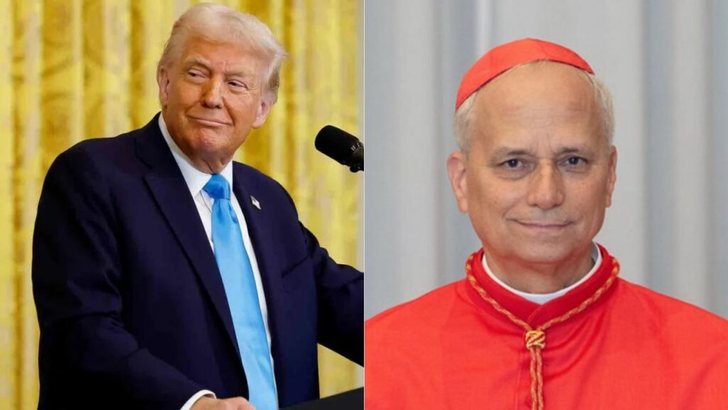
The first act of the new Pope, immediately after accepting his canonical election as Pope of the Universal Catholic Church, and before performing other obligations, is the choice of a name. This name is announced after pronouncing the famous formula "Habemus Papam", followed by the Pope's baptismal name in Latin. The new Pope Robert Francis Prevost chose the name Leo XIV.
Father Robert Sirico, who is also American and head of the Acton Institute, explained to Sky News the new Pope's name, which was last used by Pope Leo XIII in 1878, and the priest says it is "significant" .
"He was truly a theologian, a thinker who preached about the importance of the family and the dignity of work, a very significant historical figure. Pope Leo's goal now is to continue that work and then give us an indication of his direction."
The long tradition of changing one's baptismal name
According to a long tradition, the papal name is different from the baptismal name – a choice that follows the path chosen by the first Pope, Saint Peter, whose birth name was Simon. This custom appeared in the first millennium of Christianity to indicate that election to the See of Peter was akin to a second birth.
Why do Popes change their names?
In the early centuries of Christianity, many Popes changed their names because their birth names were of pagan origin. However, not all Popes followed this practice. Of the 267 Popes known to history, only 129 chose a new name. This tradition became common practice starting in 955, with Pope John XII, and continues to this day, with the exceptions of Adrian VI (1522–1523) and Marcellus II (1555). For some Popes, the new name was their third name in life, as they came from different religious orders.
Most common names: John, Gregory, Benedict, and Pius
Regarding the choice of name, very often the same name of the first or penultimate ancestor is chosen, out of respect, admiration or recognition, which also signals the desire to follow in their footsteps, or to continue the most important papalities. Others choose a name that differs from that of the ancestor, sometimes implying a commitment to innovation or change.
In the history of the Papacy, the most commonly used name was John. It was first chosen in 523 by Saint John I, Pope and martyr. The last pope to choose this name was the Italian Angelo Giuseppe Roncalli, elected as Pope John XXIII in 1958, and canonized by Pope Francis in 2014.
Other frequently used names are Gregory, in honor of Pope Gregory I, commonly known as Saint Gregory the Great (590-604), last used by Gregory XVI in 1831. Also worth mentioning is the name Benedict, which has been elected sixteen times. The last time was the election of Pope Joseph Ratzinger, Benedict XVI, in 2005.
Other names that recur in the Papal tradition are Clementine, Innocent, Leo, and Pius. From 1775 to 1958, out of 11 Popes, 7 were called Pius, from Pius VI (1775–1799) to Pius XII (1939–1958). Eugenio Pacelli took the name Pius XII because he was related by blood to Pius IX (1846–1878), but also out of gratitude to Pius X (1903–1914), who was canonized in 1954, and more recently, in direct respect to Pius XI (1922–1939), who made him Cardinal and Secretary of State.
Among the names never chosen by a Pope are Joseph, James, Andrew and Luke. No Pope ever chose the name Peter, out of respect for the first Pope. While six Popes took the name of the Apostle Paul, also remembering Pope Montini (Paul VI, 1963-1978), whose election would be followed by a key aspect of his papacy: the beginning of the Apostolic Journeys abroad.
Two Popes with two names
The first pope to adopt a double name was Albino Luciani: in 1978 he was known as John Paul I, thus emphasizing the continuity with the papacies of John XXIII and Paul VI. His successor, Karol Wojtyla, repeated this choice by choosing the name John Paul II.