Is this police force professional and capable of handling violen...
/ 2026-10-16 18:54:07Focus


Sarah Rainsford – BBC
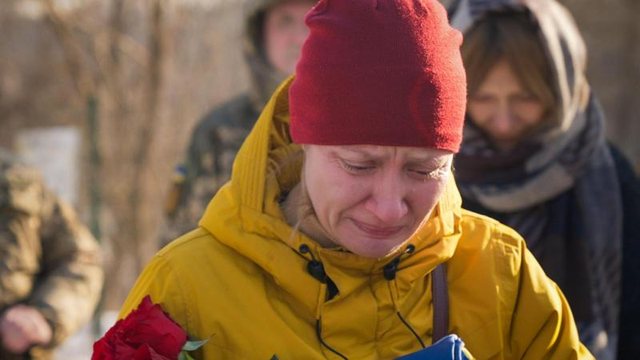
The silence of a cemetery in Kiev is broken by the sound of a bugle, then by gunfire. Soldiers spread the Ukrainian flag over a wooden coffin and stand in silence, amidst the white snow. A woman bursts into tears. Natalia is burying her husband for the second time.
Vitaly was killed three years ago, fighting in eastern Donbass. The first burial took place in their hometown of Slovyansk. But as Russian forces advance and the front line approaches, the area is increasingly at risk. Fearing that her husband's grave could fall under occupation, Natalia decided to exhume him and move his remains hundreds of kilometers away, to the capital.
"When we buried him in Slovyansk, the land was being liberated and we thought the war would end quickly," she said after the ceremony with military honors. "But the front is getting closer and closer, and I was afraid that Vitaly would end up under occupation."
Vitaly was a ceramic artist and volunteered to defend Ukraine in the early days of the Russian invasion in 2022.
"He didn't want to, but he felt obligated. He was a patriot," Natalia says through tears. She was pregnant when he was killed, and Vitaly never got to meet their daughter.
The decision to move my husband's body from the land where he was born and fought was very emotionally painful.
"It was very difficult, but it was the right decision. It would have been even more painful to leave him there," she says.
Increasingly frequent attacks
As the US tries to broker a peace deal between Moscow and Kiev, Russia continues its offensive. Air strikes on Ukraine's energy infrastructure have increased, and the pressure for compromise falls mainly on Kiev.
The talks are expected to focus on the status of eastern Donbass, where thousands of soldiers have lost their lives. Ukraine still controls about a fifth of the region, including Slovyansk, but the city is very close to the front line. Kiev proposes a freeze on fighting without giving up territory, while Moscow wants full control of the region, an idea that is also believed to be supported by the United States.
"There are drones on the streets, buses are being hit, and bombs are falling in the city center," Natalia says of life in Slovyansk. "Previously the attacks were weekly, now they happen every two days."
"We must unite"
North of Slovyansk, near Kharkiv, workers are putting up protective nets over the road to protect themselves from Russian drones. In a secret basement, soldiers from the “Typhoon” unit repair and upgrade Ukrainian drones.
“We don’t talk about surrendering territories here,” says Roman, 29. “We have to unite and fight.” He has lost many comrades during his two years at the front. According to the defense minister, about 200,000 soldiers have deserted the army without permission.
Another soldier, Maksym, admits that the concept of “victory” has changed. “Our victory is the preservation of the state. Even if we have only a few square kilometers, but we preserve the constitution and institutions, this is still Ukraine,” he says.
Pain and hope
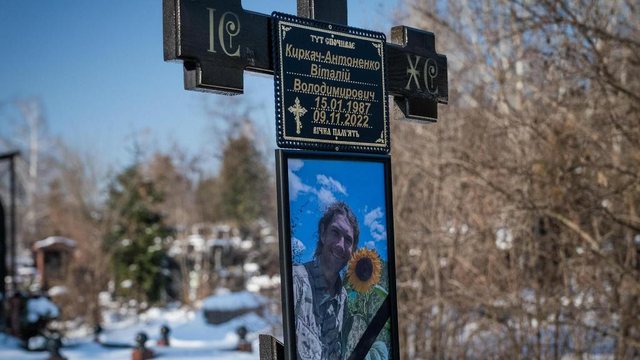
In Kiev, Natalia stands by her husband's new grave, where a wooden cross and a photo of Vitaly, smiling next to a yellow sunflower, stand. She feels more at ease now that the grave is near her and their daughter, Vitalina.
"The girl watches his videos and photos and loves him very much, even though they never met," she says. Natalia hopes to tell her husband soon that she is pregnant again, thanks to sperm the couple had frozen just days before Vitaly was killed.
Many of his comrades-in-arms were unable to attend the reburial, having been killed as well. Ukraine has paid a high price after four years of all-out war. Surrendering territory that Russia already controls may be acceptable to some, but Natalia rejects the idea of Russia taking even more, including the city where she and Vitaly lived and fell in love.
"Russia might stop for a year, then it will come back," she says. "I don't believe Russia will stop."