Protests highlight trauma crisis, operating rooms under reconstr...
/ 2026-10-15 18:35:16Focus


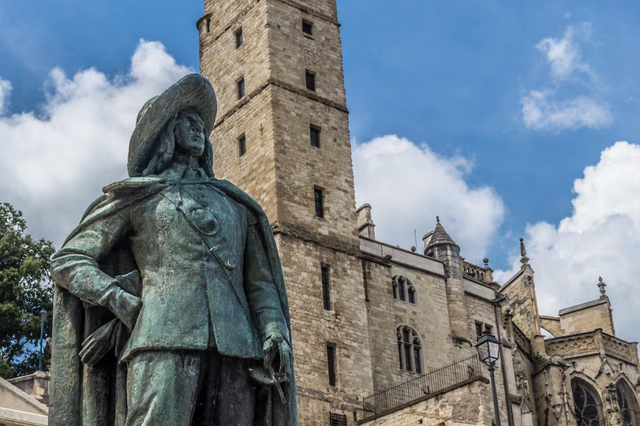
He returned to the spotlight with a twist that would have pleased even Alexander Dumas, the writer who gave him eternal fame. It's about the famous knight D'Artagnan.
What is it about?
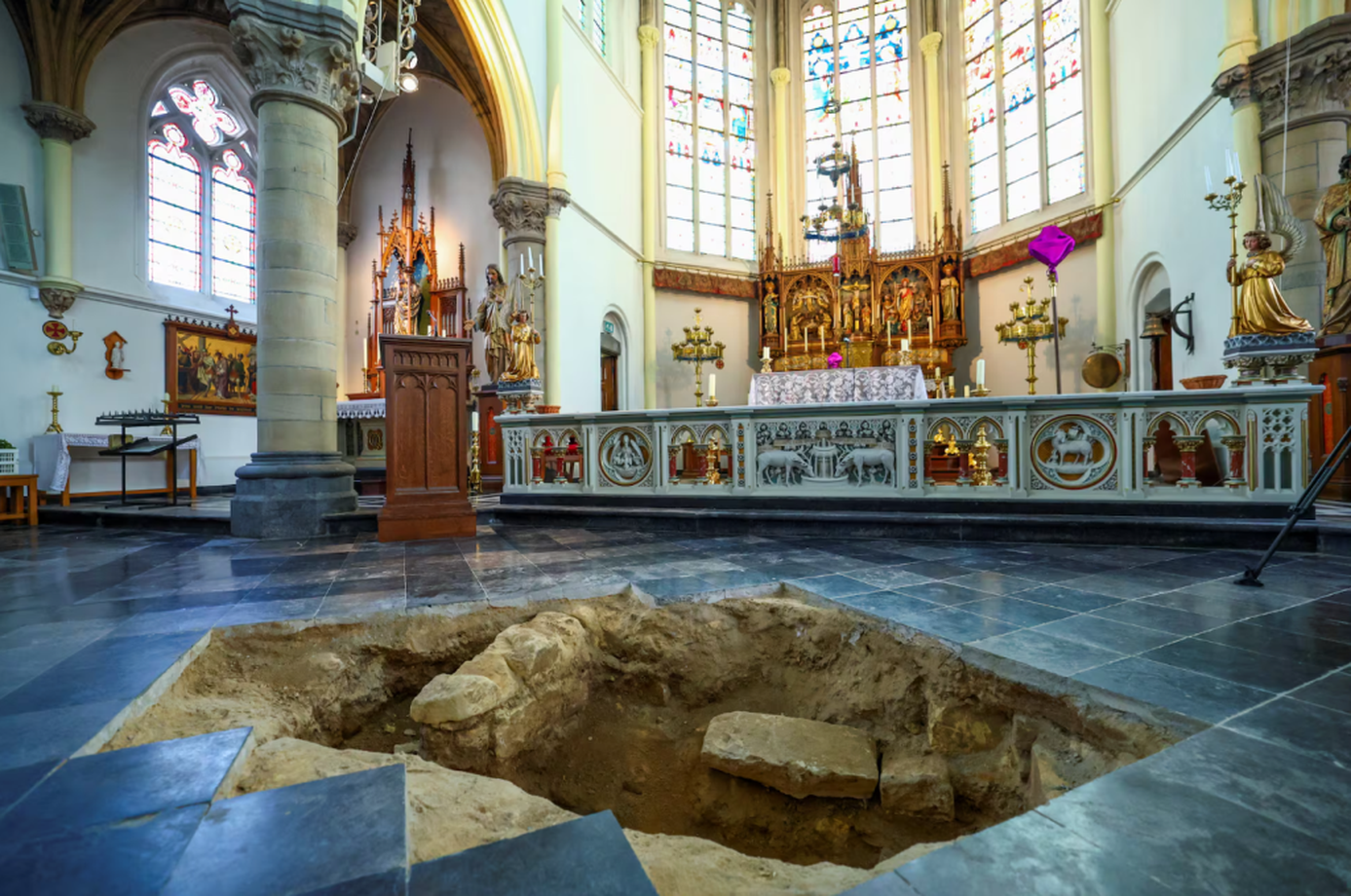
La Repubblica writes that in a church in Maastricht, in the Netherlands, a part of the floor suddenly collapsed. For this reason, a team of workers was called in to repair it. During the restoration work, one of the carpenters noticed that there was something underneath. The excavations revealed a skeleton, next to which, still well preserved, were a coin and a bullet.
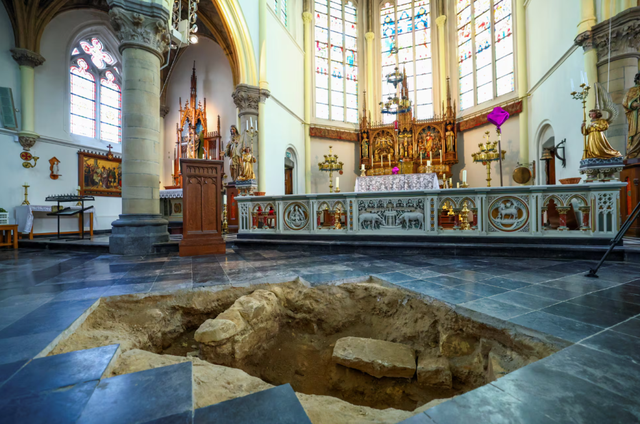
After verifying the characteristics of both, the priest immediately contacted the local archaeologist who had been searching for D'Artagnan's remains for three decades. "I think we've found him," he told him. And France's most famous musketeer, "has returned."
Knight Charles de Baltz-Castelmore
The bones in question would belong to the knight Charles de Baltz-Castelmore, the nobleman of Gascony in the 17th century, known as D'Artagnan, who inspired the writer Alexandre Dumas to make him the hero of his novel "The Three Musketeers", first published in serial form in a newspaper in 1844 and then turned into one of the most important books of French literature, a classic translated into all languages, adapted into endless films, television series. It was known that the protagonist of the novel was inspired by the real D'Artagnan, about whom a posthumous biography, "Memoirs of Monsieur D'Artagnan", was published in France in 1700.
But the real D'Artagnan's burial site was lost for centuries, following his death in 1673 during the Siege of Maastricht in the Franco-Dutch War.
SEARCHES
One of the most dedicated researchers of its remains was Wim Dijkman, a now retired Dutch archaeologist who had spent his life following the outskirts of the city where the famous battle took place, later known for an identical European Union treaty.
Everyone in Maastricht knew him. When he received the call from the deacon (the person who assists the priest or bishop in church services and duties), the scholar rushed to the church of Saints Peter and Paul.
"Some details indicated that it was the skeleton of the famous musketeer," the priest told a local television network.
"He was buried right under the altar, on sacred ground, to prove that he was an important personage. In the grave was a French coin from the time of the real D'Artagnan's death. And the bullet that killed him was at chest level, exactly as described in the memoirs of 1700."
The bones were removed from the church and sent to a nearby archaeological institute. A DNA sample, extracted from the skeleton, is now being examined at a highly specialized laboratory in Munich, where it will be compared with DNA provided by descendants of the real D'Artagnan's father to determine if there is a match.
"It's an extremely exciting discovery, but we want to have scientific certainty," says the archaeologist.
And 'The Three Musketeers'
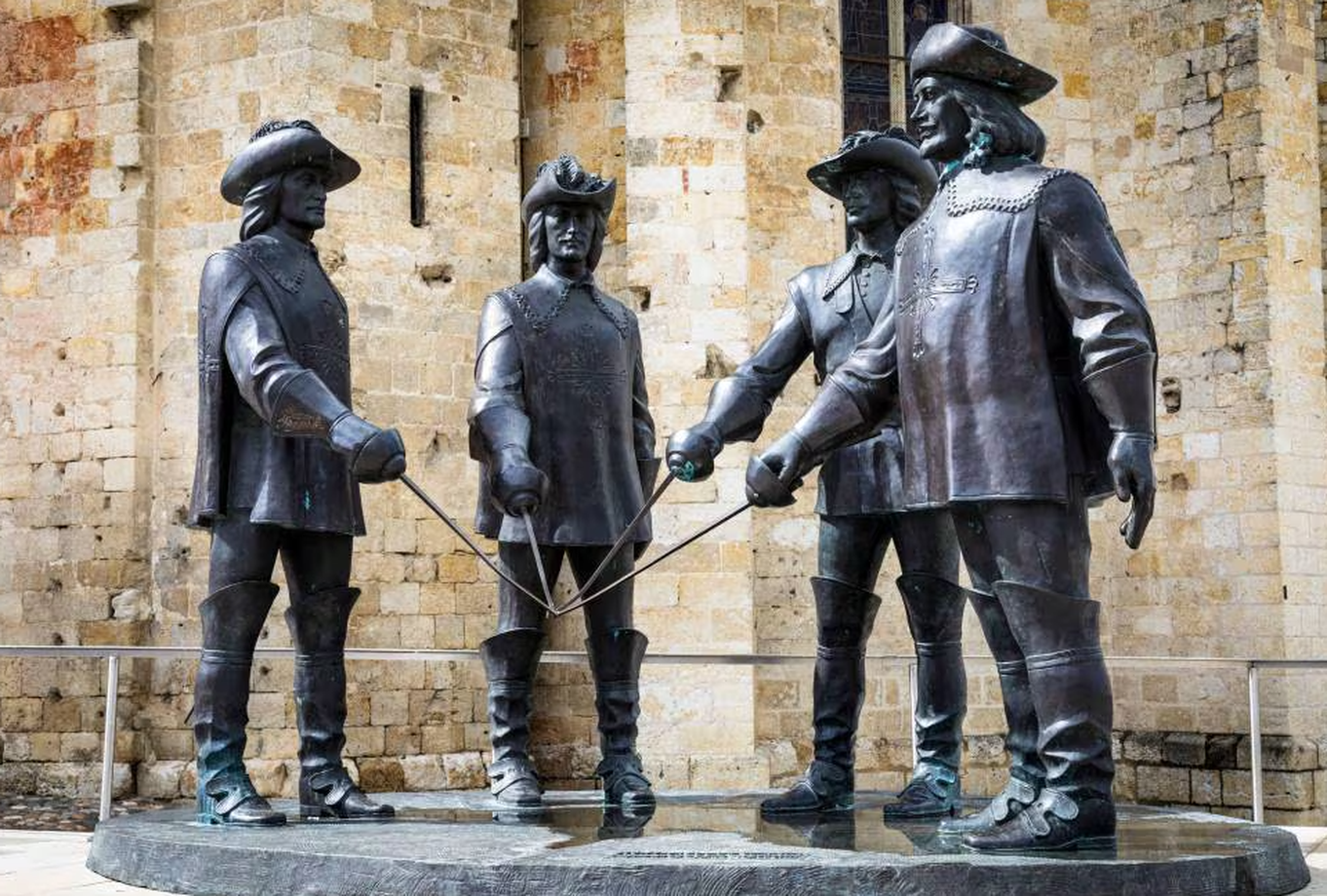
The adventures of D'Artagnan, and the three musketeers Athos, Porthos, and Aramis, whom he joins at the court of the King of France, are at the center of Dumas' trilogy.
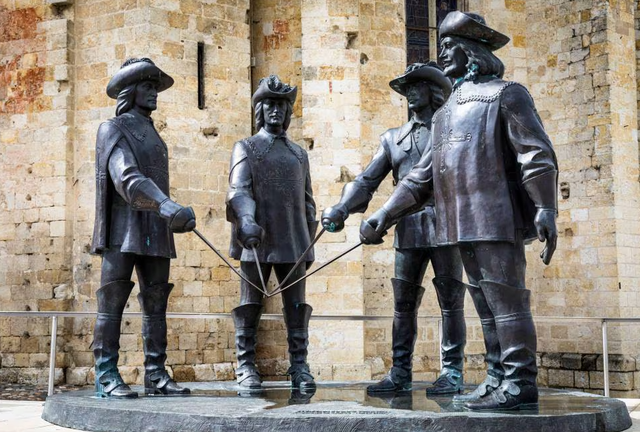
“The Three Musketeers,” “Twenty Years Later,” “The Viscount of Bragelonne,” novels once called “newspaper column novels,” meaning stories published serially in newspapers, filled with twists to keep readers following each installment, then turned into books that had global success and continue to be published in all languages.
More than twenty different editions have been published in Italian alone. In cinema, D'Artagnan has been portrayed, among others, by Douglas Fairbanks, Michael York, Chris O'Donnell and Pierfrancesco Favino in the Italian film and series directed by Giovanni Veronesi in 2018 and 2020.
The motto of the Musketeers, “one for all, all for one,” has become a common expression. Even the secondary characters of their adventures, such as Milady and Cardinal Richelieu, have entered everyday language.
If DNA confirms the authenticity of the remains, the tomb of the "fourth musketeer" will become a pilgrimage destination, with the Netherlands and France competing to determine who it belongs to.