Protests highlight trauma crisis, operating rooms under reconstr...
/ 2026-10-15 18:35:16Focus


The rivalry between Washington and Tehran dates back to the 1979 Iranian Revolution. Until then, Iran had been ruled by Shah Mohammad Reza Pahlavi, a close ally of the United States. His fall from power on January 16, 1979, and the return from exile of Ayatollah Ruhollah Khomeini transformed the country into an Islamic Republic.
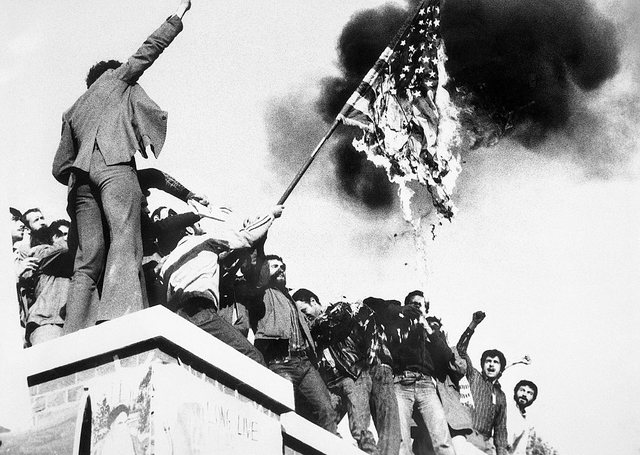
The point of no return in relations with the US was reached on November 4, 1979 , when a group of Islamic students attacked the American embassy in Tehran, kidnapping the staff. But how things have gone up to the present day, " Focus storia " has reflected .
Hostage crisis. The name that is remembered is "Operation Eagle Claw". The image that is remembered is that of a burning helicopter in the Iranian desert. The story is the failed military attack to free the hostages at the American embassy in Tehran. A failure due to a mid-air collision that cost the lives of eight soldiers, on the night between 24 and 25 April 1980.
The "hostage crisis" that began on a rainy day in November 1979, when a group of Islamic students attacked the American embassy and kidnapped its staff, reached its peak that night.
The Revolution. It had all begun months earlier, with the so-called "Iranian Revolution." On January 16, 1979, Shah Mohammad Reza Pahlavi, a nationalist ruler, had been overthrown. On the 31st, Ayatollah Ruhollah Khomeini, a Shiite in exile, had returned home triumphantly, and on March 30, 1979, the Islamic Republic of Iran was born.
In October, the Shah, who had taken refuge in Egypt, left for the United States to seek treatment for the cancer from which he had long suffered. However, the new Iranian government feared that this trip was a prelude to an agreement between the Pahlavis and the United States for military intervention in Iran. Therefore, Khomeini demanded the extradition of the former king. Faced with the United States' refusal, the Ayatollah organized a violent anti-American campaign, calling the United States "the Great Satan", the enemy of Islam.
The attack. Following Khomeini's statements, on November 4, 1979, a group of Muslim students (among whom, according to some witnesses, was former President Ahmadinejad) stormed the U.S. embassy in Tehran and took 66 hostages. The students immediately released several African-Americans, women, and the sick. Fifty-two hostages remained, declared by their captors to be "guests of the Ayatollah." However, their treatment was far from hospitable. Blindfolded, isolated, and unable to speak to each other, the hostages were subjected to severe psychological pressure and fed mainly peanuts.
In exchange for their release, the demands were an apology from the United States for its support of the Shah and the handover of the former ruler to Iranian authorities for trial and execution.
Reaction. The United States, led by Jimmy Carter, responded by cutting off oil imports from Iran and freezing $8 billion in Iranian assets in the United States. But by spring, the situation was still unchanged. A military attack was then attempted, which ended in complete failure.
US intervention. Three months later, on July 27, 1980, Reza Pahlavi died in Cairo (where he had since returned). But even this did not restore the hostages' freedom. The extradition request was rejected, but the demand for an apology for alleged US interference in Iran's internal affairs remained.
The deal. Carter paid for his failure to resolve the crisis with his defeat in the November 1980 presidential election, won by Ronald Reagan. Before his term ended, Carter continued the negotiations. The result was an agreement signed in Algiers between the United States and Iran. The United States promised not to interfere in the internal affairs of the Islamic Republic in the future and to return the billions confiscated.
Hidden secrets. However, in the same case, secret agreements were also made, later revealed in 1985, to supply Iran with American weapons, which had been at war with Iraq since September 1980. With the proceeds, the Reagan administration illegally financed Nicaraguan "contracts", opponents of the incumbent (Marxist) government.
The end of the nightmare. The crisis, however, was over. The announcement was made on January 20, 1981, coinciding with the inauguration of the new President, Ronald Reagan. Only a few minutes passed between the two events, leaving many to suspect that the release had been deliberately delayed. However, for the hostages, this was the end of a nightmare that had lasted 444 days.