Is this police force professional and capable of handling violen...
/ 2026-10-16 18:54:07Focus


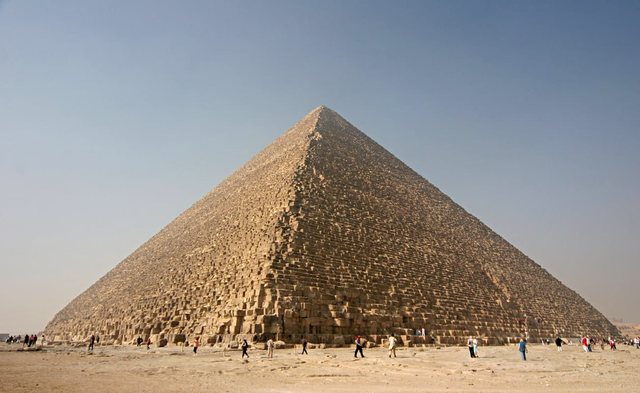
A new study has sparked debate in the archaeological world, challenging the official chronology of the Great Pyramid of Giza. The author, Italian engineer Alberto Donini, proposes that this wonder of the ancient world was not built around 2580-2560 BCE, as traditional Egyptology accepts, but thousands of years earlier, between 37,000 and 9,000 BCE.
This revolutionary hypothesis is based on a new method called 'relative erosion'. Donini's method compares the level of erosion in the pyramid's stones with those known earlier, such as the covering removed about 675 years ago.
According to him, linear erosion indicates that the structure is much older, with a 68.2 percent probability for the proposed dates. He goes further, arguing that Pharaoh Khufu (Cheops) did not build, but restored the pyramid, since carbon-14 analyses of the organic mortar come from restoration work, not the original.
Donini even doubts its function as a tomb, calling it an unsolved mystery. Egyptologist Corinna Rossi from the Polytechnic University of Milan, disputes this thesis. “Erosion is not constant. It depends not only on time, but on sand, precipitation and the covering of the bases until the modern era,” she says.
The official chronology is based on archaeological findings, carbon-14, hieroglyphic texts and astronomical evidence, with a maximum uncertainty of 100 years. This debate highlights the tension between innovation and tradition.
If confirmed, the study could rewrite the history of Ancient Egypt, opening the door to the discovery of forgotten civilizations. However, Rossi emphasizes the coherence of two centuries of Egyptology: the pyramids evolved as royal tombs.
Donini acknowledges the uncertainties of the thesis, but insists that the order of magnitude cannot be that wrong. In the meantime, the world awaits independent verification of these claims.