Is this police force professional and capable of handling violen...
/ 2026-10-16 18:54:07Focus


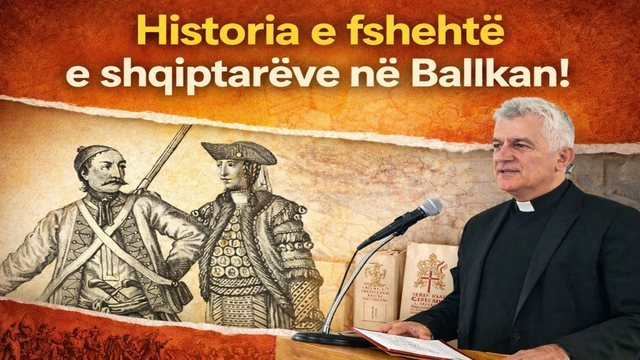
In the fierce historiographical debate among the Balkan nations, the interpretation of mass migrations during the 17th and 18th centuries has created grand national myths, which have often served as political pillars for modern state-building.
One of these Serbian myths, the so-called "Druga seoba Srba" (Second Great Serbian Migration), is deeply affected by the latest findings of the Albanian cleric and scholar, Dom Frrok Zefi. Cross-referencing original sources from the Vatican Apostolic Archives, the Propaganda Fides Archive in Rome, as well as imperial military documents in Vienna, Dom Zefi argues forcefully that the mass migration of 1737 westward was not Serbian, but entirely Albanian.
The context of this Balkan tragedy begins with the Austro-Turkish War of 1737-1739. The Habsburg Emperor, Charles VI, the report emphasizes, had begun preparations to deal a new blow to the Ottoman Empire, inciting the Christian populations in Serbia, Macedonia, and Albania to launch internal pro-Austrian uprisings. The Albanian Archbishop of Skopje, Mikel Suma, emerged as a spiritual and military leader of this call, organizing the entire tribal core of the Catholic Kelmendese in the territory of Kosovo and Sandzak to open a new front against the Turks.
However, history changed course due to developments on the ground and the betrayal of Orthodox figures. Serbian Patriarch Arsenije IV Jovanovic Sakabenta, who also initially encouraged the uprising, contributed to its failure. According to records researched by Dom Zefi, Ottoman forces discovered the plans. After the Austrian military failure, about 4,000 Kelmend Albanians were forced to begin a desperate retreat with their livestock and families to escape Ottoman punishment, marching north to join the retreating Austrian imperial army.
In October 1737, this wretched caravan was ambushed by Ottoman forces, commanded by Mehmet Bey of Zvornik, just outside Valjevo. The result was a bloody massacre; a third of the Albanian highlanders were brutally killed, another third were taken as slaves, and only a small group of about 300 families managed to escape, crossing the Sava River to the protection of the Habsburg state.
It is precisely this group of survivors that, according to Dom Zefi, Serbian historiography deliberately envelops within what they call the second Serbian migration. The researcher's logic, which is confirmed by demographic reports of the time, is sharp and questionable: Why would the Serbian population embark on a march to leave the state or lands where they themselves dominated, to pass as a minority into foreign Austro-Hungarian territory, when the Serbian core was located right below the Sava? The answer is that this mass of desperate people who arrived in Srijem were not ethnically Serbs, but Catholic Kelmendi mountaineers, who built a new life in villages like Hrtkovci and Nikinci.
Zefi calls for a rereading of historical science, where authentic Western archives—the precise reports that regional bishops sent to Rome every three years with the names, numbers, and languages of parishioners—stand out above nationalist narratives of Balkan state manipulation. His effort is not just academic, but a necessary defense of the historical memory of those martyrs of freedom that the historiography of our neighbors tends to alienate. /dritare.net