Is this police force professional and capable of handling violen...
/ 2026-10-16 18:54:07Focus


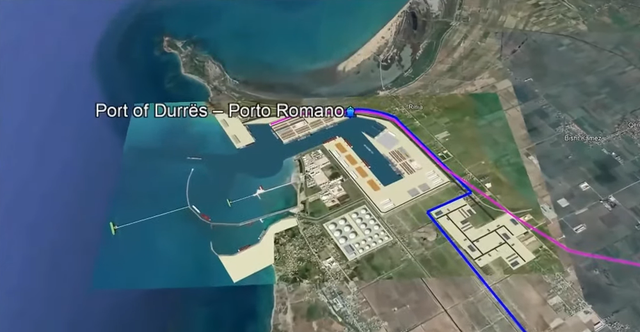
In October 2022, an unsolicited proposal arrived at Prime Minister Edi Rama's office.
The letter was signed by the Dutch company, Van Oord Dredging and Marine Contractors, and was intended to express interest in engaging in one of the Albanian government's most strategic projects - the new commercial port of Porto Romano.
Attached was a financial proposal, along with the guarantee that the company had already secured about 95% of the funds for the construction of the port.
“We have great confidence in the feasibility of the project, we have explored financing options and we were able to find a solution…,” Van Oord wrote in the letter addressed to Rama. “With the belief that our proposal meets your interests, we are ready for any explanatory meeting.”
Van Oord is part of the small club of the largest international companies specializing in the construction of marine and offshore engineering, known for its most iconic project of building the artificial island, Palm Jumeirah in Dubai.
But its concession offer for the development of the new commercial port of Porto Romano remained in the shadows, after the government decided to finance its construction with a budget fund of 399.6 million euros through an international tender.
Five foreign companies, including Van Oord, participated in the tender announced in December 2024 by the Durrës Port Authority, but Albania failed to find a construction contractor among them.
In a public statement in early March, Prime Minister Edi Rama blamed foreign factors hostile to the project, but BIRN can now reveal that at the heart of the failure is more likely to lie procurement procedures than any international conspiracy.
Documents analyzed by BIRN suggest that Albanian authorities canceled a tender, changed the rules of the game and used different standards to steer the competition towards the qualification of a single competitor – who ultimately withdrew from submitting a bid.
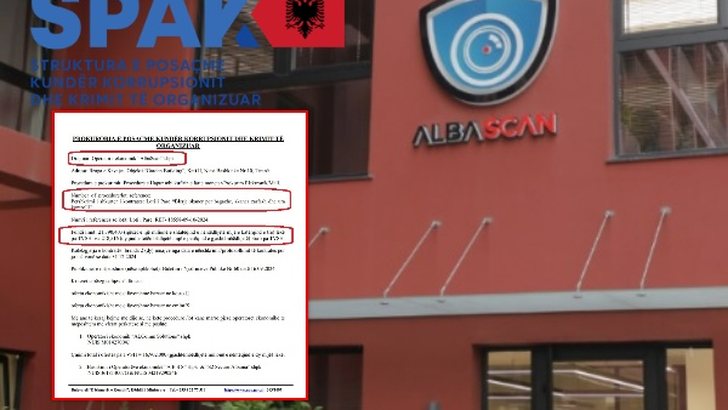
Since December last year, the tender has been under investigation by the Special Prosecution Office following a complaint filed by the Van Oord company for criminal offenses of abuse of office and violation of the equality of tender participants.
“The tender procedure for the new Porto Romano Commercial Port has raised significant concerns regarding transparency and real competition,” said Eduart Gjokutaj, head of the ALTAX organization with a focus on transparency and sustainable development policies.
“The disqualification of large international operators at the technical stages, leaving a leading bidder in the first place, created a poor perception of the process,” he added, noting that SPAk’s verifications deepened uncertainty.
Prime Minister Edi Rama expressed surprise at BIRN's question about the review of Van Oord's bid in 2022, asserting through a media advisor that "the companies' financial proposals are not submitted to the prime minister," but to the relevant authorities.
The Prime Minister also distanced himself from any possible verification of the company's claims of violations during the tender process.
"This question is also very strange, because the prime minister is not an appeals body for companies participating in public competitions," said Rama, recalling that the competition in question was administered by Royal Haskoning - a company according to him with "undoubted global prestige."
The Durrës Port Authority said in a written response that the procedures were in accordance with the provisions of public procurement legislation, while adding that they could not comment on the criminal investigation initiated by SPAK.
"All economic operators were treated on the basis of the same tender documentation, the same deadlines and the same qualification criteria," said the APD.
Meanwhile, the Royal Haskoning company said it was unaware of SPAK's investigation, while emphasizing that its team, for this project, performed its tasks "in full compliance with tendering regulations and procedures in Albania."
Transition with risks
Ports are more than just simple piers for anchoring ships – they are strategic hubs that direct the flow of trade and directly impact a country's economic development.
For governments of poor countries like Albania, ports also cause headaches to build, as they require large financial capital, complex engineering in aquatic environments, and strict regulations on environmental impact.
The new commercial port project of Porto Romano is relatively new; it emerged in parallel with the Albanian government's controversial decision to transform the historic port of Durres into a multimillion-dollar real estate business in favor of the investor from the United Arab Emirates, Mohamed Alabbar.
The project aims to expand and modernize the country's main commercial port alongside two other existing private hydrocarbon ports in Porto Romano. A separate base for the Albanian Navy flotilla is also expected to be built at additional costs.
Gjokutaj appreciates the government's announcement of port modernization as a strategic priority, but doubts that the model followed is creating a transition with financial and operational risks for the country.
The Durrës Port Authority has so far spent tens of millions of euros on the Porto Romano port project, 24 million of which went to contracting the Dutch consulting company, Royal Haskoning, for detailed technical design services and later for the tendering, contracting and supervision procedures of the project.
Beyond the considerable upfront costs, Gjokutaj emphasizes that delays and uncertainties could cost Albanian taxpayers many times more.
He cites the inflation of construction costs at 8-10 percent per year as a factor that could inflate the port's bill by tens of millions of euros for each year of delay.
The strategic damage is estimated to be even more severe – with loss of commercial traffic in favor of neighboring ports and weakening of Corridor 8.
“The worst-case scenario would be continued long delays, repeated tender cancellations, cost overruns of over 50 percent and progressive loss of commercial traffic in favor of neighboring ports such as Thessaloniki or Bari,” Gjokutaj warned BIRN.
"In this case, Albania would pay a very high fiscal cost without proportional benefits, while the country's image as an investment destination would also be damaged," he added.
Asked about future plans for the project, the government said it had "no comment."
Reporting to SPAK
After being disqualified from the competition, the Dutch company Van Oord filed a complaint with the Special Prosecutor's Office against the Durrës Port Authority in December 2025. Van Oord claims in the complaint that the Porto Romano port tender was conducted in violation of Albanian legislation and European Union standards for competition, transparency and equal treatment of participants.
“The company has consistently expressed great interest in contributing to the development of Albania's maritime infrastructure, particularly with the Porto Romano project..,” Van Oord says in the report.
“However, the tender process was compromised by irregularities, unequal treatment of competitors, contradictory administrative actions and misleading procedural communications,” she further adds.
Van Oord claims in the complaint that the unfair disqualification came as a result of the cancellation of the first tender, the change of criteria, the unilateral interpretation of the criteria, as well as active misinformation actions by the contracting authority.
Van Oord says it was the only company to meet the bid guarantee requirement by making the project available the amount of 7.8 million euros in the tender announced in July 2024, but when other competitors did not meet this criterion, the contracting authority canceled the tender to reopen it later without any participation guarantee obligation.
“Such an arbitrary removal of the mandatory financial condition not only disrupted the equality of the competition, but also caused material damage to the company, which had placed significant amounts demonstrating good faith,” says Van Oord, claiming that this modification violated the equality of participants to its detriment, favoring others.
The APD told BIRN that the first procurement procedure was cancelled with the aim of increasing competition.
"The review of elements of the tender documentation, including issues related to the bid guarantee, was done in order to increase competition, wider international participation, and ensure a more effective and functional procedure for a project with high technical and financial complexity," said APD.
“Changes to the documentation are transparently reflected and published in the electronic procurement system,” the Authority added.
In addition to the cancellation of the first tender, Van Oord also disputes the disqualification due to the lack of equivalent licenses in the second tender, claiming that according to the official English version of the standard documents, they should have been submitted at a later stage, before the conclusion of the contract.
The Dutch company also says in the complaint that it faced unnecessary barriers during the license application process and that the link sent by the Contracting Authority for the online application incorrectly directed it to a website accessible only by registered Albanian legal entities.
“Only after several repeated requests did the Contracting Authority admit that the link had been sent in error,” says Van Oord, emphasizing that this behavior, whether negligent or intentional, brought him to a disadvantage.
From ignoring the initial offer to disqualification from the competition, Van Oord claims that the administrative conduct was neither impartial nor lawful.
"The tender was conducted in a manner that ignored previous commitments, transparency and the principle of equal treatment sanctioned by both Albanian legislation and European Union procurement law," the complaint states.
“Extremely strict” rules
Public procurement procedures in Albania are generally closed processes and have resulted in high risks of corruption and low levels of competition among private operators.
In the case of the Porto Romano port tender, although the initial competition seemed high, it was reduced to the qualification of a single operator. The process was administered by the Bid Evaluation Committee, composed of three members of the Royal Haskoning company, one representative of the APD and one representative from the Ministry of Infrastructure and Energy.
Faza e parë u përmbyll në prill 2025 me skualifikimin e kompanive China Communications Construction Company, Webuild SPA dhe Jan De Nul. Një ankesë e kompanisë së madhe belge, Jan De Nul në Komisionin e Prokurimit Publik nuk u mor fare në shqyrtim me argumentin se nuk arriti të paguante një faturë të kripur prej 2 milionë eurosh si tarifë ankimi.
Faza e dytë e shqyrtimit të dokumentacionit fizik u zhvillua nëpërmjet dy kompanive të mbetura në garë, Van Oord dhe Archirodon Construction, mes datave 6 maj – 22 shtator 2025.
Por edhe pse Komisioni i Vlerësimit të Ofertave, KVO, konstatoi mungesa në dokumentacion për të dy konkurrentët, ai vendosi të skualifikojë pa vonesa kompaninë Van Oord dhe të kualifikojë kompaninë Archirodon, ndërkohë që shpenzoi gati një muaj kohë për të verifikuar autenticitetin e dokumenteve të saj në Dhomën e Tregtisë së Jeddah në Arabinë Saudite.
Sipas procesverbalit të mbledhjes së KVO, kompania Van Oord nuk kishte paraqitur licensat profesionale të shoqërive të ekuivalentuara sipas legjislacionit shqiptar, ndërkohë që në dokumentet e paraqitura nga Archirodon për punë të ngjashme, mungonin vulat noteriale, por përmbanin certifikim elektronik nga Dhoma Tregtare e Jeddah.
Kompania Van Oord paraqiti disa kërkesa përballë Komisionit të Vlerësimit të Ofertave, duke pretenduar se licensat profesionale, sipas Dokumenteve Standarde të Tenderit, duheshin paraqitur vetëm përpara nënshkrimit të kontratës dhe fillimit të punimeve. Por kompania dokumentoi gjithashtu për KVO nisjen e procesit të aplikimit për licensat në Shqipëri dhe kërkoi shtyrjen e afatit për dorëzimin e tyre.
Më 12 qershor 2025, KVO arriti në përfundimin se kërkesat e Van Oord ishin të pabazuara ligjërisht dhe theksoi se nuk mund ta shtynte afatin e dorëzimit të licensave profesionale. Van Oord i siguroi licensat e ekuivalentuara nga një komision i posaçëm pranë Ministrisë së Infrastrukturës më 30 qershor 2025.
Ndërsa Van Oord po përpiqej që të merrte licensat e validuara në Shqipëri, anëtarët e KVO u përfshinë aktivisht në verifikimin e dokumenteve të paraqitura nga Archirodon mes datave 17 qershor- 14 korrik 2025, duke angazhuar edhe stafin e Royal Haskoning në Arabinë Saudite.
Pasi mori konfirmimin se dokumentet ishin autentike, KVO vendosi në mënyrë unanime të konfirmonte vetëm kompaninë Archirodon për fazën finale.
APD i tha BIRN se ekuivalentimi të licencave profesionale ishte i nevojshëm për përmbushjen e kritereve të kualifikimit dhe dorëzimi i tyre brenda afateve mbetej përgjegjësi e operatorëve ekonomikë pjesmarrës.
“Në rastin e bashkimit të operatorëve ekonomikë “Van Oord Dredging and Marine Contractors B.V. – N.V. BESIX S.A.”, Komisioni i Vlerësimit të Ofertave konstatoi mungesën e licencave profesionale të ekuivalentuara, si dhe mungesa në dokumentacionin mbështetës të personelit të deklaruar, elemente të detyrueshme sipas Dokumenteve Standarde të Tenderit dhe legjislacionit në fuqi,” tha APD.
“The Bid Evaluation Commission assessed that accepting new essential documentation after the specified deadline would conflict with the principles of equal treatment, legal certainty and integrity of the procurement procedure,” the Authority added.
Meanwhile, regarding Archirodon's documentation, the APD stated that the verifications carried out by the Commission in Saudi Arabia were of an administrative and verification nature on the documentation submitted within the procedure deadline.
"These actions did not constitute supplementing the bid with new essential documentation after the deadline for submitting the documentation, but rather a verification of the existing documentation submitted in the procedure," said the APD.
“Consequently, the decision-making was based on the documentation available at the time of the assessment and on the legal obligation for the same application of the procedural rules to all participating economic operators,” the Authority concluded.
Meanwhile, Royal Haskoning said that Van Oord and Archirodon successfully passed the first phase of the pre-qualification process, but were not given time in the second phase to correct technical deficiencies.
“The technical deficiencies came to light as part of the evaluation process by the Bid Evaluation Committee,” the consulting company said.
“The commission subsequently reviewed these deficiencies, but in accordance with Albanian legislation, was unable to give the bidders the opportunity to correct them,” she added.
The Dutch company blamed Albania's "extremely strict" public procurement rules for the tender failure. According to Royal Haskoning, meeting these criteria has proven beyond the capabilities of most contractors, leading to a significant delay in the tendering process.
“During this period of delay, the costs of construction materials and labor have increased significantly,” the company said. “As a result, the initial project budget is no longer sufficient to carry out the full range of works envisaged in this tender,” it concluded./ reporter.al