How Belinda Balluku is fabricating the rumor about Top Channel's...
/ 2026-10-19 16:19:00Focus


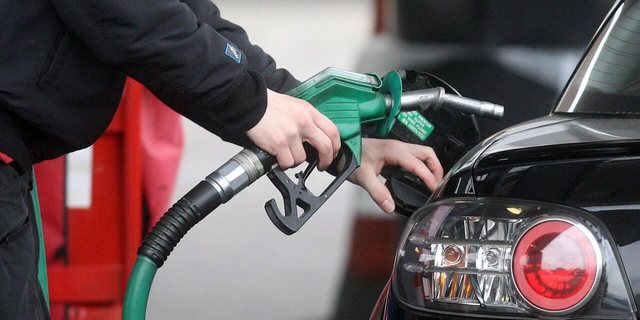
Albania ranks among the countries with the most expensive fuel prices in the world. This is despite the fact that we are among the poorest countries in the region and Europe, in other words with the lowest average and minimum wage and the lowest disposable income per capita.
According to the Global Petrol Price ranking, we are the 11th country in the world for the highest price of oil, at $1.93 per liter. At this price level, oil and gasoline are sold here much more expensive than in all other countries of the region. In the Western Balkans, the country with the cheapest oil price is very close to us, North Macedonia with 1.43 dollars per liter.
"Fuel has always been sold very expensively in Albania. A market that has generated millions of euros and has been profitable for private operators and the government, since the taxes collected on each liter of oil are safe for the state budget and easily calculated. On the other hand, the consequences have been suffered by drivers and all citizens, since oil is the basic material in the production of most products and services.
Economic experts list several reasons that explain why fuel prices are at such high levels in Albania. According to them, the lack of market control by state institutions is the main factor that conditions such a discriminatory situation for citizens. They explain that companies abuse the price and no one checks them.
This is also the reason why a phenomenon has happened in Albania over the years, which now seems not to bother anyone. While the price of oil has decreased in the international financial markets, in Albania this has not been reflected at all or has been reflected almost insensitively. The opposite has happened, when the price of black gold has increased in the stock market. The tightening in Albania was immediate, within a few days, even though the law obliges fuel importing companies to create a reserve in deposits of 3 months, sufficient to amortize possible price fluctuations.
Experts explain that fuel importers and traders have been accused many times of collusion and price fixing, distorting the market, fair competition and harming consumers. But according to them, the Competition Authority, the institution that legally monitors the market and protects it from such abusive situations, has failed to prove what actually happens.
Price abuses in the market and the lack of checks by institutions are the first two reasons why Albanians pay dearly for oil and gasoline. Another important factor is high taxes. All governments, over the years, have increased and increased taxes on fuel. A heavy bill that we all pay and that is going, not only to fill the state budget, but also for private accounts. This considering that part of the taxes are for services provided by concessionaires in the fuel market.
Currently, Albanian citizens pay a total of 8 taxes on the price of fuel, which is an unprecedented case, not only in Europe but also on a global scale. But what are the taxes currently paid on fuel and how much do they weigh on the final price?
For every liter of diesel sold on the market, the Albanian government collects 38 ALL excise duty, 27 ALL turnover tax, 3 ALL carbon tax and 7 to 10 ALL re-imbursement tax.
To these four taxes that go to the state budget, two more are added that are paid to private concessionaires. They are the marking fee and the scanning fee, both of which weigh 3 lek on each liter of fuel. To these two private fees, the pump control fee is added, 2 lek for each liter of fuel. Finally, on top of the four state and three private taxes, the value added tax is added. The VAT on oil is 20 percent of the final price, or about 30 ALL per liter. This brings the total tax burden that citizens pay for a liter of diesel to 113 ALL.
So in a liter of diesel, which today is sold in the market for an average of 187 Lek, the value of the product is only 74 Lek, while 113 Lek are taxes, which citizens pay not only for the government, but also for private concessionaires. This is the main reason why Albania is in the 11 countries with the highest oil price in the world, in absolute value. While if compared according to the purchasing power of the citizens, Albania is the country where fuel is more expensive than anywhere else on the planet.
The high prices of fuel weigh quite a bit on citizens' budgets, business costs and, consequently, the economy. (GR 4) This is because oil and gasoline directly affect the increase in transport costs, not only for those who own a vehicle, but also the increase in the price of tickets in urban and interurban transport. On the other hand, fuels are raw materials in the production of most products. This means that production costs increase and, consequently, they are passed on to the consumer with an increase in the price of products.
Due to changing lifestyles, owning a car is no longer a luxury. This means that citizens are spending more and more on fuel.
According to data from the Institute of Statistics, in 2021, transportation accounted for 6.3% of a family's monthly budget. This share has increased in 2022, which is also the last official data, to 6.9%.
The development of the economy imposes an increase in fuel consumption in the country. Consequently, citizens pay more for oil and gasoline, while importers, traders and the government earn more. Official data shows that the import of fuels reached over 615 thousand tons in 2023, the highest level in recent years. Such a trend is expected to continue, based on expectations for positive economic growth.
But what can be done to lower fuel prices and prevent Albania from becoming the 11th most expensive country in the world for oil?
"There are many measures. The first is market control. Second, the price is set by the market, but also Albania, as in several countries in the region, must have a hydrocarbon regulatory body", says Sejdarasi, an economic expert.
"I would like the competition authority to start with rigorous control if there are abuses. We operate in a competitive market, but if the prices are very similar, there may even be a tacit agreement between them. The second measure could be the review of fuel taxes", says Klodian Muço, an economic expert.
"Review of all taxes and their distribution in other products. The Competition Authority must monitor prices", says Vjoldi Danaj, an expert on the hydrocarbon market.
In addition to reducing taxes, which have a negative effect on the budget, other measures that experts propose are easily applicable. Always if the focus will be on the market and consumer protection.
And if no intervention will be made, as unfortunately has happened until now, all of us, whether we have a vehicle or not, will pay more than everyone else for fuel, in a market that generates millions of euros, which come out of our pockets every day./A2