Is this police force professional and capable of handling violen...
/ 2026-10-16 18:54:07Focus


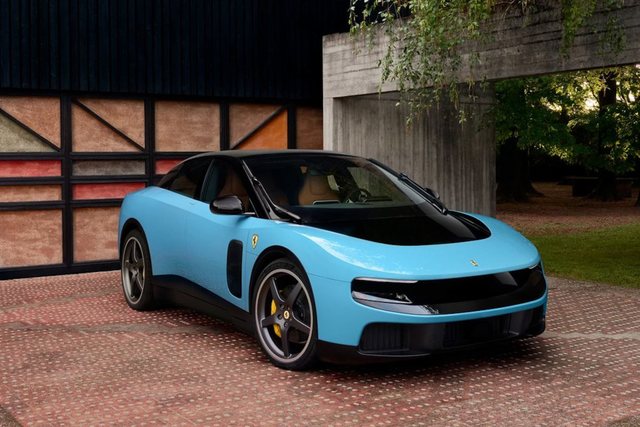
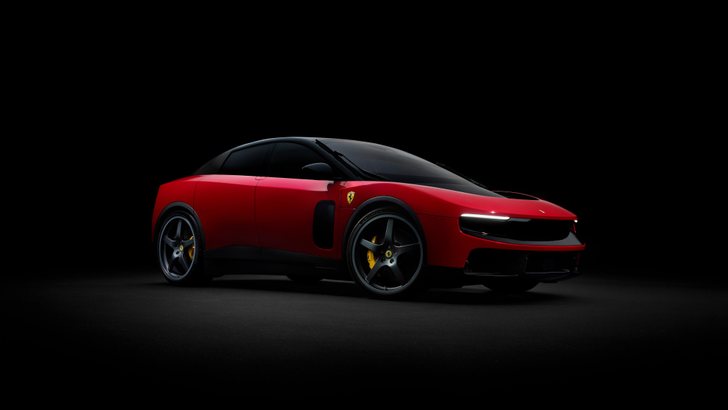
The debut of the Ferrari Luce, the first fully electric car produced by Ferrari, a four-door, five-seat model, could go down in history not only for the model but also for the psychological and financial reaction it caused, writes focus.it.
After the presentation of the model, designed in collaboration with the studio founded by Jony Ive — the legendary designer behind the iPhone and Mac — Ferrari's shares on the stock market took a hard hit, losing about 6%.
But, above all, some of the most "purist" fans of the "Cavallino Rampante" reacted as if they were faced with a... sacrilege: an electric, silent, four-door Ferrari, also designed for everyday life. Scandal!
But how is it possible for a car with over 1,000 horsepower and a price tag of 550,000 euros to generate such an emotional reaction?
The answer is not just found under the hood, but in the psychology of brands.
When an iconic brand "changes language" too quickly, the public doesn't just judge the product: they judge the coherence of the identity that brand represents.
Behind the first fully electric Ferrari lies a completely new architecture, developed around four independent electric motors, an 800 V structural battery and an integrated dynamic system that coordinates traction, regeneration, steering and suspension.
Here are the main technical aspects in detail.
Architecture and electrical propulsion system
The Ferrari Luce is built on a dedicated platform, designed from the ground up to make the most of the advantages of electric technology in terms of center of gravity, torque control and interior space.
Traction scheme: four electric motors, one for each wheel, with integral electric traction and independent torque vectoring on both axles.
Maximum total power: 772 kW, equivalent to 1050 horsepower, in Launch Control mode.
Maximum torque on engines: 990 Nm.
Maximum torque at the wheels: 11,150 Nm.
Electrical architecture: 800 V, with high-efficiency power electronics and compact inverters.
Motor shafts and performance
The system is divided into two independent electric axes, each with two motors.
Front axle
Power of 210 kW
Torque on engines of 280 Nm
Torque at the wheels of 3400 Nm
Front motors reach 30,000 rpm
Axle weight: 65 kg
Rear axle
Power of 620 kW
Torque on engines of 710 Nm
Torque at the wheels of 7750 Nm
The rear motors reach 25,500 rpm.
Axle weight: 129 kg
Launch Control
It uses additional power from the battery to reach a peak of 770 kW, enabling:
0-100 km/h in 2.5 seconds
0-200 km/h in 6.8 seconds
Maximum speed: 310 km/h.
Battery, charging and autonomy
The battery is designed, tested and manufactured in Maranello. It is not just an energy component, but an integral part of the car's structure.
Gross capacity: 122 kWh
Maximum voltage: 800 V
Configuration: 210 cells in series, divided into 15 modules of 14 cells each
Cell typology: pouch co-designed with SK on®, with 159 Ah capacity, graphite anode and NMC cathode with high nickel content
Maximum discharge power: 830 kW
Fast charging: up to 350 kW in direct current
Claimed charging: 70 kWh in 20 minutes with the right infrastructure
Estimated range: over 530 km
Control software: VCU, e-Manettino and Manettino
Main dimensions
Length: 5026 mm
Width: 1999 mm without mirrors
Height: 1544 mm
Wheelbase: 2961 mm
Luggage: 597 liters
Front tires: 265/35 R23
Rear tires: 315/30 R24
Every great brand lives on a tacit agreement with its audience.
In the case of Ferrari, this pact consists of speed, the sound of the engine, exclusivity, petrol, traditional engines and racing. Luce calls into question three pillars of the identity of the “Cavallino Rampante”.
The first is the sound.
Ferrari claims to have worked on psychoacoustics to valorize the real vibrations of the electric powertrain, avoiding a simple artificial noise.
But for many fans, the lack of the roar of a V8 or V12 remains an enormous symbolic loss. It's not just a technical matter, but above all an emotional one.
The second is the use for which it is intended.
A four-door, five-seat Ferrari, however extreme and luxurious, comes close to the idea of a family car, albeit with very high performance.
It's a step that violates the traditional idea of a "borrowed" race car for the road.
The third has to do with design.
The collaboration with Jony Ive brings a new, cleaner, fluid, almost “digital” style. For some it’s a natural evolution of contemporary luxury; for others it’s a stark departure from the emotional muscle of Motor Valley.
When history repeats itself
Ferrari Luce is not the first case where an almost "religious" brand has been accused of betraying itself. Industrial history is full of revolutions that were initially perceived as heresy.
In 1985, Coca-Cola changed its historic formula to respond to Pepsi's advancement.
In tests, the new, sweeter recipe worked. But the public wasn't just buying a drink: they were buying a piece of their collective memory.
The reaction was very harsh. Phone calls, letters of protest, public outrage.
The message was clear: Coca-Cola may have improved the taste, but it had violated a symbol. The original formula was quickly restored as Coca-Cola Classic.