Is this police force professional and capable of handling violen...
/ 2026-10-16 18:54:07Focus


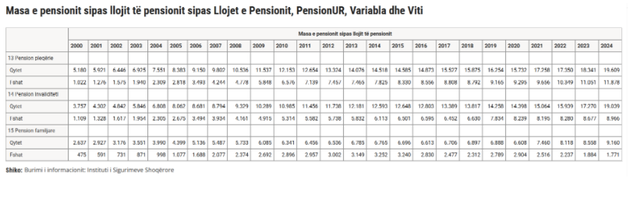
The old-age pension in Albania over the last 25 years has increased in both urban and rural areas, but with a stable difference between the two areas.
In 2000, the average old-age pension in the city was 5,180 lek, while in the countryside it was only 1,022 lek. By 2024, these values have increased to 19,609 lek in the city and 11,878 lek in the countryside, respectively.
This means that the old-age pension in the city has increased by 14,429 lekë, or almost 3.8 times compared to 2000. In the countryside, the absolute increase is 10,856 lekë, but in relative terms the pension has increased more than 11 times, starting from a very low initial base.
However, despite the faster percentage increase in rural areas, the gap remains deep. In 2024, the old-age pension in the city is about 65% higher than in the countryside. This differentiation directly reflects the contribution history, the level of wages and the lower formalization of work in agriculture.
Disability pension: strong growth and gradual rapprochement between city and countryside
The disability pension has also shown a steady increase over the last 25 years. In 2000, the disability pension in the city was 3,757 lekë, while in the countryside it was 1,109 lekë. In 2024, these figures have reached 19,039 lekë in the city and 8,966 lekë in the countryside.
In absolute terms, the disability pension in the city has increased by 15,282 lekë, or more than 5 times. In the countryside, the increase has been 7,857 lekë, or about 8 times compared to 2000. This shows that, although the level remains lower, disability pensions in rural areas have increased at a faster pace.
An important element is that the gap between urban and rural areas, although still considerable, has narrowed slightly over the years. In the early 2000s, the urban disability pension was more than three times the rural one; today it is about double. This reflects the policies of indexation and periodic increases that have had a relatively stronger effect on the lower pensions.
Family pension: more moderate growth and stronger impact in rural areas
Unlike the two categories above, the family pension has seen a more moderate increase, especially in recent years, and has more clearly reflected the structural difficulties of the scheme for families in rural areas.
In 2000, the family pension in the city was 2,637 lek, while in the countryside it was only 475 lek. By 2024, the urban family pension had reached 9,160 lek, while the rural one had fallen to 1,771 lek, marking a negative trend in the last decade.
In the city, the family pension has increased by 6,523 lekë, or about 3.5 times compared to 2000. In the countryside, although there was an increase until around 2013–2015, a continuous contraction is observed thereafter, turning the rural family pension into one of the weakest benefits of the system.
This trend is related to demographic changes, the reduction in the number of beneficiaries, as well as legal regulations that have limited family benefits, especially in rural areas with a poor contribution history.
Overall picture: nominal growth, but structural challenges
Overall, the data show that pensions in Albania have increased significantly in nominal terms over the period 2000–2024, especially old-age and disability pensions. However, urban–rural disparities remain deep and reflect structural issues in the labor market, informality, and contribution levels over time.
While urban pensions have followed a more linear and stable growth trajectory, rural pensions, especially family pensions, remain more exposed to demographic changes and restrictive scheme reforms. This makes the debate on territorial equity and the long-term sustainability of the pension system increasingly important.