Is this police force professional and capable of handling violen...
/ 2026-10-16 18:54:07Focus


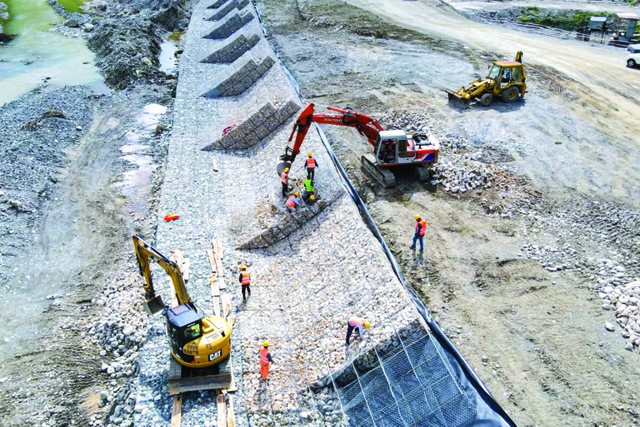
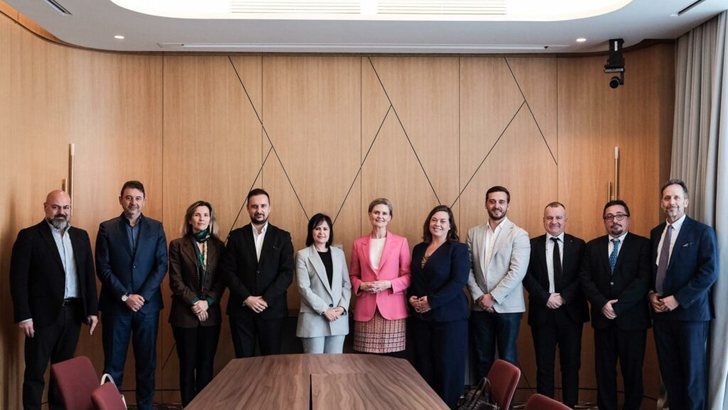
A few days ago, Tirana solemnly hosted another ministerial summit on Corridor VIII. In the conference rooms, everything worked perfectly: the maps were clear, blue arrows connected the Adriatic to the Black Sea, and Albania appeared as a strategic node that will change the fate of the region. In PowerPoint, the vision for Corridor VIII is clear.
In reality, it continues to be in the most advanced phase of Albanian infrastructure development, that of promise.
There was talk of the “east-west axis,” of the “key to European integration,” and of the role Albania could play as a key transit point. The only problem is that, outside the halls, the corridor is lame.
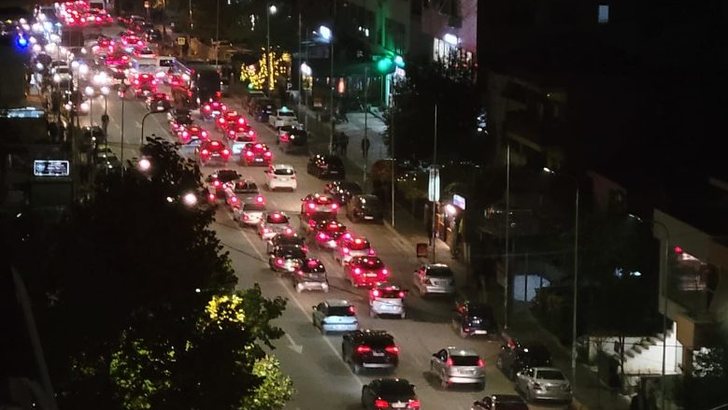
On the summit maps, Albania is a transit hub; on the ground, it's a long detour, a "road blocked" sign, and a waiting convoy of cars and trucks that must cross and recross the border, raising the costs of the products they trade.
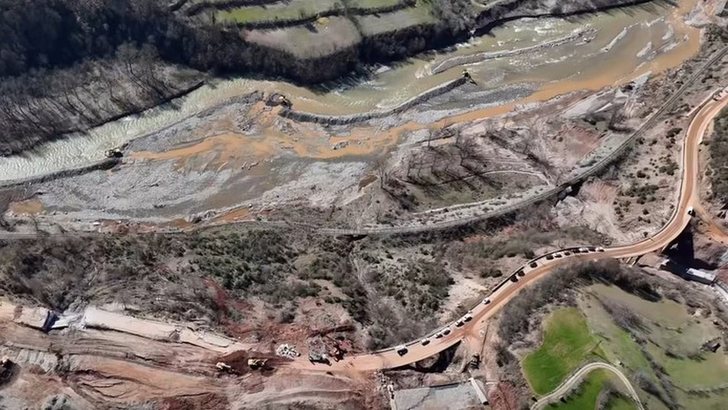
Ironically, a week later, one of the main nodes of this axis, which connects the center of the country with the Southeast, is today impassable in a segment near Librazhd.
Even the projects that are supposed to revive Corridor VIII are not without their share of questions. Costly diversions, route changes, rising costs, and delayed deadlines are a familiar recipe for any major Albanian infrastructure project.
In theory, the corridor will be a modern European artery; in practice, it risks becoming another story with endless variants, additions, and revisions.
Meanwhile, the other strategic node, that of the Port of Durres, is perhaps the most surreal chapter of this story. The Port of Durres is gradually transforming into a tourist port, while the new port in Porto Romano, which should take on the role of a commercial port, has been dragging on for more than a year amid procedures and expectations.
In this sense, Corridor VIII seems to exist, as in the 1990s, more as a geopolitical concept than as infrastructure. It is a project that lives in the near future, a future that, as always, is only a few years away.
Perhaps this is our greatest paradox: we build narratives faster than we build roads. At international tables, Albania is a strategic transit hub; in reality, it is a place where a landslide can cut off a national axis for months.
Even where roads exist, they often only last until the next rainstorm. In a country where a storm can turn asphalt into a construction site overnight, the ambition for international corridors, however far-sighted, sounds all the more ironic.
And as we continue to talk about geopolitical corridors that will connect seas and continents, the feeling remains that for now we only have conference corridors, well-lit, with functional microphones and plenty of light at the end of them.
Because in Corridor VIII, at least for now, with the exception of the TAP gas pipeline, the light is still a project and it is not known when we will see it at the end of the "tunnel".
And perhaps it is no coincidence that, as Edith Durham is attributed, “Albanians have so many proverbs about roads, because they have always had to travel.” In our case, it seems that the journey continues: the quick one on paper, and the real one, the long one, between the slopes and on segments of the Egnatia road. (Monitor)