Is this police force professional and capable of handling violen...
/ 2026-10-16 18:54:07Focus


Food safety issues are often brought back to public attention through alarms that are raised in various food production sectors. The case of aflatoxin, discovered on several farms in the Lushnja area, has once again reopened discussions: do control mechanisms really work, are food safety protocols implemented at every link in the chain, and how protected are consumers?
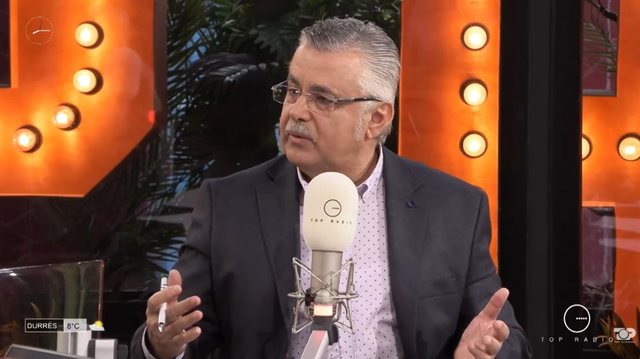
Invited to “Wake Up” to speak about these issues was Ilir Pilku, a renowned expert in the field and Executive Director of the “Dairy Processing Industry” Association. He first explained the situation that was created mainly by contaminated cow feed, which comes from Serbia or inappropriate conditions on some farms, from humidity, as well as the great risks posed by aflatoxin, up to and including causing cancer. Pilku emphasized that the decision to immediately ban milk was undoubtedly the right measure, as a legal obligation (the Food Law of 2028 - amended) and as a moral responsibility towards the health of the consumer.
"It was a unanimous decision of all members of the Milk Processing Association that we should not risk food safety and the health of our consumers, as well as our investments. We must implement the law. Large factories, like Lufra, which have about 15 million euros of investments, could not risk their business and reputation by violating the law. The milk was rejected, only to that part of the farmers who resulted with this problem and not to never return. Because aflatoxin, if intervened, can be corrected within 48 hours. I want to emphasize that the goal was only to save the market. Albanian factories collect 22% of the milk in Albania, an extremely high volume, which if distributed would cause great damage. All this action brought a good thing. Farmers have been made aware and corrected. Meanwhile, from the meetings that we as an Association had with the AKU and the Ministry of Agriculture, the decision was made to control the "There was a strict restriction on food coming from Serbia and several trucks were blocked after this measure was taken," Pilku explained.
He further emphasized that in addition to aflatoxin, companies have been instructed to be strict in their controls against antibiotics and somatic cells. Our factories have the capacities for this assessment in real time. "Lufra, for example, has digital and automated temperature and hygiene control systems as well as internal laboratories for daily analysis. It conducts continuous training of quality staff and has been awarded ISSO 22000 certifications. It has modern automatic processing lines, mainly German, Italian and Swedish production lines. And all these investments are made not simply for business benefits but especially to guarantee food safety."
Regarding one of the ongoing discussions: the import of milk, Pilku explained that it is done only when it is necessary and is provided by certified European sources. "The principle of the union is: One EU = one market. We are the same as a processor in Germany or Italy. We will also have production quotas. You cannot produce more than 'x' liters, the rest will have to be obtained from the European market. Even Italy, despite its production capacity, is forced to produce only 60–70% of the raw material domestically, the rest from Austria or Germany. The same will happen for Albania," Pilku explains.
According to him, this requires a change in approach from the livestock farmers themselves, towards increasing standards and competitiveness. To the question of how Albanian livestock farming will cope in the absence of state support, Pilku answers by emphasizing the role that the dairy industry has played in the development of the sector, specifically Lufra, which together with other companies have differentiated Albanian production beyond regional standards.
"Part of the development that livestock farmers have had has come thanks to the dairy industry, thanks to these large factories that often get muddy. Lufra has invested about 300 thousand euros for livestock farmers, donating 50 cooling tanks for milk collection. This avoids keeping milk in unsuitable containers and guarantees quality through temperature control. It has also invested in increasing the number of heads. You have a high-level milk acceptance system, a by-product production system that you don't even find in Italy. No factory in the Balkans comes close to our companies. They have revolutionized product storage and the distribution system," Pilku emphasizes.
The Lufra case, according to the industry, should be seen as an example of the functioning of control and response mechanisms in consumer protection. In a sector where food safety is directly linked to public health, transparency, standards and accountability remain key elements for building trust between the industry, livestock farmers and consumers.