Is this police force professional and capable of handling violen...
/ 2026-10-16 18:54:07Focus



The draft for mandatory earthquake insurance of homes was released for public consultation in July 2025, but was not approved by the government last year.
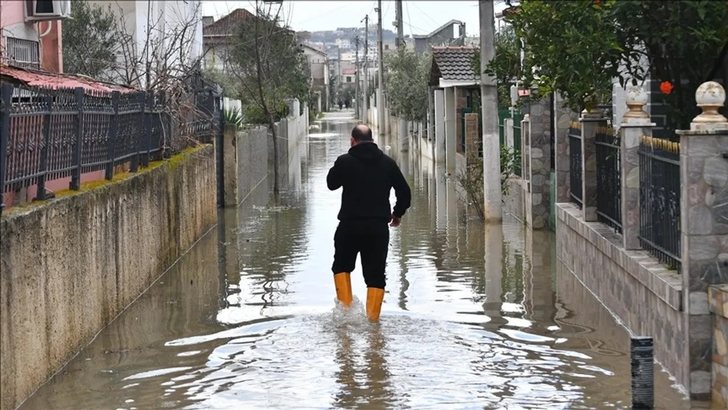
Meanwhile, Ekofin.al has a new version of the draft law, where the working group has expanded the scheme: in addition to earthquakes, floods are also expected to be included, a move directly related to the increased exposure of homes to this risk and to recent episodes of flooding in the country.
Experts from the Ministry of Finance have consulted with several versions and models of disaster insurance schemes, before drafting the draft, with the aim of guaranteeing the most complete protection not only for citizens, but also for the state budget.
Essentially, the new draft aims to build a mandatory financial mechanism (through insurance premiums) to cover material losses in housing, gradually shifting the emphasis from "after-the-event" response towards prevention and risk management.
As in the previous draft, in this version the scheme will be administered by the National Fund, in the form of a state-owned JSC, excluding insurance companies.
What the scheme includes: apartments and units within them, but with clear exceptions
According to the version consulted by Ekofin.al, mandatory insurance applies to apartments, as well as to sections within apartments that are used as units/offices or for similar purposes.
On the other hand, the draft also provides for exceptions: the scheme does not apply to buildings built with clay/adobe, reed fiber structures or similar, as well as to buildings with mobile or temporary placement.
Who is required to be insured and how are the categories in need financed?
The obligation to insure lies with the owners (and not only them), but the draft clearly expands the base of subjects: the "insured" is also considered the user who has a contract in his name with the electricity distribution or water supply entity, regardless of whether he has an ownership document and regardless of the degree of use of the building.
The contract must be signed and renewed annually (or for longer periods according to the policy).
The scheme also includes persons for sections within buildings intended for residential use (even when used as sales/office units); as well as local self-government units for social housing, where the premium is financed from their budget.
An element with social impact is that the state budget finances the premium for individuals who benefit from social assistance, while the categories and procedures are determined by decision of the Council of Ministers.
What the insurance covers and what it excludes: not only bodily injury, but also property damage (floods only)
The contract covers damages to insured real estate caused by earthquake or flood events during the validity of the policy.
The main exclusions are significant: physical bodily injury (including death), non-pecuniary damage, as well as losses from business interruption/lost profits are not covered.
Meanwhile, the draft makes a strong distinction related to floods: items inside the apartment are in principle excluded, but in the case of flood insurance, "items inside the apartment are also covered by the insurance."
Premium, insurance amount and "deductible": what the citizen pays and how the risk is calculated
The maximum limit of the insurance amount is determined by a decision of the Council of Ministers. The draft also establishes a deductible: 2% of the value of the compensation, which is covered by the insured for any damage from covered events.
For the premium, full payment by the insured is foreseen, while the determination methodology will be actuarial, with classification of housing based on risk, and will be approved by decision of the Council of Ministers after receiving the opinion of the AFSA.
How the contract is concluded and when it enters into force: also electronic payment and clear rules for suspension
The contract is considered valid if the premium is paid at the sales agents, at the Fund, or even electronically. It must contain minimum elements, such as the risks covered, the start/end dates, the insured amount and the premium.
The standard validity is one year (or longer annual periods), and the contract enters into force at 24:00 on the date indicated; if the premium is not paid on time, the insurance is suspended until 24:00 on the day the payment is made.
In the event of a change of ownership, the contract remains valid for the new owner, who must notify the Fund within 15 calendar days.
"National Fund": the institution that administers the scheme and how it is financed
At the heart of the draft is the creation of the National Fund for Mandatory Earthquake and Flood Insurance, as a public legal entity organized in the form of a joint-stock company; the state is represented as a shareholder by the ministry responsible for finance. The Fund is envisaged to have operational and financial independence.
Funding sources include premiums, commissions from reinsurance transactions, investment income, the state budget, grants/donations, and other legitimate income.
The main expenses are related to compensation, claims handling, commissions for concluding contracts, reinsurance and operational expenses of the Fund.
The Fund also has a reporting obligation: it reports at least twice a year to the minister responsible for finance and the AFSA, and publishes periodic reports, data and statistics on the official website.
Implementation and “enforcement in practice”: the link with the cadastre, e-Albania and the Central Bank
One of the strongest mechanisms of the draft is the link between insurance and the receipt of public services. Persons requesting registrations/registration changes or other cadastral services must present a valid insurance contract in advance; the absence of a contract makes it impossible to receive cadastral services.
For those who do not sign a contract, administrative enforcement measures are also foreseen, including restrictions on some services in e-Albania (determined by the Council of Ministers) and non-benefit of services from the National Business Center.
Floods: definition, risk model and phased implementation
The draft also brings a clear definition of flood: a natural phenomenon that causes material damage through the penetration of water into buildings, as a result of heavy rainfall, rivers overflowing their banks, dam breaks or sewage failure.
But, unlike earthquakes, the flood scheme is envisaged as conditional and phased. The Fund is required to implement mandatory flood insurance in certain areas, based on the premium methodology and flood risk model developed for Albania.
The risk model is designed by the Fund with actuarial principles and historical/hydrological data, and includes elements such as: identification of areas according to risk (urban, rural, critical infrastructure), housing characteristics, flood scenarios and probability, damage categories, technical parameters for calculating the premium and periodic updating, taking into account climate change and urban developments.
The methodology and model are approved by decision of the Council of Ministers, upon proposal of the minister responsible for finance and after approval by the AFSA, while mandatory flood insurance enters into force after approval of the model for risk areas.
Deadlines: when the law comes into force and what the government must issue next
The draft provides for a non-immediate entry into force: the law enters into force 12 months after publication in the Official Gazette. The Council of Ministers is also tasked with issuing, within 12 months of entry into force, a series of sub-legal acts for the implementation of key articles (including the premium, the amount of insurance, enforcement and floods).
What does this return of the draft mean for the market and citizens?
The inclusion of floods transforms the draft from a scheme focused solely on seismic risk, into a broader instrument for managing natural disasters.
In practice, this change is expected to open debate not only on the cost of the premium and risk classification, but also on how flood risk areas will be defined, when models will be approved, and how the Fund's reporting and transparency will be managed.
If the draft moves towards approval, it brings a new reality: home insurance is no longer simply a voluntary choice, but is linked to access to public services and a new institutional architecture where the Fund is the central link of the scheme, while insurance companies, even in this version, remain outside and can only play the role of agent for selling the policy.
One point that is expected to generate quite a bit of debate is the one that states that "Private insurance companies cannot enter into voluntary insurance contracts for earthquakes or floods for a residence that has not previously entered into a mandatory insurance contract with the Fund." / ekofin.al