Protests, violence, curfews: From France to Albania, why Europe'...
/ 2026-10-20 23:47:20Focus


The agency S&P Global Ratings increased the rating of Albania's sovereign debt to the BB- level. The improvement of the assessment is due to the rapid economic recovery after the pandemic, the strengthening of the Lek in the exchange rate, the improvement of the balance of payments and a fiscal policy with consolidating features. Experts believe that the improvement of the assessment is likely to reduce the interest rates for the country's borrowing in the international markets, expand the base of investors in the Albanian government bonds and positively affect the performance of foreign investments.
The rating agency "S&P Global Ratings" (Standard & Poor's) in March improved for the first time the long-term rating of Albania's sovereign debt from B+ to BB-.
In the analysis that argues for the improvement of the assessment, S&P brings as the main reason the reduction of the public debt and the improvement of the external debt of the economy.
The agency estimates that Albania has consistently demonstrated its ability to withstand shocks, including the 2019 earthquake, the COVID-19 pandemic and the indirect macroeconomic effects of the Russia-Ukraine war.
Despite these obstacles, the agency estimates that Albania's economy has grown by an average of 5.8% per year over the last three years.
The agency attributes this economic resilience, in part, to a significant increase in tourism, which helped Albania increase its exports of services by nearly 15% of GDP between 2019 and 2023, significantly strengthening its external position.
S&P notes that the Albanian authorities have shown their commitment to fiscal consolidation. Combined with economic growth, these efforts have led to a significant reduction in public debt, from 74.5% of GDP in 2021 to an estimated 58% in 2023.
The agency predicts that the authorities will aim to maintain this prudent approach to public finances, in accordance with the Organic Budget Law, ensuring that Albania's public debt remains stable, at an average of around 55% of GDP over the years 2024–2027.
In addition to the improved fiscal position, Standard & Poor's estimates that Albania has also strengthened its external balance. This is attributed to the accumulation of public assets, mainly foreign exchange reserves, and growing service revenues from the developing tourism sector.
The agency predicts that Albania's moderate growth prospects and relatively high reserves provide protection against possible external shocks.
Strong lek, key role in debt reduction
In evaluating sovereign debt, its current level is undoubtedly an important factor in determining a country's rating. It is clear that the reduction of the public debt by about 16.5 percentage points to the Gross Domestic Product in the last three years has played a decisive role in the improvement of Albania's evaluation.
In recent years, the government has undertaken a cycle of gradual reduction of the budget deficit, with the aim of moving the public debt towards lower levels.
However, the main contribution to the reduction of the public debt was made by the rapid recovery of the economy after the pandemic (supported by tourism and real estate), but also by the strengthening of the Lek in the exchange rate.
Based on the latest data published by the Ministry of Finance, at the end of 2023, the country's public debt was estimated at 59.22% (higher than the estimate quoted by S&P), from 74.49% reported in 2021.
If we look at the decrease in debt, according to the residence of creditors, the main impact in the last two years has been the reduction of external debt, which of course is all in foreign currency.
External debt at the end of 2023 was estimated at 26.86%, from 36.65% at the end of 2021.
Meanwhile, domestic debt (which is overwhelmingly in local currency) has dropped to 32.36%, from 37.3% at the end of 2021. In a two-year horizon, external debt has decreased by almost 10 percentage points to GDP- of, while the internal debt by approximately 5 percentage points.
The main effect on the strong reduction of external debt was given by the exchange rate. External debt, expressed in nominal value in Euro, has increased by 6.8% in the period 2021-2023.
However, expressed as a nominal value in Lek, the domestic debt stock has decreased by 8.1%.
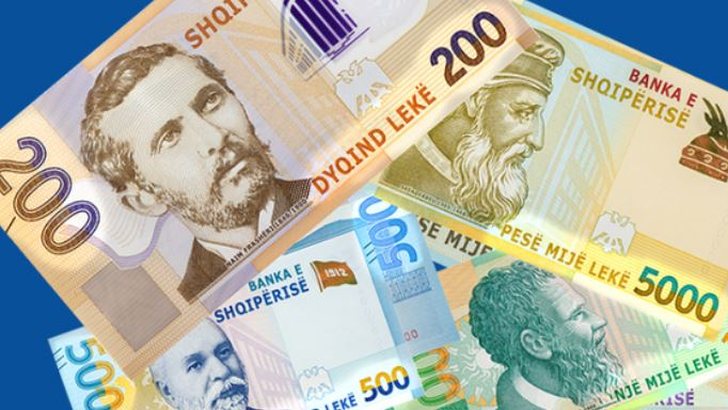
According to the official exchange rate of the Bank of Albania, at the end of 2023, the Euro was exchanged at 103.88 ALL, down by 16.2% compared to the end of 2021. The Euro is the main currency of external debt, but the exchange rate trend has was similar for other major currencies.
External deficit at historic low
The current account deficit hit a historic low last year. According to data from the Bank of Albania, this deficit decreased to the value of 191 million euros, down 78% compared to 2022 and 84% compared to 2021, (the year when the highest deficit was recorded in the 12 years last).
In relation to the Gross Domestic Product, the current account deficit is estimated at less than 1%, from 6% that had been in 2022 and 7.7% that had been in 2021.
Such an improvement in nominal terms is due especially to the strong increase in the contribution of the tourism sector to the balance of payments, while in real terms the effect of the strengthening of the Lek in the exchange rate must also be added (influenced to the greatest extent precisely by increasing tourism and improving the external position of the economy).
Services and tourism in particular had the main effect on the historical narrowing of the current account deficit. The external account in services last year was positive in the amount of 3.4 billion euros, increasing by 43% compared to the previous year.
More than half of the surplus in services came from tourism. Statistics showed that net receipts in the travel item of the Balance of Payments were worth 1.84 billion euros, up 72% compared to 2022 and 255% compared to 2019, before the pandemic.
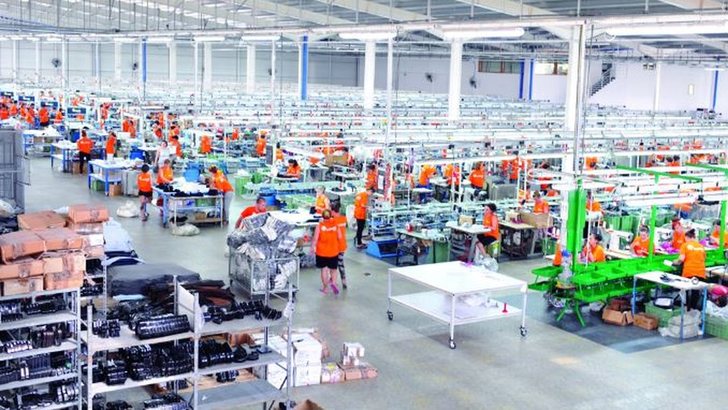
Fashion also contributed to the growth. Net revenues from services for the processing of physical inputs owned by others amounted to 770 million euros, an increase of almost 19% compared to the previous year. The added value of the processing service continues to grow, even reaching an all-time high in 2023.
Remittances continue to make a positive contribution to the current account balance. Last year, immigrants' remittances reached the value of 929 million euros, an increase of 11% compared to the previous year.
The new waves of Albanian emigration in recent years have recovered remittances, positively affecting the country's current account balance. High inflation and the depreciation of the Euro over the past two years may also have fueled the growth of remittances, maintaining the purchasing power of households dependent on them.
Services and remittances have largely offset the trade deficit in goods. According to the Bank of Albania, the deficit in goods last year reached more than 4.5 billion euros, an increase of 6% compared to the previous year.
The increase in the deficit in goods has been significantly lower in relation to the increase in the surplus of services and this has had a positive impact on the country's current account balance.
Moreover, the record value of Foreign Direct Investments, of almost 1.5 billion euros, has exceeded by more than seven times the value of the current account deficit. This shows that the inflows of foreign exchange into the economy have been greater than the outflows.
The improvement of the Balance of Payments has also influenced the record strengthening of the Lek in the exchange rate. The Euro-Lek exchange rate recorded an annual decline of 9% at the end of 2023, while during the summer season, the annual decline of the exchange rate reached more than 14%, very close to the limit of 100 Lek.
Economic growth remains at relatively high levels
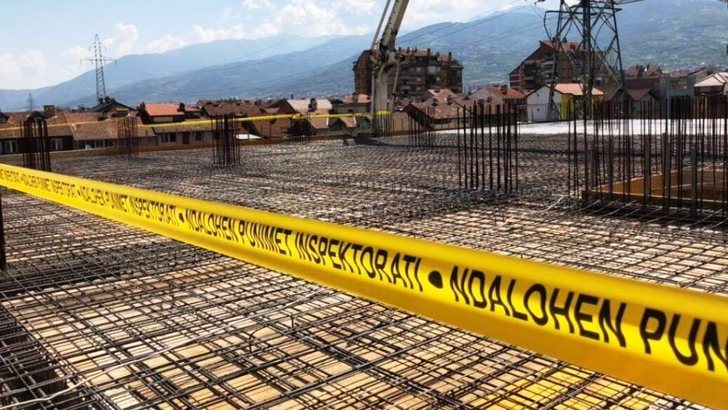
In the post-pandemic period, the Albanian economy has registered a rapid recovery, supported especially in the construction and real estate sectors and services related to tourism.
In 2021, the Gross Domestic Product registered a high growth of 8.9%, which however was largely due to the comparative base effect, after the 3.3% decline in the pandemic year 2020.
More significant was the maintenance of a relatively high level of growth, with 4.8%, for the year 2022. The complete data for the year 2023 have not been published yet, but based on the performance of the first 9 months, an increase in the level of 3.2-3.3%.
The inflationary blow and the increase in interest rates has brought a slowdown in economic growth, but nevertheless the growth rates of the Albanian economy remain good in relation to most countries of the European Union and the Western Balkans Region.
For example, the average economic growth of the Eurozone countries for the past year is estimated at around 0.5%.
In the Western Balkan region, it is estimated that only Montenegro has recorded higher economic growth, above the limit of 4%. In Kosovo, estimates are for growth similar to Albania, around the level of 3.3%, while other countries have recorded lower growth in national production.
On the other hand, many analysts think that the official statistics of 2023 do not give a completely reliable picture of Albania's economic growth, due to the high informality that exists in the tourism sector.
The S&P system, what the BB scale shows
The sovereign debt rating system from S&P Global Ratings has ten basic ratings or grades, starting from the highest, AAA, to the lowest, D. Ratings from AAA to BBB are included in the investment grade classification.
Such a determination implies that the borrower has at least adequate (BBB) to extremely strong (AAA) capacities to respond to financial commitments.
The BB scale, which Albania has just entered, is classified as the highest speculative grade level. According to the definition of Standard & Poors, such a degree means that the subject is less critical in the short term, but faces great uncertainties and in the future to unfavorable business, financial and economic conditions.
The previous scale, B, defined Albania as "more fragile to adverse business, financial and economic conditions, but with current capacity to meet financial commitments". MONITOR