Is this police force professional and capable of handling violen...
/ 2026-10-16 18:54:07Focus


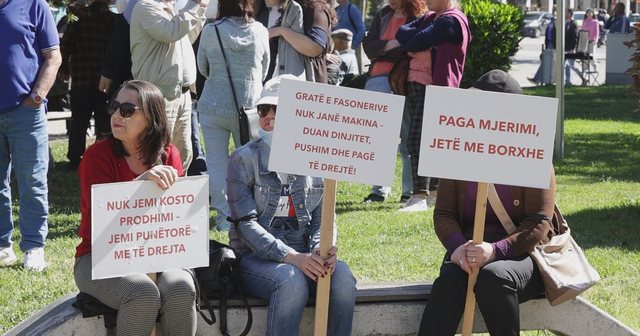
With an increased desire to leave, numerous problems left behind, and few, almost non-existent, alternatives. This "May 1" finds Albanians with this mix of feelings.
Most of them celebrate while few protest. This at a time when 39 percent of them face difficulties in coping with the month. This indicator is significantly higher than in the countries of the Region.
"Respondents are asked to rate how easy it is for their family to meet monthly expenses, taking into account total monthly income from various sources. The rating is made on a six-level scale, from "very easy" to "very difficult."
Overall, 8% of respondents in the EU reported that in 2024 they found it difficult or very difficult to cope with expenses. The differences between genders were negligible,” said Gertjana Hasalla, Center for Rights at Work.
Despite the great rhetoric, the average salary in Albania has increased less than in other Western Balkan countries.
While in Serbia, Bosnia and Herzegovina and Montenegro the average salary is approaching 1,300 euros, in Albania it is estimated at only 860 euros.
"The purpose of this protest is to raise awareness. Although this should be done throughout the year for the problems faced by workers in Albania, the Confederation wanted to emphasize that May 1 is not a holiday, but a protest."
"Every year we try to gather trade unionists and ordinary citizens to react. Only in Vietnam and China is it celebrated," said Kol Nikollaj, president of the Confederation of Trade Unions of Albania.
From education to retirement, the labor market faces a series of challenges that are still not being properly addressed. Yet few Albanians come out to protest.
"There is distrust because unions cannot be visible only on May 1 or when some tragic event occurs. They need to be visible every day so that employees feel some kind of security," said Esmeralda Hoxha, Coalition for Rights at Work.
Emigration is translating into a huge burden on the economy, effects that have been felt for years now. Businesses are lacking employees, the economy is lacking consumption and sufficient contributions to the pension scheme, labor costs have increased and productivity has decreased.