Is this police force professional and capable of handling violen...
/ 2026-10-16 18:54:07Focus


By Ettore Sequi - La Stampa
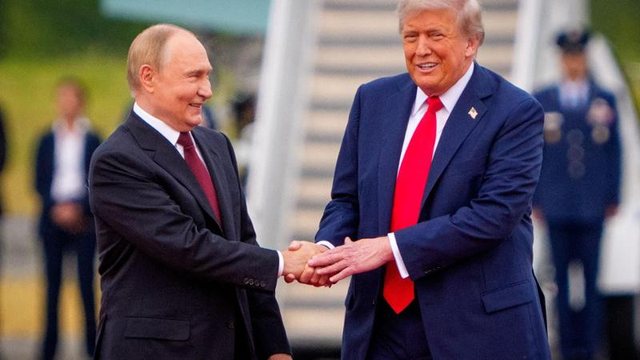
A legendary Italian ambassador once told me that in international relations, manipulation is often necessary. This was also the case during last night’s phone call between Putin and Trump, on the eve of today’s summit with Zelensky. For Trump, the goal was to put pressure on Putin by using the meeting with Zelensky as leverage. For Putin, it was important to avoid any dangerous outcomes for Moscow from the Trump-Zelensky conversation.
In this context, Trump and Putin's decision to meet in Budapest, chosen as a "European" place of balance between Moscow and Washington, follows this logic. To satisfy Trump's ego, Putin used the entire repertoire of enticements: congratulations on peace in the Middle East, praise for Melania Trump, offers of economic cooperation.
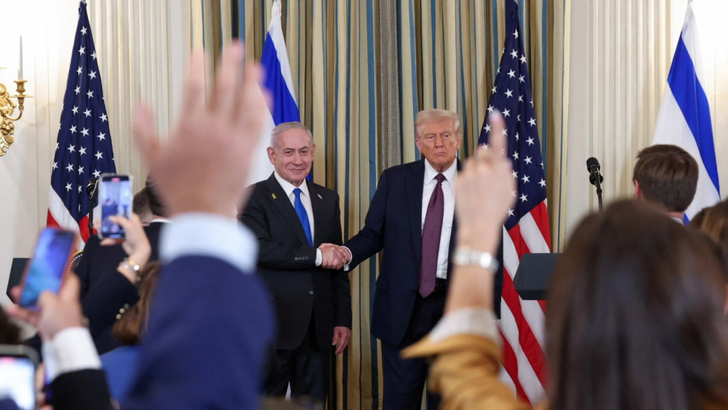
After the success of the "peace" in the Middle East, more of a ceasefire than reconciliation, Trump shifts his attention to Ukraine. It is the new phase of his strategy: to close a complex conflict with a political act that he can present as a personal trophy. His strategic urgency stems from the need to show that only he can achieve what no one else has guaranteed.
In this context, Zelensky's visit to Washington takes place. The war is in a dynamic stalemate: Moscow advances slowly and at high cost, while Kiev aims to turn the conflict into a war where economic damage to the enemy is important, in addition to the kilometers gained. For both sides, the political cost of negotiations is higher than that of war. The goal is to increase these costs until sitting down at the negotiating table becomes inevitable.
Ukrainian attacks on refineries and energy infrastructure have shifted the war to Russia's heartland, striking at the point where economic and military power converge. That's why the central theme of the summit with Trump is the delivery of Tomahawk missiles: not just a long-range weapon, but also political leverage. Trump is using them to pressure the Kremlin, hinting that he will provide them with clear rules of engagement. It's a direct message: either a diplomatic path is opened, or the costs will rise.
The logic is clear: war is now a matter of marginal costs. Moscow continues to fight, but the economy is militarizing, consumption is falling, and public spending is absorbing everything. What once seemed like a model of resistance is showing its limitations: a rigid system that is consuming itself in war.
The American move rests on this ground. The hypothesis of supplying Ukraine with Tomahawks formalizes a conditional deterrence: diplomacy and risk to push Putin towards negotiations, before the crisis escalates. Trump does not promise escalation, but a more expensive bill for those who refuse dialogue, combining offer and threat in a single move.
For its part, the Kremlin aims to keep the channel with the US open while accusing Europe and Ukraine of obstructing peace. For Moscow, negotiations are only possible with Washington. It is the usual strategy: to divide the West and offer Trump space for bilateral agreements and false concessions to resume dialogue. For Washington, Ukraine is just one segment of a global relationship with Moscow, related to stability in the Middle East, the Iranian nuclear program, competition in the Arctic, energy security and, above all, the relationship with China. Moreover, the “New Start” treaty, the last bilateral nuclear weapons treaty, expires in February 2026. Meanwhile, Russian doctrine, hardened during the war, has made the threshold for use more unclear: for this reason, too, Moscow rejects new Western long-range missiles such as the Tomahawk, for fear of losing the only advantage it still considers deterrent.
Every move in Ukraine is part of a systemic game. Victory will not be a capitulation or a parade, but the moment when Russia realizes that war costs more than peace. The solution lies in security guarantees for Kiev, which could make any territorial concessions more acceptable. But it is an illusion to expect direct guarantees from Washington. And most likely there will be no second-level guarantees either, that is, an American umbrella over Europe, which in turn would guarantee Ukrainian security.
The new effort to end the war comes as Putin tries to buy time before the suspension of military operations for the winter season and Kiev tries to link its security with the Americans. The Americans aim to end the war to devote themselves to the systemic challenge (geopolitical, economic, military and technological) with China in the Indo-Pacific. Europe is realizing that its security and that of the United States are increasingly separated. The end of this conflict will come with an equation: when it will be more profitable to stop than to continue the war.