Is this police force professional and capable of handling violen...
/ 2026-10-16 18:54:07Focus


In two reports in the space of a few days, Turkish Radio and Television (TRT) has rebuked Albania for further strengthening relations with Israel during the two-year war in Gaza. For the giant Turkish media corporation, which represents and propagates Ankara's official foreign policy line, Albania has significantly advanced in relations with Tel Aviv, while a brutal and genocidal offensive was taking place in Gaza.
The reporting of the Turkish public media, also known as the “Voice of Turkey”, went even further, listing all the Albania-Israel agreements in the fields of security, health and tourism, in addition to the exchange of high-level visits and mutual honors between Albanian and Jewish statesmen. So clearly, what at first glance appeared as a media report, was packaged with a genuine editorial stance. A style very similar to some former reports of the “Voice of America”, which closed with the classic note that the commentary represented the views of the US government.
In the series of Turkish publications against official Tirana, the question naturally arises: Is there a criticism, reproach or complacency from Turkey towards Albania for its foreign policy approach to the conflict in Gaza? Is the "concentrated strike" by TRT a warning or a reminder of a previous warning about Israel?
The recent history of diplomacy and international relations tells us that Turkey has constantly attempted to influence Tirana's foreign policy regarding the Middle East. This effort has mainly been manifested in lobbying for various resolutions discussed at the Glass House in New York, but Ankara has not hidden its intentions on other hot topics.
Sali Berisha still remembers the tense phone call with Erdogan in the fall of 2012 before a UN vote to grant Palestine observer status in the General Assembly. The former prime minister has claimed that the consequences of his refusal were not small.
However, since Berisha's departure from power, official Tirana has considered Ankara a strategic ally and among allies it seems quite normal for there to be demands for unification or softening of positions in foreign policy. In addition, Turkish aid after the 2019 earthquake and during the pandemic remains among the most important acts of friendship between the two countries.
So far, despite the Turkish stance, the public movements of Albanian diplomacy have not reflected that they have undergone any change or impact. Moreover, the Minister for Europe and Foreign Affairs, Elisa Spiropali, announced a visit to Israel during these days, reconfirming the intensive relations between the two countries in a telephone communication with her counterpart, Gideon Sar. Albania has been clear in its approach to developments in the Middle East, where the implication in the unfriendly relations with Iran should not be forgotten.
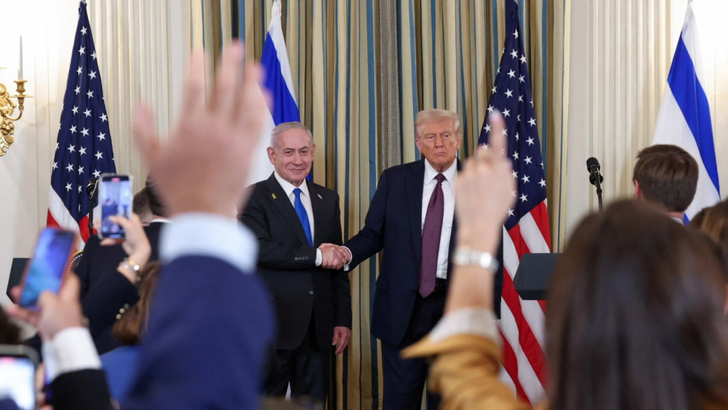
However, the framework of developments after the ceasefire in Gaza is not the same. With military excesses and civilian killings in the last two years, Israel lost the advantage that was created after the terrorist attack on it on October 7, 2023. European and Western support for the “Netanyahu” government has faded significantly, while private criticism has also arrived from Washington. Israel now faces, almost unanimously, both Arab-Muslim countries, as well as Western Europe and large and powerful states, such as Canada and Australia, in its military actions. The ceasefire and the peace plan for Gaza have not diminished the resentment of Turkey and part of Europe towards Netanyahu.
It is precisely the Turkish approach that is gaining ground in international politics, with open American support. From the plane that was flying in the air in the sky of Sharm El Sheikh, Erdogan imposed his rules on the ground, leaving Netanyahu in Israel and receiving maximum praise from Donald J. Trump. Syria and Gaza were already arenas where Turkish policy shone and official Washington is increasingly favoring a strong role for Turkey. Even more so when the spotlight is turning away from resolving the Ukraine crisis.
The new panorama in the Middle East and beyond undoubtedly requires a realistic and careful assessment from Tirana's foreign policy as well. Forced to maneuver the small ship with the red and black flag in the USA-EU-Turkey triangle, Albania must decipher and understand as soon as possible the new rules that are being written in international relations. Those rules that guarantee us the calmest possible navigation even in turbulent seas.